Ergolding Camp
Displacement in Europe
Ergolding · Germany · 1945–1947
Six repaired barracks on a disused Luftwaffe reserve airfield outside Landshut housed a Ukrainian camp that the inventory closed in autumn 1947. Local building records, a Landshut parish history and published population returns together document the site, its Ukrainian Autocephalous Orthodox church and a community that shrank by two thirds within a year.
Introduction
Ergolding’s displaced-persons camp occupied part of a former military airfield near Landshut. The inventory records it as a Ukrainian camp, AC 93-403, attached to Team 537 at Landshut, opening on 24 January 1946 and closing between 20 September and 17 October 1947. It belonged to a cluster of camps around Landshut that shared relief administration and pastoral care with the town.
A history in dates
- 22 September 1936Eighty-one farmers agree to lease about ninety hectares of meadow for an emergency landing ground; levelling begins the same year.
- 1939The reserve airfield is manned with a company-strength ground staff.
- End of 1940Ergolding becomes an outstation of the Pilsen flying school; in 1943 it passes to the Straubing double flying school.
- November 1945The archpriest of the Landshut Orthodox parish takes on the care of believers in the Ergolding and Altdorf camps.
- 24 January 1946The inventory record for the Ukrainian camp AC 93-403 opens.
- Spring 1946UNRRA requisitions the parish barn and cattle stable for horses and other purposes.
- 1946Only six of the nine huts remain; the district authority repairs them for UNRRA use.
- 24 August 1946The UNRRA summary records 337 Ukrainians.
- 31 May 1947A later UNRRA summary records 102 Ukrainians.
- September–October 1947The inventory places camp closure within this interval.
- 1971The THW moves into the surviving main building on Rottenburger Straße.
Sources for this section
From reserve airfield to accommodation
The airfield was not an inheritance from an older military site but a piece of requisitioned farmland. In 1936 the Munich air district command opened negotiations with the parish of Ergolding over an emergency landing ground of about ninety hectares between the Landshut to Plattling railway, today’s Rottenburger Straße, the main road and today’s Landshuter Straße. The land was meadow. On 22 September 1936 the farmers concerned agreed to give up the ground for an annual rent of sixty Reichsmark per Tagwerk, and eighty-one leases were signed.
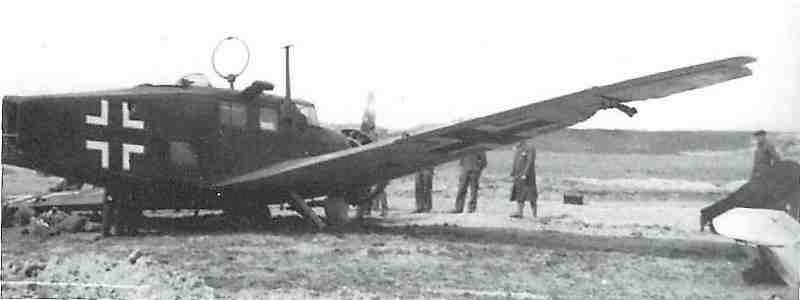
Levelling began the same year. The buildings, huts and ammunition bunkers were put up east of the road that is now Rottenburger Straße, the aircraft hangars stood along the Plattling railway, and a spur line was laid for fuel and ammunition. On the outbreak of war in 1939 the reserve airfield received a company-strength ground staff; from the end of 1940 it was an outstation of the flying school at Pilsen, with about forty trainee pilots and six or seven instructors, and in 1943 it passed to the double flying school at Straubing. Flying stopped near the end of the war for want of fuel, and several Ju 52 transports landed with refugees from Czechoslovakia and were left standing on the field.
After the war the owners got their fields back once the ground had been cleared and resurveyed. Of nine huts, an orchard and several gardens, only six huts were left by 1946. The district authority repaired those six, and UNRRA then used them. That is the whole physical extent of the camp as the local history describes it.
A camp within the village
The reused huts were part of a wider local relief operation. In spring 1946, UNRRA also requisitioned the parish barn and cattle stable to accommodate horses and for other purposes. This was a support facility; the account does not identify the parish barn as residents’ accommodation. The same local history notes that liberated French and Russian prisoners were free to travel home at once, while civilians deported from the eastern countries stayed longer or for good and were gathered into the UNRRA camps.
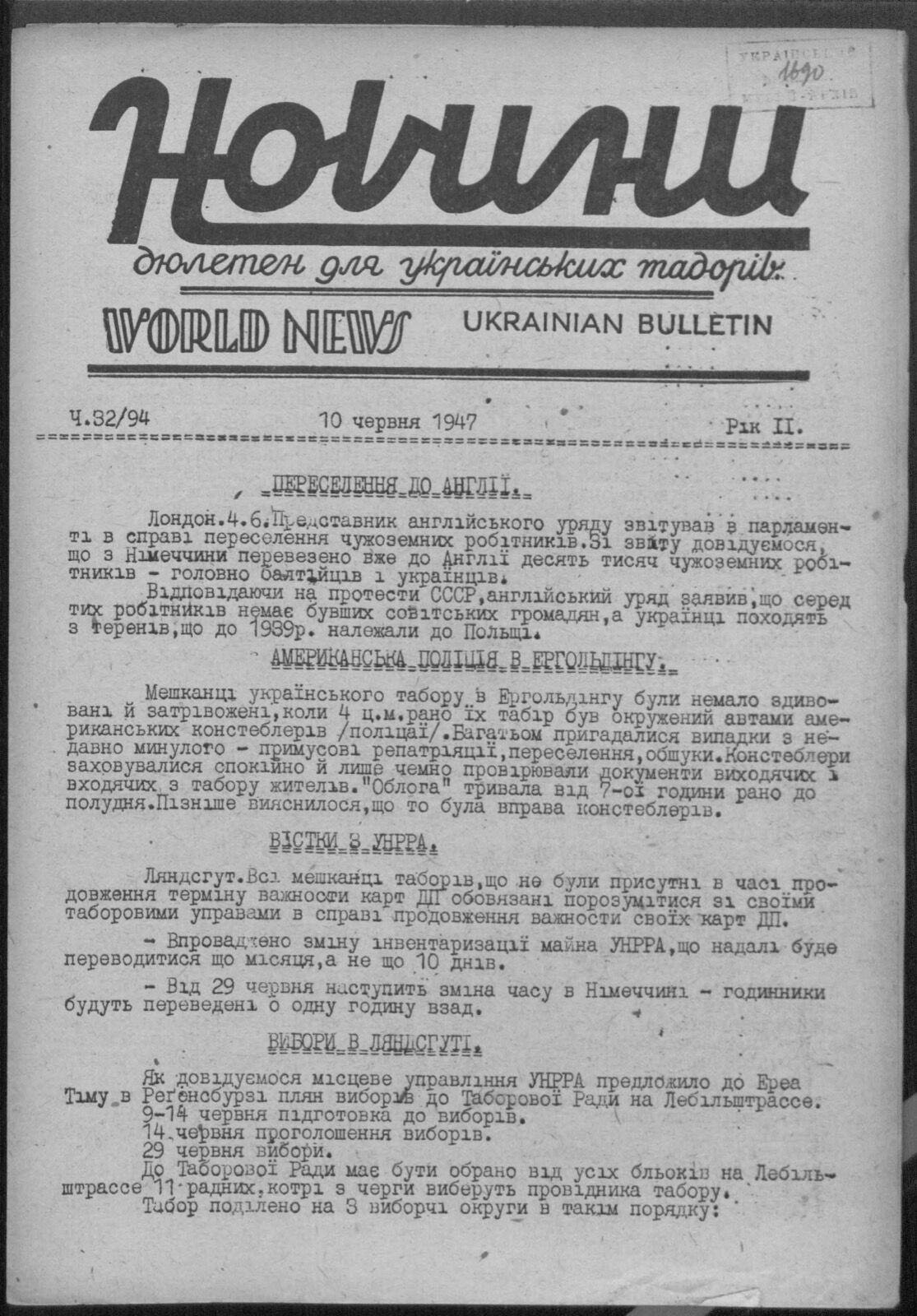
One morning in the camp was reported at length in the Ukrainian camp bulletin Novyny. On 4 June 1947 the residents of the Ukrainian camp at Ergolding were, in the paper’s words, not a little surprised and alarmed to find their camp ringed by the cars of American constables. Many remembered recent years — forced repatriations, transfers, searches. The constables behaved calmly and only checked, politely, the papers of those going in and out. The “siege” lasted from seven in the morning until midday, and it emerged afterwards that it had been a police exercise.
A Ukrainian church in the camp
The Landshut Orthodox parish history is the clearest evidence of religious life at Ergolding. It records that a further four hundred Russians lived outside the town at Ergolding and Altdorf, and that only some of them came to the church of St Nicholas in Landshut, because there were Ukrainian Autocephalous churches in the camps that were, in its words, easier to reach by public transport. From November 1945 the archpriest Arkadij Moiseev took over the care of the believers in the Ergolding and Altdorf camps, where his own parish had no premises of its own.
That single sentence establishes two things about Ergolding: that a Ukrainian Autocephalous Orthodox congregation had a church in the camp, and that Orthodox residents of more than one tradition lived there together. The figure of four hundred is a combined count of Russians at two places and is not a Ukrainian population for Ergolding.
Sources for this section
The recorded community
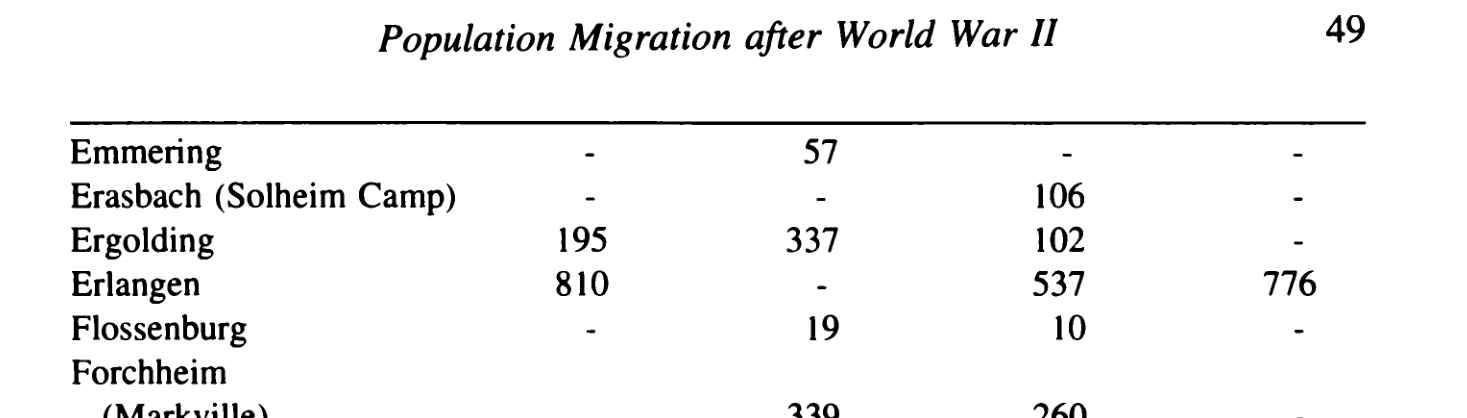
Ihor Stebelsky’s published table records 337 Ukrainians at Ergolding in the UNRRA summary of 24 August 1946 and 102 in the summary of 31 May 1947. A separate set of questionnaire returns collected during 1946 and 1947 lists 195. No figure is given for the PCIRO summary of January 1948, by which time the camp had closed. These snapshots describe a community that fell by roughly two thirds inside a year; the sources do not explain the departures or name a shared destination.
Ukrainians recorded at Ergolding
| Source and date | People |
|---|---|
| Questionnaire returns collected 1946–1947 | 195 |
| UNRRA summary, 24 August 1946 | 337 |
| UNRRA summary, 31 May 1947 | 102 |
| PCIRO summary, 2 January 1948 | not listed; the camp had closed |
Sources for this section
Closure and the surviving site
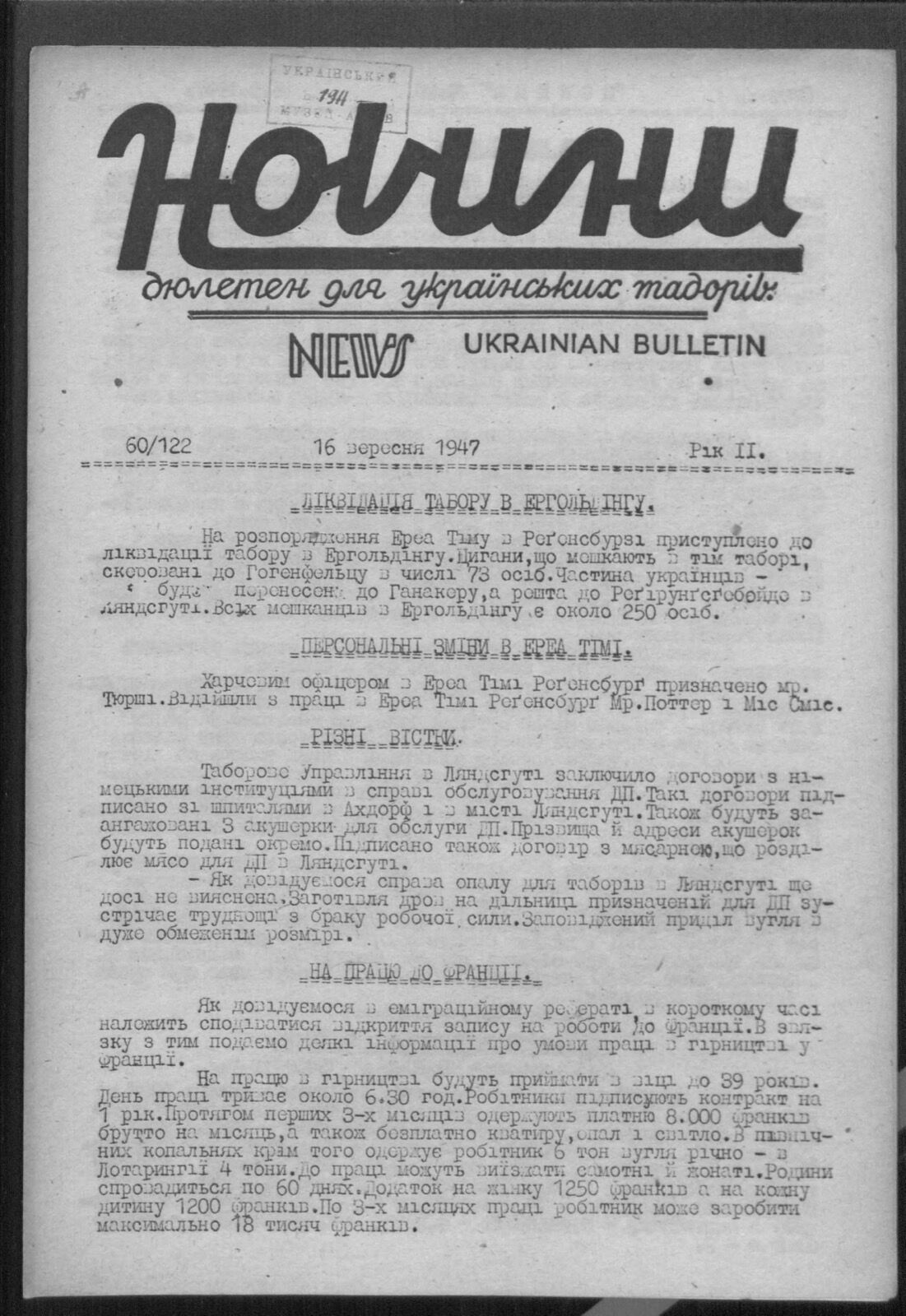
The end was announced in the camp bulletin Novyny on 16 September 1947, under the front-page heading “Liquidation of the camp at Ergolding”. On the orders of the Area Team at Regensburg the liquidation of the camp had begun. The Romani residents, whom the bulletin calls Gypsies, were directed to Hohenfels, seventy-three people in all; part of the Ukrainians were to be moved to Hanaker and the rest to the Regierungsgebäude camp in Landshut. The bulletin put the whole population of Ergolding at about 250 people.
The camp inventory places closure between 20 September and 17 October 1947 and gives no capacity figure, which leaves the camp’s intended size unrecorded. It also carries an archive reference to holdings and change reports for Ergolding under document identifiers 81977312 to 81977316, a short run that has not been read. The Ukrainian camps that remained around Landshut, at Lebühlstraße and the Regierungsgebäude, stayed open into 1949 and 1950, so residents leaving Ergolding had places to go within the same relief district; no source consulted names where any of them actually went.
Of the whole airfield installation only the main building on Rottenburger Straße still stands, together with bunker ruins between the gardens of Heimgartenstraße. The Technisches Hilfswerk, Germany’s civil-protection organisation, moved into the surviving main building in 1971 and occupies it today.
The camp record
| Item | Recorded detail |
|---|---|
| Assembly centre | AC 93-403 |
| Later identifier | none recorded |
| Relief team | 537, Landshut |
| Recorded nationality | Ukrainian |
| Opening | 24 January 1946 |
| Capacity | not recorded |
| Closing | between 20 September and 17 October 1947 |
Sources for this section
- Likvidatsiia taboru v Erholdingu (Liquidation of the camp at Ergolding), Novyny: biuleten dlia ukrainskykh taboriv / News: Ukrainian Bulletin, number 60/122, 16 September 1947, page 1
- DP camp inventory, record 899
- Ergolding and its districts
- History of the accommodation
- Flugplatz Ergolding, section of the Ergolding local history
Sources
- DP camp inventory, record 899
Arolsen Archives · 26 October 2023
Ergolding (Kreis Landshut). Nationality recorded as Ukrainian only; AC 93-403; Team 537 Landshut; opening 24 January 1946; closing between 20 September and 17 October 1947; capacity field blank; ITS documents 81977312-81977316.
- Ergolding and its districts
ARLAN, reproducing Heimatbuch des Marktes Ergolding, 1999 · 1999
PDF pp 44–46: airfield structures, six restored UNRRA huts. Page 24: parish barn requisition for horses.
- History of the accommodation
THW Ortsverband Ergolding
Institution occupying surviving buildings confirms UNRRA 1946 use and THW arrival 1971. The page was unreachable on 13 September 2026 because of an anti-scraping challenge; the statements it supports are also carried by the local history.
- Parish history
St Nicholas Orthodox Church, Landshut
Ergolding and Altdorf camp congregations, Ukrainian autocephalous churches and Landshut pastoral connections.
- Ukrainians in UNRRA and IRO camps of the American zone: Table 7
Ihor Stebelsky, in The Refugee Experience, Canadian Institute of Ukrainian Studies Press, 1992 · 1992
Table 7, printed pages 47–51: Ergolding, 195 in the questionnaire returns collected during 1946 and 1947, 337 in the UNRRA summary of 24 August 1946 and 102 in that of 31 May 1947; no entry in the PCIRO summary of 2 January 1948. Column assignment checked against the x-positions of the digits in the PDF text layer.
- Flugplatz Ergolding, section of the Ergolding local history
Heimatbuch des Marktes Ergolding, November 1999, reproduced by ARLAN · 1999
PDF pages 43–46 read in full: the 1936 negotiations with Luftkreiskommando V, ninety hectares of meadow, 81 leases at 60 RM per Tagwerk agreed 22 September 1936, buildings and bunkers east of Rottenburger Straße, hangars along the Plattling railway, 1939 ground staff, Pilsen and Straubing flying schools, Ju 52 arrivals with refugees from Czechoslovakia, return of the land after the war, six surviving huts repaired for UNRRA, and the THW in the one remaining main building. Page 43 also describes the departure of French and Russian prisoners and the gathering of eastern civilians into UNRRA camps; unsupported collective allegations on the same page are not used.
- Landshut parish history: the camps at Ergolding and Altdorf
St Nicholas Orthodox Church, Landshut · Retrieved 13 September 2026
German text read in full: four hundred Russians living at Ergolding and Altdorf, Ukrainian Autocephalous churches in the camps described as easier to reach, and the archpriest Arkadij Moiseev taking over the camp congregations from November 1945 until his emigration in November 1951. The four hundred is a combined figure for two places and counts Russians, not Ukrainians.
- Likvidatsiia taboru v Erholdingu (Liquidation of the camp at Ergolding), Novyny: biuleten dlia ukrainskykh taboriv / News: Ukrainian Bulletin, number 60/122, 16 September 1947, page 1
Novyny: biuleten dlia ukrainskykh taboriv · 16 September 1947
Digitised by the Ukrainian Museum-Archives of Cleveland with the United States Holocaust Memorial Museum in the Displaced Persons Camp Periodicals Collection; marked public domain or an orphan work and offered under Creative Commons Attribution-NonCommercial-NoDerivatives 3.0. Front-page notice of the camp’s liquidation, the destinations of its residents and its size.
- Amerykanska politsiia v Erholdingu (American police at Ergolding), Novyny: biuleten dlia ukrainskykh taboriv / World News: Ukrainian Bulletin, number 32/94, 10 June 1947, page 1
Novyny: biuleten dlia ukrainskykh taboriv · 10 June 1947
Digitised by the Ukrainian Museum-Archives of Cleveland with the United States Holocaust Memorial Museum in the Displaced Persons Camp Periodicals Collection; marked public domain or an orphan work and offered under Creative Commons Attribution-NonCommercial-NoDerivatives 3.0. Front-page report of American constables cordoning the Ukrainian camp at Ergolding on 4 June 1947.
Last researched 13 September 2026