
DOCUMENT
Report on the theatre opening at the Amberg Aufbauschule camp, 18 August 1945
18 August 1945 · Amberg · Germany
A short contemporary report identifies the theatre's 18 August 1945 opening performance at the Aufbauschule camp.
The camps, hostels, hospitals, transit centres and detention sites through which Ukrainians passed between 1939 and about 1960, from the first refugee barracks in Slovakia, through wartime forced labour and the displaced persons camps of occupied Germany and Austria, to the hostels and reception centres of the countries that took people in.
Barracks, hostels, hospitals, transit centres and detention sites, each with its own history, chronology, images and sources.
23 SCHEMES, SHIPS AND PORTS · 109 JOURNEYSHow people left the camps: the labour schemes, the sponsorship routes, the chartered fleet and the ports at either end.
232 DOCUMENTS · 264 PHOTOGRAPHSInspection returns, camp newspapers, notices, plans and photographs, each read against the place it came from.
480 ITEMS BY SUBJECTChurches, schools, sport, theatre, work, family life and food, as the residents recorded them.
A Ukrainian community took shape inside a former barracks: families made homes, children went to school, and residents built a busy sporting and cultural life while preparing for an uncertain future.
BONEGILLA · AUSTRALIAA first Australian address for thousands of newcomers, Bonegilla connected Ukrainian arrivals with work, schools, worship and new communities across the country.
LOCKERBIE · UNITED KINGDOMUkrainian former prisoners of war brought from the Rimini camp in Italy made a home near Lockerbie in 1947 and turned a camp hut into a Greek Catholic chapel. The chapel, a memorial cross and several huts still stand, and family photographs connect work, faith and lives rebuilt in Scotland and overseas.
A short contemporary report identifies the theatre's 18 August 1945 opening performance at the Aufbauschule camp.
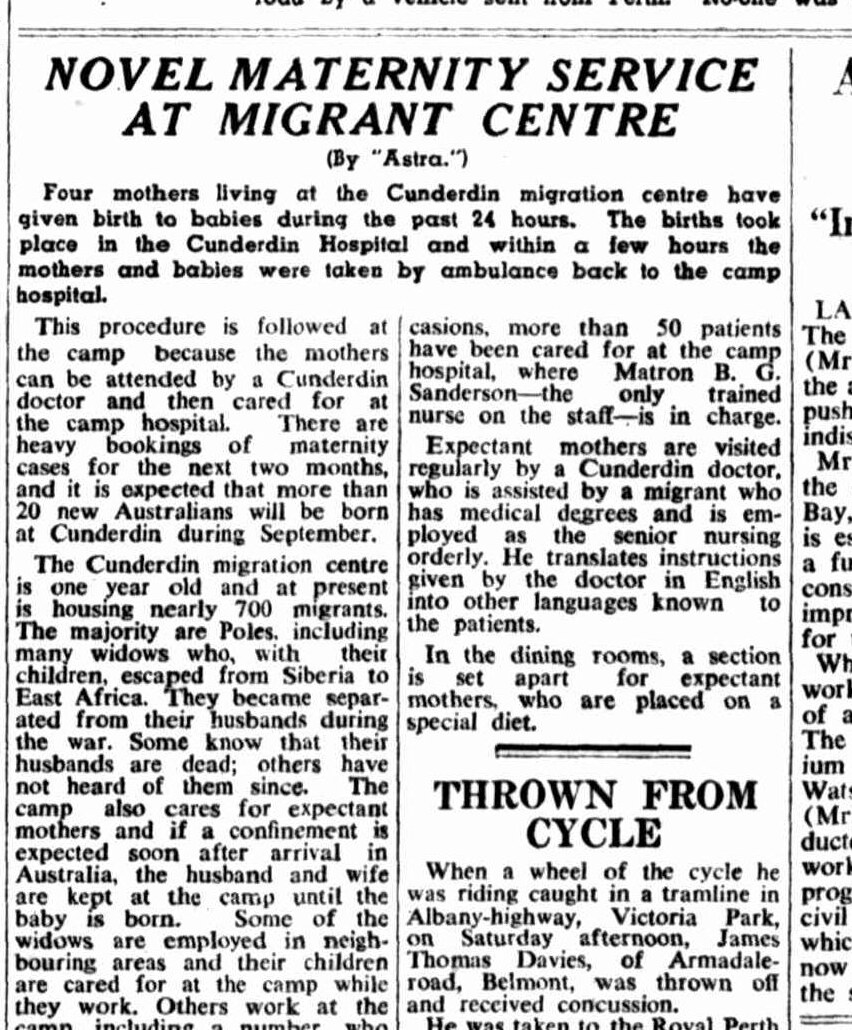
Births at the centre, August 1950. The West Australian reported that mothers from Cunderdin were confined at the town hospital and brought back to the camp hospital by ambulance within hours; that more than twenty children were expected to be born to Cunderdin families in September; and that the centre, then a year old, housed nearly 700 people, a majority of them Poles, among them widows who had escaped with their children from Siberia to East Africa.
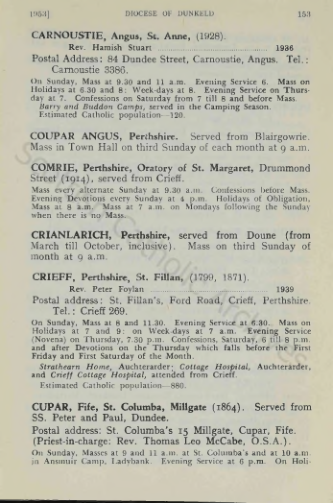
The 1953 Scottish Catholic Directory records 10 a.m. Sunday Mass at Ansmuir Camp. Printed page 153.
Germany and Austria after the Second World War
| Measure | Year | Reported number |
|---|---|---|
| Camp residents, all nationalities | 1947 | 1.6 million |
| Ukrainian camp residents | 1947 | About 200,000 |
| Camps housing Ukrainians | 1946 | 125 |
| Camps housing Ukrainians | 1949 | 110 |
| Predominantly or entirely Ukrainian camps | 1949 | About 80 |
| DP camps in the overview’s regional count | 1946 → 1950 | 493 → 223 |
Camp buildings included requisitioned barracks, schools and former labour accommodation. Residents moved between facilities as populations changed and resettlement progressed.