Frontstalag 154, Fourchambault and Garchizy
Displacement in Europe
Garchizy and Fourchambault, Nièvre · France · German prisoner of war camp: summer 1940 to 1941; Ukrainian pastoral visits recorded November and December 1940
A German prisoner of war camp of 1940 in a former railway wagon works near Nevers, where Ukrainian Greek Catholic priests from Paris visited Polish Army soldiers of Ukrainian origin captured in the fall of France.
Introduction
Frontstalag 154 was one of the transit camps that the German army opened in occupied France in the summer of 1940 to hold soldiers captured during the campaign. It occupied a former railway wagon works on the boundary between Fourchambault and Garchizy, a few kilometres from Nevers. The German administration and the surviving French register call it Fourchambault; the camp buildings stood on land that now belongs to the commune of Garchizy. Among the prisoners were soldiers of the Polish Army in France who were Ukrainian by origin. The history of the Ukrainian Greek Catholic mission in France records visits by its priests to these men at Fourchambault in November and December 1940.
A history in dates
- 1916Le Matériel Roulant builds a wagon works on the Fourchambault and Garchizy boundary.
- 1930The State acquires the works as a central railway material establishment of the military engineers.
- Summer 1940German troops requisition the site as Frontstalag 154 and transfer prisoners from Pouilly-sur-Loire and Saint-Saulge.
- October 1940A prisoners’ theatre troupe performs in Nevers and Le Creusot with German permission.
- 26 November and 31 December 1940Ukrainian Catholic mission documents record pastoral visits to Ukrainian soldiers of the Polish Army held at Fourchambault.
- Late 1940 to early 1941Prisoners of European origin are moved to Germany; the camp then holds mainly colonial soldiers.
- November 1941A Vichy and German agreement allows the release and repatriation of many North African prisoners.
- 1948 and 8 May 1949Fourchambault is awarded the Croix de Guerre for aid to prisoners; the decoration is presented by the minister for veterans.
- May 2024A stele to the prisoners of Frontstalag 154 and the inhabitants who helped them is unveiled at the Conservatoire in Garchizy.
The site: a wagon works turned military depot
The buildings had been put up in 1916 for the company Le Matériel Roulant to build railway wagons. In 1930 the State bought the works and turned them into the central railway material establishment of the 5th Engineer Regiment, with an annexe at Fourchambault. Local accounts describe the site as former buildings where railway equipment was stored when German troops arrived and requisitioned it for prisoners in the summer of 1940. The land was later transferred to Garchizy, which is why the camp is described both as the Fourchambault camp and as the Garchizy camp.
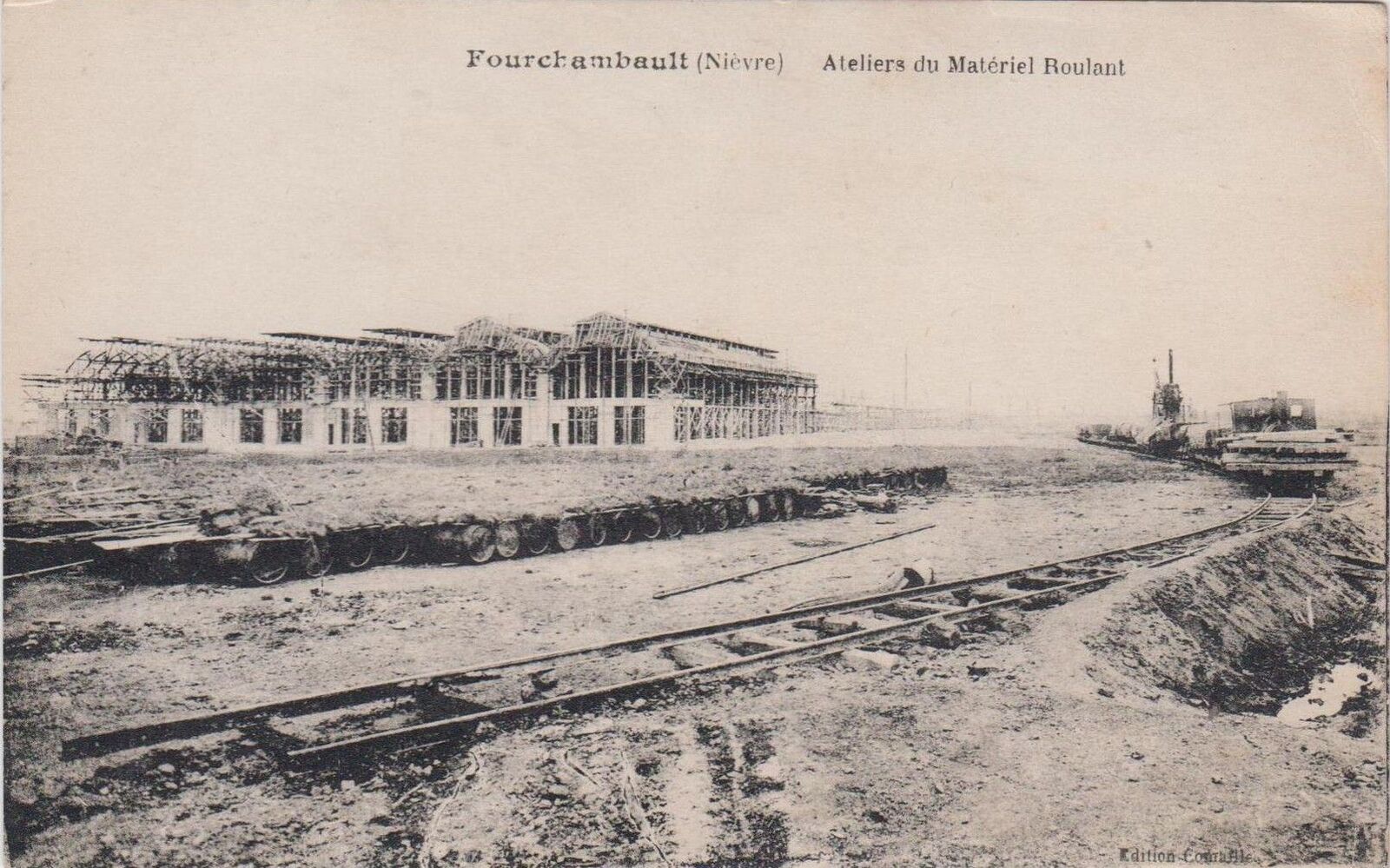
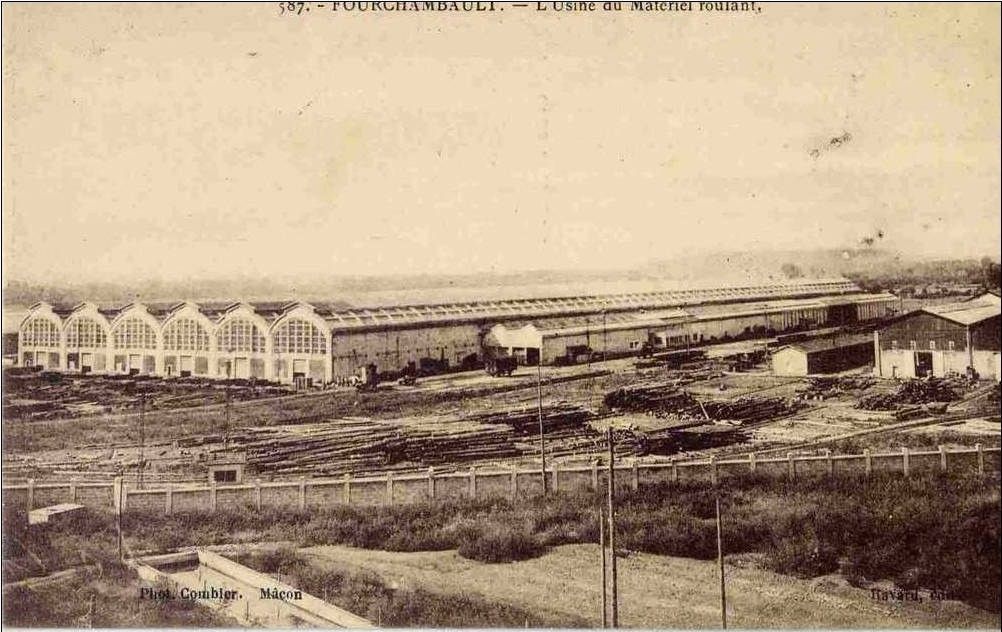
The camp in 1940 and 1941
The camp received the prisoners held at the temporary internment sites of Pouilly-sur-Loire and Saint-Saulge, a figure of about 8,000 men being quoted locally for the opening period; prisoners nicknamed it the Silesia camp. It was the largest prisoner of war camp in the Nièvre. The town of Fourchambault organised a municipal aid committee that became a departmental committee under the prefect, and Fourchambault and Nevers between them supplied some 600 kilograms of bread a day. In October 1940 a theatre troupe formed by prisoners was even allowed to perform in Nevers and Le Creusot.
Prisoners of European origin were moved to camps in Germany at the end of 1940 or early in 1941, after which the Frontstalags mainly held colonial soldiers. From the spring of 1941 the German authorities used the largely North African prisoners at Fourchambault for agricultural labour, and an agreement of November 1941 between Vichy and the occupation authorities allowed many of them to be released and sent home. Inhabitants of Fourchambault and Garchizy helped prisoners to escape across the nearby demarcation line, and the town received the Croix de Guerre for this in 1948, presented on 8 May 1949.
The German registers of the Frontstalags survive on microfilm at the Archives nationales. The roll covering the end of the Fourchambault register runs from matriculation number 5081 to the end of the series, followed by the beginning of the Dijon register. The inventory describes the registers; it does not give a total population, and the numbers cited by local historians should be read as approximate.
Figures quoted for Frontstalag 154
| Measure | Figure | Source scope |
|---|---|---|
| Prisoners transferred at opening, summer 1940 | about 8,000 | Local magazine account, 2020 |
| Bread supplied by Fourchambault and Nevers | 600 kg a day | Local magazine account, 2020 |
| Register roll 619Mi/33, Frontstalag 154 | matriculation numbers 5081 to end | Archives nationales inventory |
Ukrainian soldiers of the Polish Army
The history of the Ukrainian Greek Catholic eparchy in France lists, among the notable actions of the Ukrainian Catholic mission in Paris, pastoral work for Polish combatants of Ukrainian origin imprisoned by the Germans, with the possibility for priests to visit them. It gives Fourchambault near Nevers as its example, citing mission archive documents of 26 November and 31 December 1940. The mission history uses the word concentration camp; the facility was a prisoner of war camp under the German army. No figure for the Ukrainian prisoners is given, and none is offered here.
Sources for this section
Later use and remembrance
The site remained a military establishment after the war, and a mess building of the 1960s survives there. Since 2021 the Conservatoire du patrimoine automobile et militaire has occupied part of the ground, and in May 2024 a stele was unveiled there, with the Souvenir français of the Nièvre, commemorating the help given by the people of Fourchambault and Garchizy to the prisoners of Frontstalag 154. The former mess is being restored to house a research and archive centre for a planned museum.
Sources
- History of the Eparchy of Saint Volodymyr the Great in Paris
Ukrainian Greek Catholic Church in France (read via the Wayback Machine capture of 8 November 2025) · Accessed 2026
Section 7: pastoral action for Polish combatants of Ukrainian origin imprisoned by the Germans, example of Fourchambault near Nevers, mission documents of 26 November and 31 December 1940.
- Frontstalags 154 Fourchambault (end), 155 Dijon (beginning), 619Mi/33
Archives nationales, via FranceArchives · 1940–1945
Register inventory entry: Frontstalag 154, matriculation numbers 5081 to the end. Not a population count.
- Ancien mess à Garchizy dans la Nièvre
Fondation du patrimoine · Accessed 2026
Site history: 1916 wagon works, 1930 State acquisition, Frontstalag 154, stele of May 2024, Croix de Guerre, land now in Garchizy. Reproduces two early postcards of the works.
- Nevers Agglomération magazine, no. 11, July to September 2024, p. 22
Nevers Agglomération · 2024
Stele erected in May 2024 at the Conservatoire du patrimoine automobile et militaire in Garchizy for the prisoners of Frontstalag 154.
- GeoDaszner chronique la Nièvre: no. 154
Local history blog · 3 February 2018
Largest camp in the Nièvre, in the former Matériel roulant works; transfers to Germany, North African prisoners from spring 1941, November 1941 agreement, Croix de Guerre. Local secondary account.
- Le Frontstalag 154, le camp de prisonniers de guerre de Fourchambault
Koikispass, Nevers · 5 October 2020
Summer 1940 requisition, 8,000 prisoners from Pouilly-sur-Loire and Saint-Saulge, aid committee, bread supply, theatre troupe. Local magazine account.
Last researched 12 September 2026