Gauting DP Hospital
Displacement in Europe
Gauting · Germany · 1945–mid-1950s
Gauting was a hospital, not a residential camp: a former Luftwaffe barracks south-west of Munich where displaced people with tuberculosis were treated from 1945 into the mid-1950s. Ukrainians were among its patients, and a multilingual patient newspaper and a hospital radio station record how the institution was also a place where people lived.
Introduction
Gauting was a place of treatment for displaced people living with tuberculosis after war, forced labour and imprisonment. Ukrainians were among the patients in this international hospital south-west of Munich. The institution offered more than beds and medical care: patients created a newspaper, a radio service and cultural activities while recovery and an uncertain future shaped daily life. It should be kept distinct from the residential assembly centres: people came here because they were ill, and the figures it generates are counts of patients.
A history in dates
- 1938–1939The German air force builds a training barracks of 38 hectares, including a searchlight detachment.
- 1943The barracks are converted into a Luftwaffe hospital for soldiers with tuberculosis; capacity rises from 500 to 1,200 beds.
- 30 April 1945American forces enter Gauting without a fight; military patients are transferred and displaced patients take their place.
- August 194629 Ukrainians recorded in the UNRRA return for the DP hospital.
- 1947The patients’ newspaper Unser Leben begins.
- July–December 1947Gauting appears as IRO area team 1065 and as the seat of IRO Zone VI in the monthly reports held in Paris.
- December 194774 Ukrainians recorded in the PCIRO return.
- 19 August 1948Radio Gauting starts broadcasting as the sanatorium’s own station.
- 1951The Upper Bavarian state insurance institution takes over administration, with 746 displaced-person patients still present.
- 1954Radio Gauting passes a thousand broadcasts; a commemorative booklet is produced.
- 1 January 1999The clinic passes to the Asklepios group.
Sources for this section
- History of the Gauting lung clinic
- Gauting: postwar reconstruction
- Ukrainians in the Gauting DP Hospital
- Yury Boshyk and Boris Balan, Political Refugees and ‘Displaced Persons’, 1945–1954: A Selected Bibliography and Guide to Research
- Displaced persons: Gauting hospital photograph
- Researching the patients’ lives
From Luftwaffe barracks to a hospital
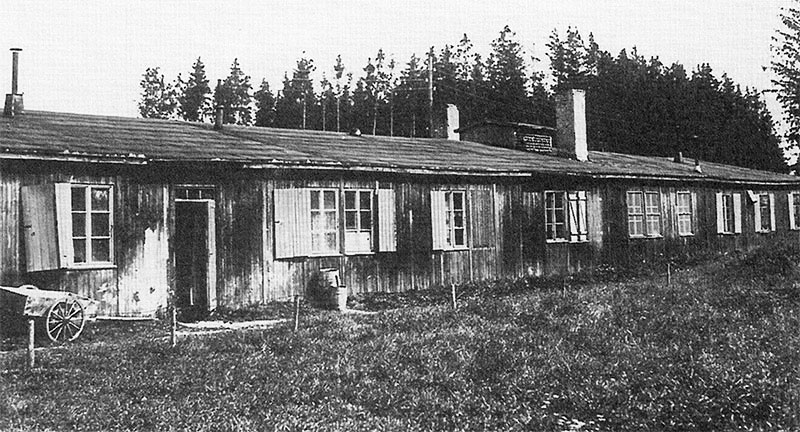
The German air force built a training barracks of 38 hectares on the site in 1938 and 1939, including a searchlight detachment. In 1943, during a search for a specialist clinic for lung disease, the barracks were converted into a Luftwaffe hospital for soldiers with tuberculosis, and capacity was raised in stages from 500 to 1,200 beds; satellite wards were opened in the Gauting elementary school and at Eibsee near Garmisch-Partenkirchen. American forces entered Gauting without a fight on 30 April 1945, after local members of the Freiheitsaktion Bayern offered the unconditional surrender of the town. The military patients were transferred to other hospitals and displaced people with tuberculosis began receiving treatment there.
The institution’s own measures
| Measure | Recorded figure | Scope |
|---|---|---|
| Site area | 38 hectares | Luftwaffe training barracks built 1938/39 |
| Beds | Raised in stages from 500 to 1,200 | Wartime Luftwaffe tuberculosis hospital capacity |
| Patients in the DP period | About 1,000, from more than twenty nationalities | Local research group’s estimate for the patient community, not a dated census |
| Deaths among patients | Almost 500 | Local research group; patients buried at Gauting |
| DP patients at the 1951 handover | 746 | Hospital’s own account, at the transfer to the LVA |
| Patient newspaper | 13 of 14 issues surviving, 1947–1948, in three languages | Local research group |
| Radio Gauting | More than 1,000 broadcasts by 1954 | Hospital’s own account; station opened 19 August 1948 |
A community of patients
The local historical research group describes approximately one thousand patients from more than twenty nationalities. At times around half were Jewish survivors of concentration camps. These estimates refer to the wider hospital community; the smaller Ukrainian figures below measure a particular nationality within it.
Recovery was not assured. The same research documents almost five hundred deaths among the patients, many of whom had already endured severe persecution, and the research group compiled lists of the Jewish and non-Jewish dead, who were buried at Gauting. The Bavarian state history project separately records graves of 224 foreign workers and 85 Jewish dead in the Gauting cemetery, in a specially allotted plot, and describes the oldest Holocaust memorial on German soil as standing in the village. Those cemetery counts cover the war years generally and are not a tally of hospital patients.
Newspapers, radio and ordinary routines
The patients’ publication Unser Leben appeared in 1947–1948 in three languages. The historical research group documented thirteen of its fourteen issues, together with a commemorative booklet marking the thousandth broadcast of Radio Gauting in 1954. Its existence records patients participating in the life of the institution, rather than appearing only as subjects of medical administration.
Radio Gauting began broadcasting as the sanatorium’s own station on 19 August 1948 and by 1954 had reached more than a thousand programmes. A cinema showed films including Gone with the Wind and Quo Vadis, and a Jewish prayer room occupied part of the B building. A vehicle hall, a laundry, a nursery garden and the keeping of pigs and sheep supported partial self-sufficiency on the large grounds. The site was guarded first by American soldiers, then by the displaced persons’ own police, and finally by the hospital’s own staff.
Sources for this section
Ukrainian patients in the records
Published population returns identify 29 Ukrainians in August 1946, 66 in May 1947 and 74 in December 1947. Stebelsky’s table, which lists Gauting explicitly as a DP hospital among the assembly centres of the American zone, leaves the 1946–47 questionnaire column blank for it. These returns establish a continuing Ukrainian presence in a specialist medical institution.
Ukrainians recorded at Gauting DP Hospital
| Return | Ukrainians |
|---|---|
| 1946–47 (questionnaire returns) | not listed |
| August 1946 (UNRRA) | 29 |
| May 1947 (UNRRA) | 66 |
| December 1947 (PCIRO) | 74 |
Sources for this section
An IRO centre in its own right
Gauting was more than a treated population. The guide to displaced-persons research compiled by Boshyk and Balan shows it as the seat of an International Refugee Organisation zone office: monthly reports for Zone VI (Gauting) survive in the IRO papers at the Archives Nationales in Paris, and Gauting also appears as area team 1065 in the series of monthly reports for July to December 1947, alongside Regensburg, Augsburg, Kempten, Mittenwald and Munich.
Continuing care after IRO
In 1951 the Upper Bavarian state insurance institution took over administration from the International Refugee Organisation, which was itself wound up in 1952. The hospital’s own account records that 746 displaced-person patients were still in the institution at the handover, and that training workshops in trades such as machine building and electrical engineering were set up to support their longer-term integration. Displaced patients continued to be associated with the clinic into the mid-1950s. The transfer therefore marks a change in administration rather than a day on which every patient left.
The site remains a lung clinic, passing to the Asklepios group on 1 January 1999. Its own historical presentation and a memorial plaque on the grounds draw on the research of Walter Fürnrohr and Felix Muschialik, whose 2005 study of the DP hospital reproduces the patient newspaper in facsimile. Together they preserve a medical chapter of displacement that differs from the residential camps and emigration centres.
Sources
- History of the Gauting lung clinic
Asklepios Lungenklinik Gauting · Accessed September 2026
Full page read 13 September 2026: 38-hectare Luftwaffe training barracks of 1938/39 with a searchlight detachment; 1943 conversion and capacity raised from 500 to 1,200 beds; US entry on 30 April 1945; Jewish prayer room in the B building; vehicle hall, laundry, nursery garden and livestock; Radio Gauting from 19 August 1948 and over a thousand broadcasts by 1954; cinema; guarding by US soldiers, then DP police, then hospital staff; 1951 handover to the LVA with 746 DP patients and new training workshops; IRO dissolved 1952; transfer to Asklepios on 1 January 1999. Based on Fürnrohr and Muschialik (2005). Introductory paragraph: “das Leben der Displaced Persons (DPs), die von 1945 bis Mitte der 50er Jahre auf dem Gelände des heutigen Klinikums in Gauting Zuflucht fanden”.
- Gauting: postwar reconstruction
Haus der Bayerischen Geschichte · Accessed September 2026
Entry read in full 13 September 2026: institutional chronology of the DP hospital, satellite wards in the Gauting elementary school and at Eibsee, patient newspaper from 1947 and Radio Gauting from 1948; cemetery graves of 224 foreign workers and 85 Jewish dead; the oldest Holocaust memorial on German soil. Bibliography includes the 2005 Fürnrohr and Muschialik study with facsimiles of the patient newspaper. The cemetery figures cover the war years generally and are not a count of hospital patients.
- Researching the patients’ lives
Gesellschaft für Archäologie und Geschichte, Oberes Würmtal · 7 January 2005
Research group’s report read in full 13 September 2026: roughly 1,000 patients from more than twenty nationalities, at times about half of them Jewish concentration-camp survivors; almost 500 deaths, with lists of the Jewish and non-Jewish dead compiled; the trilingual patient magazine Unser Leben, thirteen of fourteen issues surviving; a commemorative booklet for the thousandth Radio Gauting broadcast in 1954. These figures refer to the broader historical patient community.
- Ukrainians in the Gauting DP Hospital
Canadian Institute of Ukrainian Studies Press · 1992
Stebelsky, Table 7, printed pages 47–51, re-read 13 September 2026. The row reads ‘Gauting (DP Hospital)’ with the 1946–47 column blank and 29 in August 1946, 66 in May 1947 and 74 in December 1947. Column sources: UNRRA summaries of 24 August 1946 and 31 May 1947 and the PCIRO summary of 2 January 1948.
- Displaced persons: Gauting hospital photograph
Historisches Lexikon Bayerns / Juliane Wetzel · Accessed September 2026
Caption identifies Gauting DP barracks in the late 1940s; photograph credited to Asklepios Fachkliniken München-Gauting. Identifies 1951 transfer to LVA.
- Yury Boshyk and Boris Balan, Political Refugees and ‘Displaced Persons’, 1945–1954: A Selected Bibliography and Guide to Research
Canadian Institute of Ukrainian Studies, University of Alberta, Research Report No. 2 · 1982
Inventory of IRO records in the Archives Nationales, Paris: ‘Zone VI (Gauting). AJ 43 772. Rapports mensuels’, and Gauting as area team 1065 in the monthly reports of July to December 1947 at AJ 43 774. The files have not been consulted.
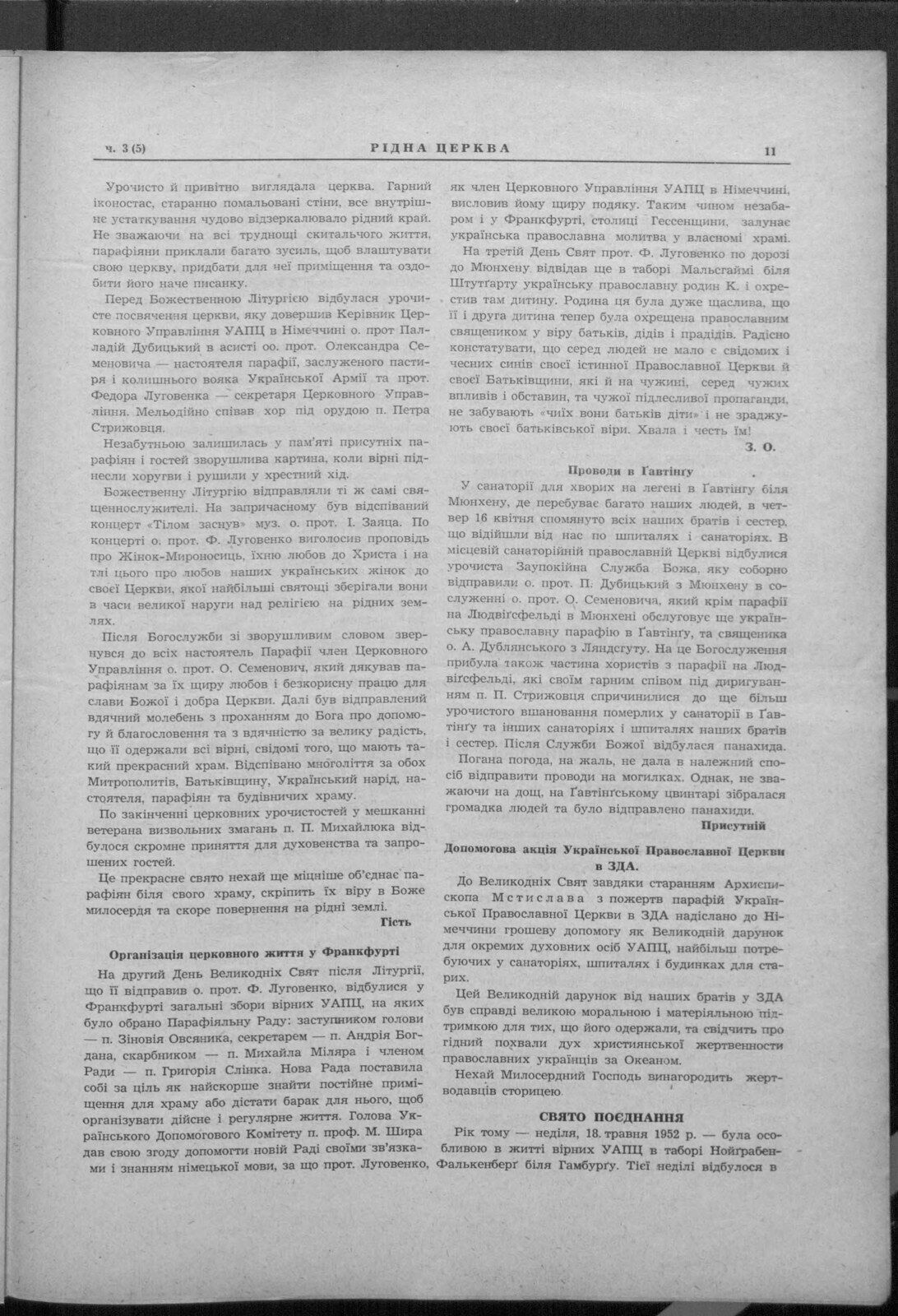
- Проводи в Ґавтінґу (Memorial services at Gauting), Рідна Церква, number 3 (5), page 11
Ridna tserkva, organ of the Church Administration of the Ukrainian Autocephalous Orthodox Church, Munich; digitised in the Ukrainian Museum-Archives of Cleveland Displaced Persons Camp Periodicals Collection with the United States Holocaust Memorial Museum · 1953
Page report of the requiem liturgy held on Thursday 16 April in the Orthodox church inside the Gauting lung sanatorium for all who had died in the hospitals and sanatoria, and of the panakhyda said afterwards in the rain at the Gauting cemetery. The digitised item is marked by the holding libraries as public domain or an orphan work and is offered on the Internet Archive under a Creative Commons Attribution-NonCommercial-NoDerivatives 4.0 licence; the page is reproduced whole and unaltered.
Last researched 13 September 2026