Kaiser-Wilhelm-Kaserne
Displacement in Europe
Mannheim · Germany · From 1945
A barracks in Mannheim’s Neckarstadt became a relief centre on 30 March 1945 and housed more than 5,000 former forced labourers and deportees, mostly from eastern Europe. Ukrainian residents resisted a forced return transport in September 1945, and Latvian families used the address to search for missing relatives.
Introduction
Kaiser-Wilhelm-Kaserne in Mannheim became an early centre for displaced people after American troops entered the city. Its history includes both organised returns home and resistance to forced repatriation. Ukrainian and Latvian residents are documented at the barracks, later known as Turley Barracks. The surviving protected buildings now form part of a civilian neighbourhood.
A history in dates
- 1899–1901Kaiser-Wilhelm-Kaserne is constructed for 1,080 soldiers, with fourteen main buildings and a parade ground.
- 1914–1918Huts on the parade ground hold prisoners of war, mostly French and Russian, in a camp laid out for more than 23,500 men.
- 1936The Wehrmacht returns to the barracks after years of civilian use.
- 30 March 1945A displaced persons centre is established at the barracks.
- 6 September 1945A Ukrainian protest wins a four-day postponement of a return transport.
- 17 October 1945The camp inventory dates the opening of its entry for the DP camp.
- 1945–1946The city archive records more than 5,000 former forced labourers and deportees accommodated at the barracks.
- 17 March 1946A Latvian newspaper uses the barracks as a family-tracing address.
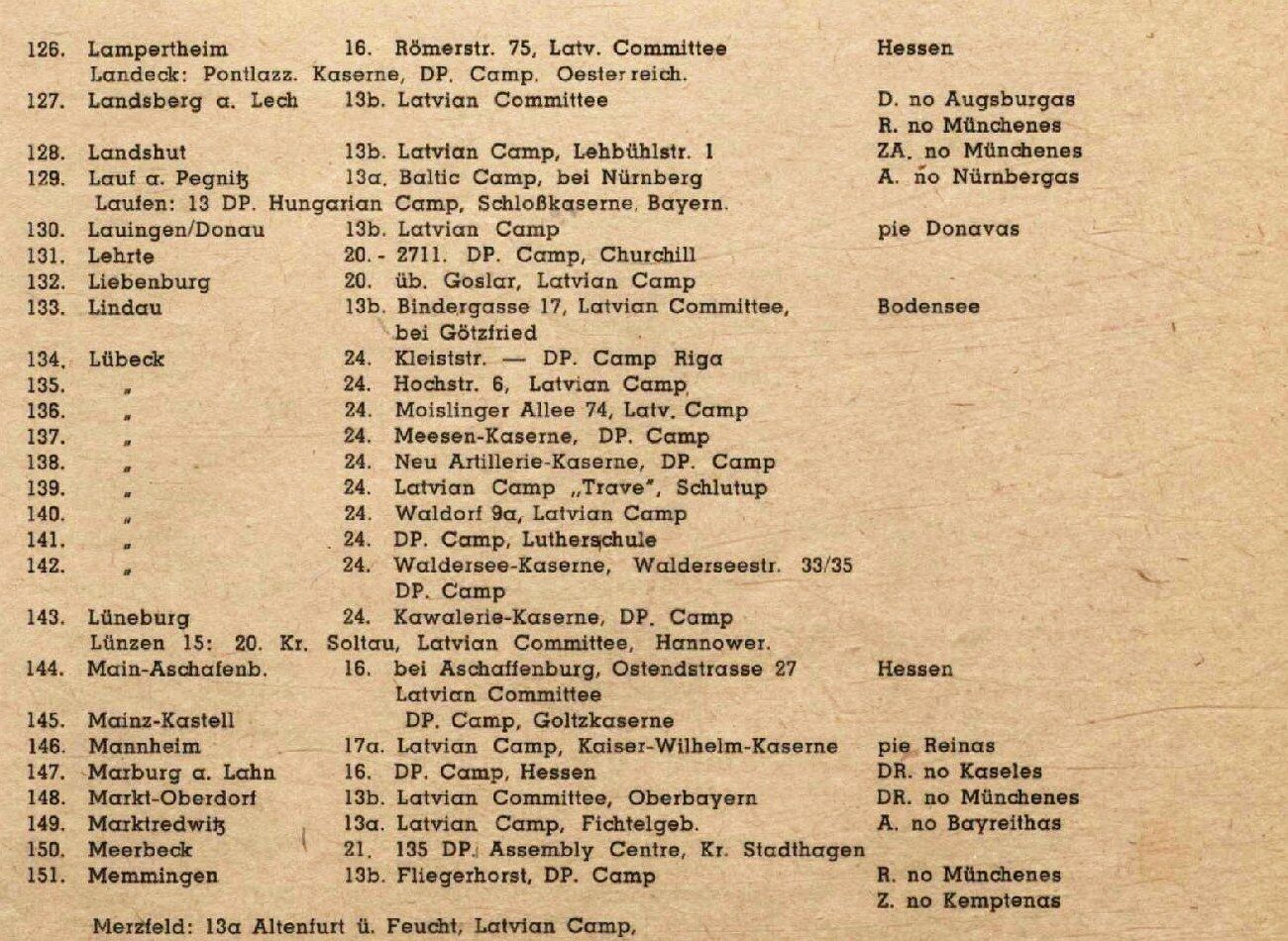
- 1 May 1946A Latvian camp list records the Latvian camp at Kaiser-Wilhelm-Kaserne, postal district 17a, as its entry number 146.
- 31 May 1947An UNRRA return counts 576 Ukrainians in Mannheim as a whole.
- 1948City historical research reports 960 displaced people still at the barracks.
- 2012The municipal development company buys the former military site.
Sources for this section
- Turley-Areal environmental report
- Mannheimer Stadtpunkte 142: Neckarstadt-Ost, Turley Barracks
- MÆMORIES: Displaced Persons
- Vom Zwangsarbeiter zum Heimatlosen Ausländer
- DP camp inventory: Kaiser Wilhelm Kaserne, entry 1203
- Tēvzeme, no. 19
- Latviešu nometnes Vācijā (Latvian camps in Germany), Mūsu Pagasts, numbers 1–2
- Ukrainians in the Displaced Persons Camps of Austria and Germany, Table 8
A barracks becomes a relief centre
The compound was built between 1899 and 1901 on open ground at the eastern edge of the Neckarstadt, a generous layout for 1,080 soldiers with fourteen main buildings and a parade ground. Before the First World War it held the two infantry battalions of the 2nd Baden Grenadier Regiment Kaiser Wilhelm I No. 110, known locally as the 110ers. During that war, emergency huts on the parade ground housed prisoners of war, mostly French and Russian; the camp was laid out for more than 23,500 men and had its own church, a library and numerous workshops. After the demilitarisation imposed in 1919 the barracks were used mainly for civilian housing, and the Wehrmacht only returned in 1936.
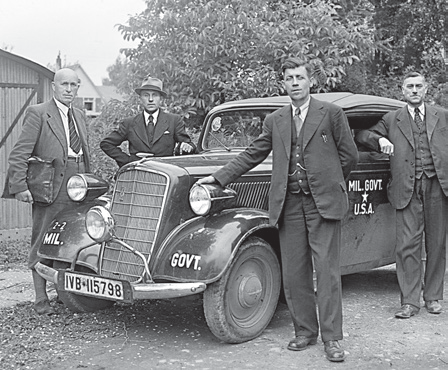
The American authorities established a centre there on 30 March 1945 for displaced people from Mannheim and northern Baden. At the end of the war the city contained at least 20,000 displaced people, predominantly eastern European forced labourers, and about 19,000 were still in Mannheim in 1946. Those are citywide estimates, not the barracks population. The city archive’s own information panel states that in 1945 and 1946 the barracks accommodated more than 5,000 forced labourers and deportees of the Nazi regime, mainly from eastern Europe, which is a figure for this site.
The centre’s early task was to provide accommodation and organise departures in a damaged city. Returning people to their countries required transport and supplies on a large scale, and as many as 2,000 people a day were sent home. Relief arrangements also had to serve those who remained, including people unwilling to return to Soviet rule. The barracks were not the only such accommodation in Mannheim: the city archive names the Lüttich-Kaserne on Ulmenweg among the collective quarters, and the camp inventory records further entries at Neckarstadt, Käfertal, Sandhofen and a technical school.
A privately compiled garrison list names the units quartered in the barracks during the Second World War: the staff and I. Battalion of Artillerie-Regiment 69, together with a medical detachment and a Wehrmacht welfare officer. The list covers the military years only.
Names and institutions
| Name | Meaning |
|---|---|
| Kaiser-Wilhelm-Kaserne | Historical barracks and DP camp location |
| AC 694 / AC 695 | Assembly-centre identifiers in the DP inventory |
| Turley Barracks | Later American military name, after Sergeant Samuel J. Turley |
| Turley-Areal | Present civilian redevelopment |
| Lüttich-Kaserne, Ulmenweg | A different Mannheim site used for collective accommodation |
| Latvian DP camp, AC 94-462 | A separate Mannheim camp of 1947 to 1949, capacity 1,200 |
Sources for this section
- Mannheimer Stadtpunkte 142: Neckarstadt-Ost, Turley Barracks
- MÆMORIES: Displaced Persons
- Turley-Areal environmental report
- 1939–1955: Migration während des Zweiten Weltkriegs und in der Nachkriegszeit
- Vom Zwangsarbeiter zum Heimatlosen Ausländer
- DP camp inventory: Kaiser Wilhelm Kaserne, entry 1203
- Standort Mannheim
The September 1945 crisis
On 6 September 1945, 600 Soviet Ukrainian displaced people at Kaiser-Wilhelm-Kaserne resisted a planned return transport. An archival study by Wolfgang Jacobmeyer describes physical resistance and threats of suicide. American officers postponed the departure for four days. UNRRA observers recorded intense relief at this short reprieve.
This episode shows why departure cannot always be treated as a willing homecoming. For the people involved, even a delay mattered. The source establishes the protest and postponement; it does not provide a complete account of what happened to every member of that group afterwards.
Sources for this section
A mixed camp and a search for relatives
By March 1946, Latvian tracing notices used the address Mannheim DP Camp, Latvian Group, Kaiser-Wilhelm-Kaserne. These small newspaper entries connect the barracks to the practical effort to locate missing relatives after wartime separation. A Latvian camp list dated 1 May 1946 records the camp as entry number 146, “Mannheim 17a. Latvian Camp, Kaiser-Wilhelm-Kaserne pie Reinas”, placing the Latvian camp at the barracks in postal district 17a on the Rhine. The camp inventory separately records Latvian and Ukrainian residents under assembly-centre identifiers 694 and 695, with no capacity figure. A distinct Latvian camp with a capacity of 1,200 was opened elsewhere in Mannheim in February 1947 and ran until January 1949; it is a different entry and its figures do not apply here.
Team 23 at Mannheim under the director recorded as Tomasek and, from November 1946, Area Team 1001 appear in the administrative record. The inventory dates reflect a shorter organisational entry than the whole centre’s history: the city’s historical publication still reports 960 displaced people in the barracks in 1948. The difference is why an inventory closing range is not used here as proof that everyone had left.
How many of the residents were Ukrainian is not recorded for the barracks. Stebelsky’s tabulation of Ukrainians in American-zone camps gives Mannheim 560 in the questionnaire returns collected during 1946 and 1947 and 576 in the UNRRA return of 31 May 1947, with nothing in the two other columns. That row names the town and covers every Mannheim camp, so it cannot be read as a count for this building. Nothing has been traced about a Ukrainian school, church or association at the barracks, and that gap is real rather than a matter of unread sources.
Figures with different meanings
| Figure | What it describes |
|---|---|
| At least 20,000 | Displaced people across Mannheim at war’s end |
| About 19,000 | Displaced people across Mannheim in 1946 |
| More than 5,000 | Former forced labourers and deportees at the barracks in 1945 and 1946 |
| 600 | Soviet Ukrainians involved in the September 1945 transport crisis |
| 960 | Displaced people reported at the barracks in 1948 |
Ukrainians recorded at Mannheim
| Source and date | Scope | Figure |
|---|---|---|
| Central Representation questionnaires, 1946–1947 | Mannheim locality, all camps | 560 |
| UNRRA return, 24 August 1946 | Mannheim locality | no entry |
| UNRRA return, 31 May 1947 | Mannheim locality, all camps | 576 |
| PCIRO return, 2 January 1948 | Mannheim locality | no entry |
The surviving site
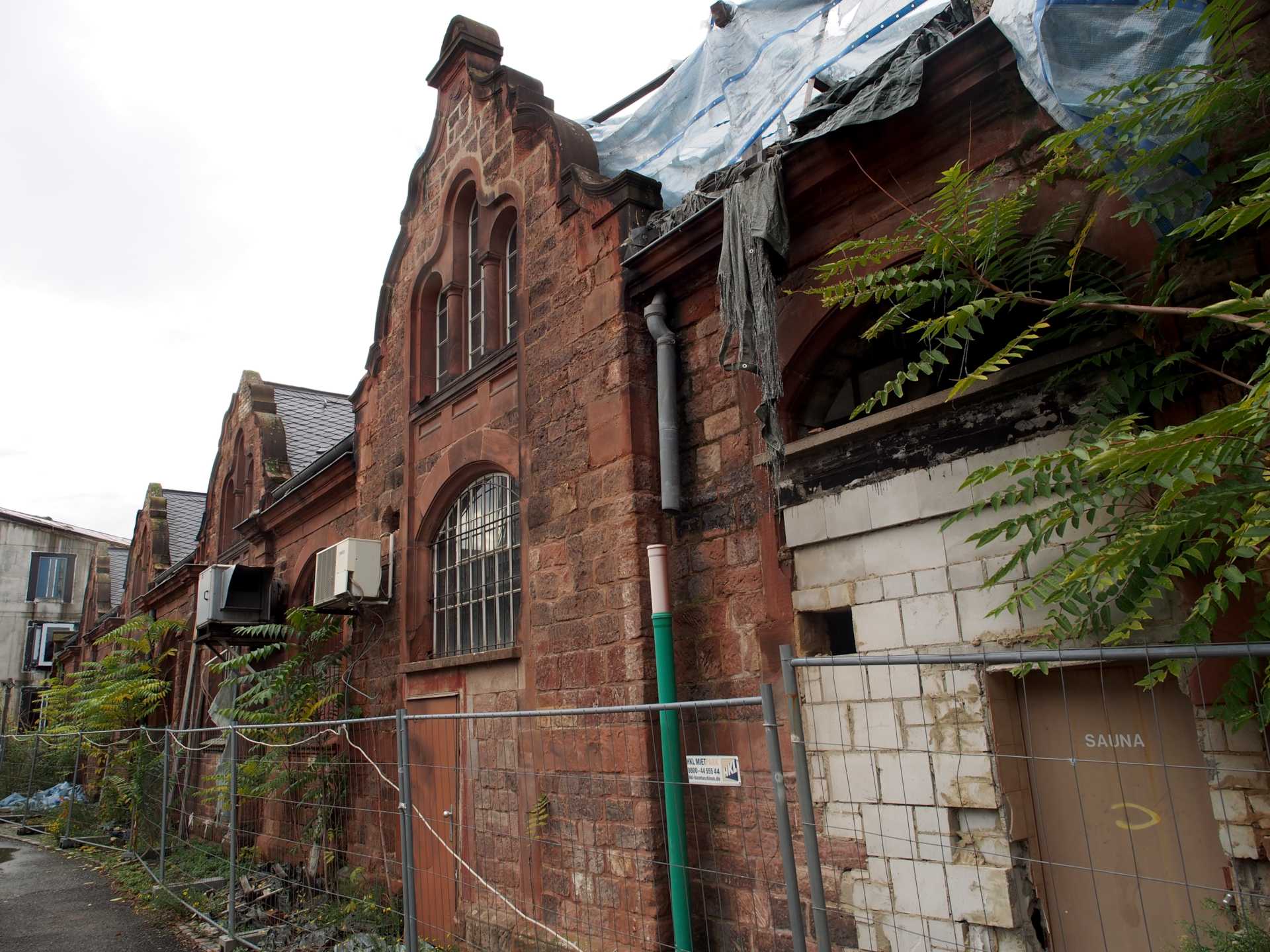
The United States Army named the barracks after Sergeant Samuel J. Turley, killed near Metz in 1944, and the city archive counts Turley Barracks among Mannheim’s important American installations from 1947 to 2007. The private University of Maryland ran its European campus there from 1994. The site was handed back in 2007 and purchased by Mannheim’s development company in 2012.
Its redevelopment combines housing, work and community uses around the protected historic barracks and tree-lined courtyard, across a planning area of 12.6 hectares. This surviving urban setting makes the camp’s location identifiable even though its purpose has changed completely.
Sources
- MÆMORIES: Displaced Persons
MWSP / MARCHIVUM · June 2021
Page 17 and image credits on page 50: centre established on 30 March 1945; 960 displaced people in 1948. Photograph GP00514-014, Polizeipräsidium Mannheim, 1946. The caption identifies a DP camp but does not name its premises.
- Vom Zwangsarbeiter zum Heimatlosen Ausländer
Wolfgang Jacobmeyer / Vandenhoeck & Ruprecht · 1985
Page 132: 600 Soviet Ukrainians at Kaiser-Wilhelm-Kaserne on 6 September 1945; their protest delayed a transport by four days. An UNRRA observation is cited in note 31.
- DP camp inventory: Kaiser Wilhelm Kaserne, entry 1203
Arolsen Archives · 26 October 2023
Row 1203: Latvian and Ukrainian residents, AC 694 and 695, Team 23 Mannheim under Tomasek, Area Team 1001, no capacity recorded, ITS documents 82012235–82012608. The opening of 17 October 1945 and closing range of December 1946 to February 1947 do not encompass the full centre history documented by city research. Rows 1204 to 1208 record the other Mannheim entries.
- Tēvzeme, no. 19
Latvian National Library / original newspaper · 17 March 1946
Original issue opened in full. Tracing notices give Mannheim DP Camp Latvian Group, Kaiser-Wilhelm-Kaserne. No resident names reproduced.
- Turley-Areal environmental report
City of Mannheim · 18 December 2013
Municipal planning report, page 7: construction in 1899–1901, protected buildings and location, handover in 2007 and municipal purchase in 2012.
- Turley Barracks
City of Mannheim · Current planning page
The historic Kaiser-Wilhelm compound remains at the centre of a redevelopment for housing, workplaces and community uses. The planning area covers 12.6 hectares.
- Mannheimer Stadtpunkte 142: Neckarstadt-Ost, Turley Barracks
MARCHIVUM, Mannheim city archive · May 2019
Public information panel: 1,080 soldiers, fourteen main buildings and a parade ground; the 110th Grenadier Regiment; the First World War prisoner camp for more than 23,500 men with its church, library and workshops; civilian use after 1919 and the Wehrmacht’s return in 1936; more than 5,000 forced labourers and deportees accommodated in 1945 and 1946; the naming after Sergeant Samuel J. Turley and the American years 1947 to 2007.
- 1939–1955: Migration während des Zweiten Weltkriegs und in der Nachkriegszeit
MARCHIVUM research blog · Accessed 13 September 2026
About 19,000 displaced people in Mannheim in 1946, housed chiefly in camps and collective quarters such as the Lüttich-Kaserne on Ulmenweg; friction with local residents over black markets and requisitioned rooms.
- Ukrainians in the Displaced Persons Camps of Austria and Germany, Table 8
Ihor Stebelsky, Ukrainskyi Istoryk 3 · 1986
PDF page 56, printed page 54. Row “Mannheim”: 560 in the 1946–1947 questionnaire returns and 576 in the UNRRA return of 31 May 1947, blank in the August 1946 and January 1948 columns. A locality row covering all camps in the city.
- Latviešu nometnes Vācijā (Latvian camps in Germany), Mūsu Pagasts, numbers 1–2
Mūsu Pagasts, 1 May 1946; facsimile and English translation reproduced by latvians.com · 1 May 1946
Facsimile sheet 4 of 6, list item (169), entry number 146: “Mannheim 17a. Latvian Camp, Kaiser-Wilhelm-Kaserne pie Reinas” — a Latvian camp at the barracks, in postal district 17a, on the Rhine. No residents are named.
- Standort Mannheim
Lexikon der Wehrmacht · Accessed 14 September 2026
Garrison list for Mannheim read: the Kaiser-Wilhelm-Kaserne quartered the staff and I. Battalion of Artillerie-Regiment 69, a medical detachment and a Wehrmacht welfare officer. A privately compiled list; it says nothing about the barracks after 1945.
Last researched 13 September 2026