Mühlberg-Kaserne
Displacement in Europe
Ellwangen, Baden-Württemberg, Germany · 1946–1951
Mühlberg-Kaserne in Ellwangen became a Ukrainian displaced persons community in 1946, registered as assembly centre 709 with a capacity of 2,800. Its residents turned barracks and nearby houses into homes, schools, workshops, churches and a hospital, and their 1947 anniversary almanac records that first year in detail.
Introduction
Mühlberg-Kaserne in Ellwangen became a Ukrainian displaced persons community in 1946. Its residents turned barracks and nearby houses into homes, schools, workshops, churches and a hospital. Their 1947 anniversary almanac records the first year in detail, including photographs of children, medical workers and craftspeople.
Sources for this section
A history in dates
- 2 January 1914 to 1 October 1916Barracks built for the Württemberg non-commissioned officers’ preparatory institute.
- 1921–1923State police and a police school section occupied the barracks.
- 1923–1934Buildings housed an orphanage.
- August 1933SS units moved in; large extension buildings followed in 1935 and 1936.
- 1941A Dachau external work detail at the SS barracks employed about 35 prisoners on construction work.
- 23 April 1945Waffen-SS troops left and American forces occupied the barracks, opening a military hospital.
- 26 February 1946Advance party arrived from Mannheim to organise the Ukrainian camp.
- 9 April 1946Primary and gymnasium teaching began.
- 20 August 1946The camp inventory’s opening date for assembly centre 709.
- 25 August 1946Sokil sports ground opened.
- 1 January 1947Published age table recorded 3,257 residents.
- 26 February 1947First screening decision affected 435 residents.
- 31 October 1947The camp inventory records a capacity of 2,800.
- 30 June 1948A Ukrainian relief committee lists Ellwangen DP Camp No. 709 among its main camps in the American zone.
- Between 30 September 1950 and 31 March 1951The camp inventory closes the record; the municipal history places the end of Ukrainian accommodation in 1951.
- September 1955The Americans handed the barracks to the federal property office at Aalen.
- 23 July 1956First Bundeswehr unit entered the barracks.
Sources for this section
- Ellwangen/Rainau conversion report, 14 August 2014
- Mühlberg-Kaserne Ellwangen
- Außenlager und Außenkommandos des KZ Dachau; and Ellwangen local research on the barracks
- One Year in Ukrainian DP Camp Ellwangen, 1947: chronicle
- One Year in Ukrainian DP Camp Ellwangen: education
- DP camp inventory: Mühlberg-Kaserne, Ellwangen
- One Year in Ukrainian DP Camp Ellwangen: women, sport and workshops
- One Year in Ukrainian DP Camp Ellwangen: buildings and residents
- Report of the United Ukrainian American Relief Committee
Before the displaced persons camp
Construction began in 1914 and finished in 1916, according to Ellwangen’s municipal conversion history. Originally a military preparatory school, the complex later housed police and, from 1923 to 1934, an orphanage. Military use resumed under the Nazi regime, with army and SS units occupying the expanded site. An American military hospital operated there briefly after the war.
A garrison history gives the same phases in more detail. Building of the school for the Württemberg non-commissioned officers’ preparatory institute began on 2 January 1914 and was completed on 1 October 1916. Cadet training continued until 1920, when the Versailles treaty closed it. State police and a police school section followed, and the Württemberg Protestant provincial orphanage then used the buildings until about 1933. The political readiness formation of the SS moved in from August 1933 and became a battalion of the 1st SS-Standarte Munich in October 1934; extensive additional buildings went up immediately beside the barracks in 1935 and 1936. During the war the barracks could not hold the units sent there, so further buildings in the town were requisitioned and huts were put up at the Goldrain.
The memorial list of Dachau subcamps and external work details records an Ellwangen external detail at the SS barracks in 1941, with about 35 prisoners employed on construction work. Local research dates a Dachau satellite on the barracks site from July 1941 to October 1942 and describes its prisoners as mainly political and protective-custody detainees, almost all German nationals.
Waffen-SS troops left on 23 April 1945 and American forces occupied the barracks until the spring of 1946, setting up a military hospital there. The same account places a camp for Polish displaced people not in the barracks but in the Buchenberg school, and that distinction matters: the Ukrainian community described below was the barracks’ first displaced-persons population.
Uses of the site before and after the camp
| Period | Use |
|---|---|
| 2 January 1914 to 1 October 1916 | Built as the Württemberg non-commissioned officers’ preparatory institute |
| To 1920 | Cadet training, closed under the Versailles treaty |
| 1921–1923 | State police and police school section |
| To about 1933 | Württemberg Protestant provincial orphanage |
| August 1933 to April 1945 | SS units; extension buildings in 1935 and 1936 |
| 1941 | Dachau external work detail at the SS barracks, about 35 prisoners on construction work |
| 23 April 1945 to spring 1946 | American occupation and military hospital |
| 1946 to 1950 or 1951 | Ukrainian displaced persons camp, assembly centre 709 |
| From 1951 | American engineer and medical units; handover to the federal property office in September 1955 |
| From 23 July 1956 | Bundeswehr; later consolidated as Reinhardt-Kaserne |
| From 2015 | State initial reception centre for refugees on the Hungerberg part of the site |
Arriving from Mannheim
About 30 organisers left Mannheim on 26 February 1946 to prepare the new camp. Their chronicle recalls hot food and field beds for the first night’s arrivals. Further transports followed; by 10 March it reports 2,440 people. American soldiers initially still occupied the second block.
Sources for this section
The camp in the administrative record
The Arolsen Archives camp inventory records the Mühlberg-Kaserne at Ellwangen-Jagst in the district of Aalen as a Ukrainian camp with a capacity of 2,800 at the reporting date of 31 October 1947. It carried assembly centre number 709, later WG 222, and was served by UNRRA Team 524 Ellwangen. Its opening field reads 20 August 1946 and its closing is given as an interval between 30 September 1950 and 31 March 1951.
The inventory’s opening date is almost six months later than the chronicle’s first arrivals of 26 February 1946, and the two are left standing side by side rather than reconciled. The assembly-centre number can now be matched: the United Ukrainian American Relief Committee’s report of 30 June 1948 lists Elwangen (Jaget) DP Camp No. 709 among the main Ukrainian camps in the American zone, which ties number 709 to this town in a contemporary Ukrainian source.
The camp inventory entry
| Field | Recorded value |
|---|---|
| Building and place | Mühlberg-Kaserne, Ellwangen-Jagst, district of Aalen |
| Nationality | Ukrainian |
| Assembly centre | AC 709, later WG 222 |
| UNRRA team | T 524 Ellwangen |
| Capacity at 31 October 1947 | 2,800 |
| Opening field | 20 August 1946 |
| Closing | Between 30 September 1950 and 31 March 1951 |
| Archive reference | ITS Dok-ID 81976583–81976902 |
Rooms, families and neighbours
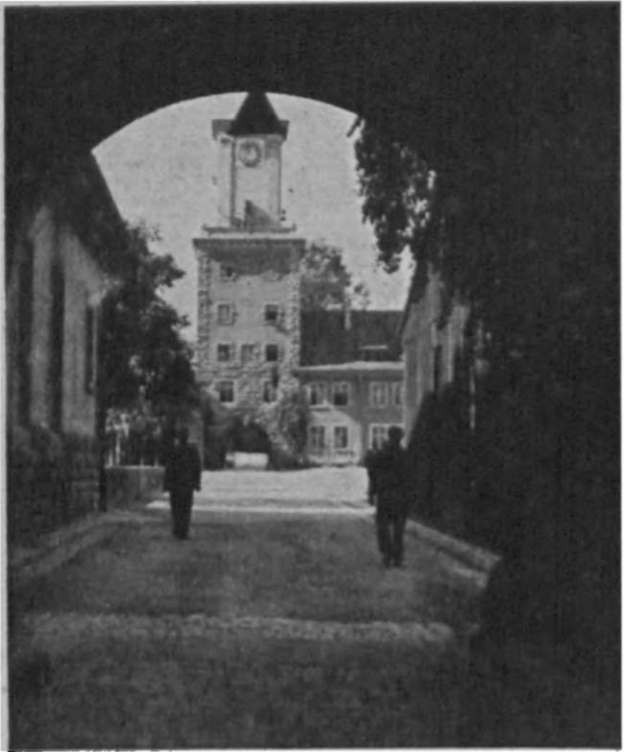
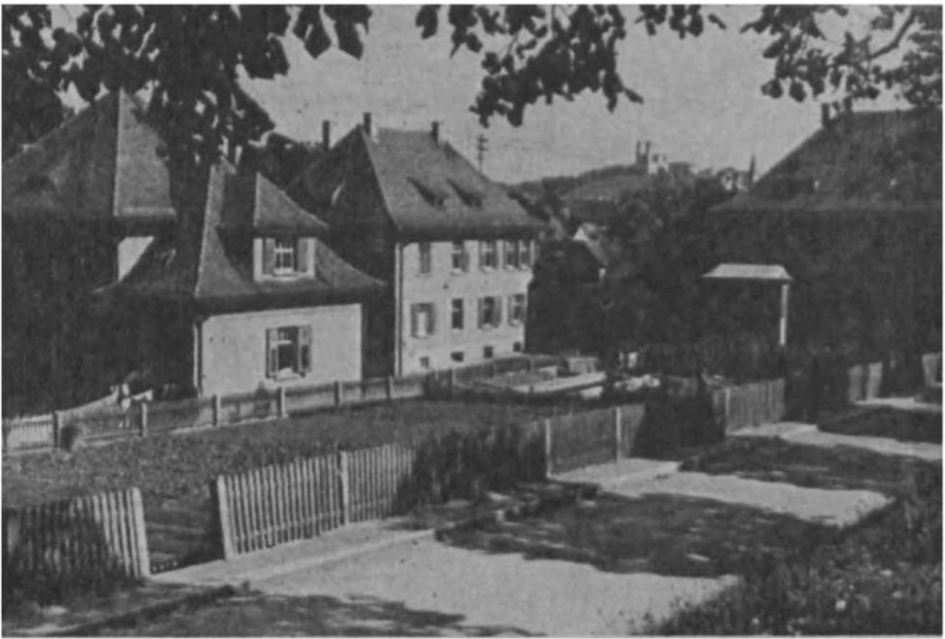
The almanac identifies the premises explicitly as Mühlbergkaserne. Most residents occupied two main blocks. Families also shared rooms and kitchens in ten houses along Hohenstaufenstraße. Smaller buildings accommodated the administration, hospital, school and kindergarten; pressure on space brought former workshops into residential use.
Sources for this section
The community in numbers
The almanac’s age table, dated 1 January 1947, records 3,257 people. It includes adults, school-age children and 378 children under six. This is a snapshot of the community before the screening decisions described later in the anniversary chronicle.
Three separate returns compiled by Ihor Stebelsky count Ukrainians rather than residents: 2,330 from questionnaires collected during 1946 and 1947, 2,329 in the UNRRA summary of 31 May 1947 and 2,177 in the PCIRO summary of 2 January 1948. They sit below the almanac’s own total and below the registered capacity of 2,800, and they are a different measure taken by different bodies on different dates.
Residents by age, 1 January 1947
| Group | People |
|---|---|
| Men over 20 | 1668 |
| Women over 20 | 970 |
| Young people 14–20 | 113 |
| Children 6–14 | 128 |
| Children under 6 | 378 |
| Total | 3257 |
Ukrainian population in dated returns
| Return | Ukrainians |
|---|---|
| Questionnaires collected during 1946 and 1947 | 2,330 |
| UNRRA summary, 31 May 1947 | 2,329 |
| PCIRO summary, 2 January 1948 | 2,177 |
A school day in the barracks
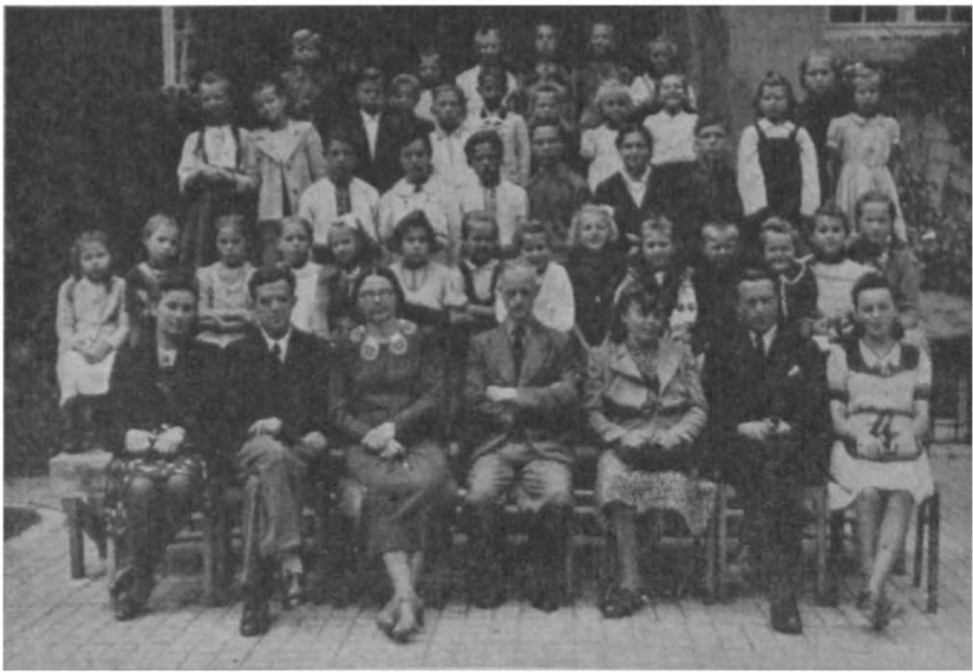
Primary-school teaching began on 9 April 1946. The 1946–47 report records 126 primary pupils. The gymnasium moved from a difficult wooden hut to heated rooms, sharing its building with primary classes, a nursing course and adult literacy teaching at different times of day.
Education in the 1946–47 school year
| Institution | Recorded pupils | Scope |
|---|---|---|
| Primary school | 126 | First half of 1946–47 |
| Gymnasium | 98 | 104 enrolled; 6 had left |
| Gymnasium boarding house | 34 | Boarders, not additional enrolment |
Sources for this section
Medical care and support
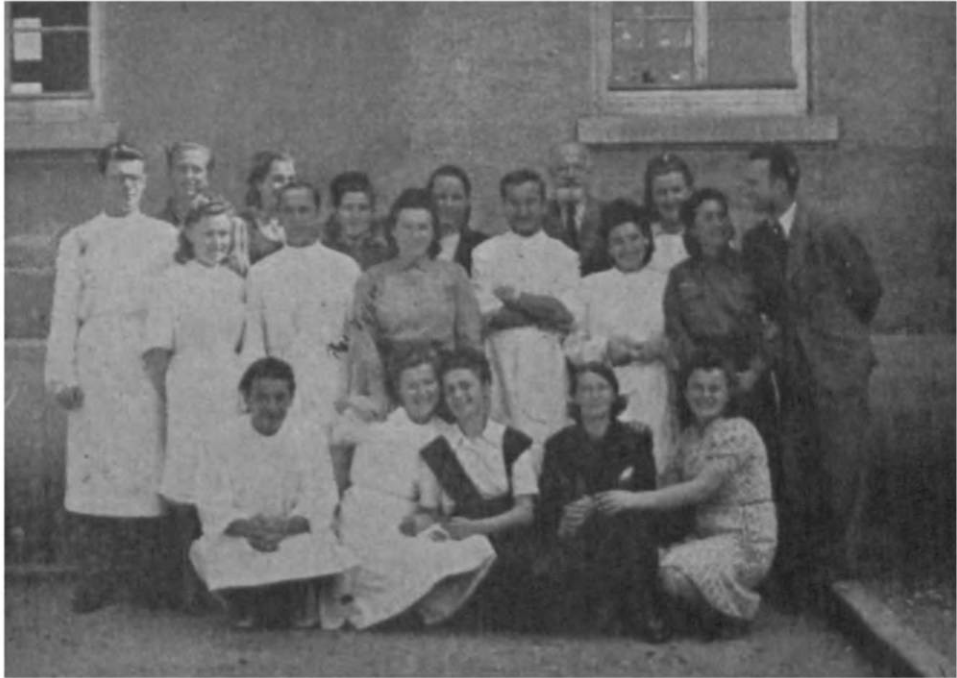
Ukrainian clinicians ran the camp hospital and outpatient services. Child health received particular attention through a children’s kitchen and mother-and-child consultations. Women needing maternity facilities were referred to a German hospital. The women’s organisation also arranged a shared Christmas supper for more than 500 people living alone.
Making and repairing
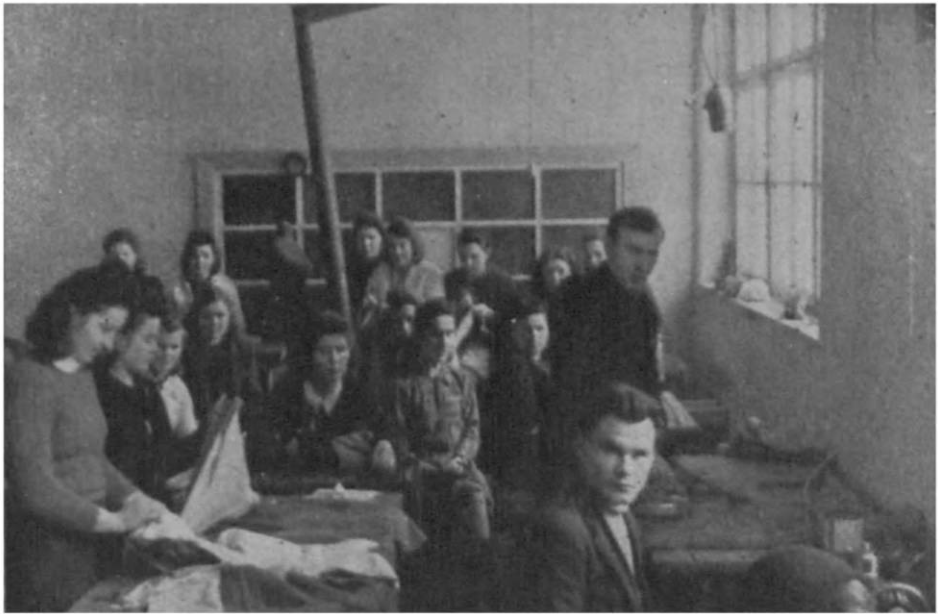
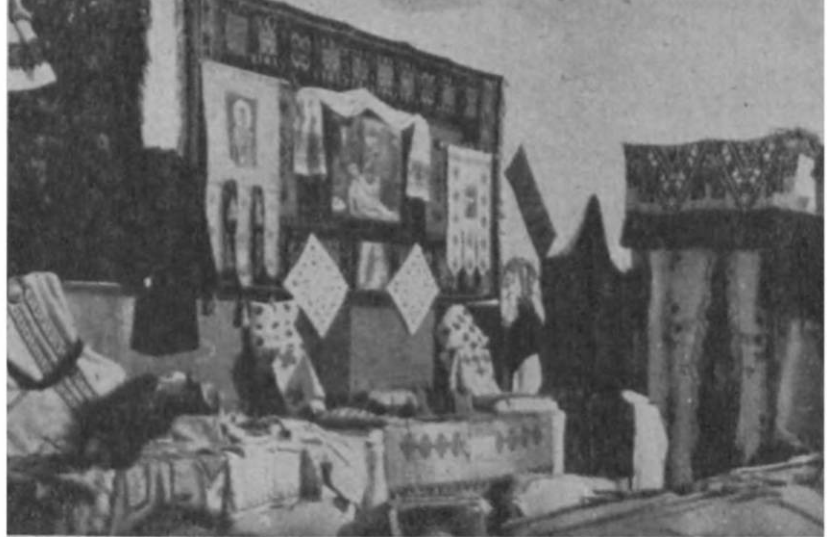
Workshops supplied the practical things a crowded community needed. Tailors made hospital clothing, school and workshop coats, scout uniforms and theatre costumes. The photographed sewing workshop employed 30 women. Knitting and embroidery workshops served residents and outside orders, while a display presented Ukrainian handiwork to visitors.
Sources for this section
Churches, performance and sport
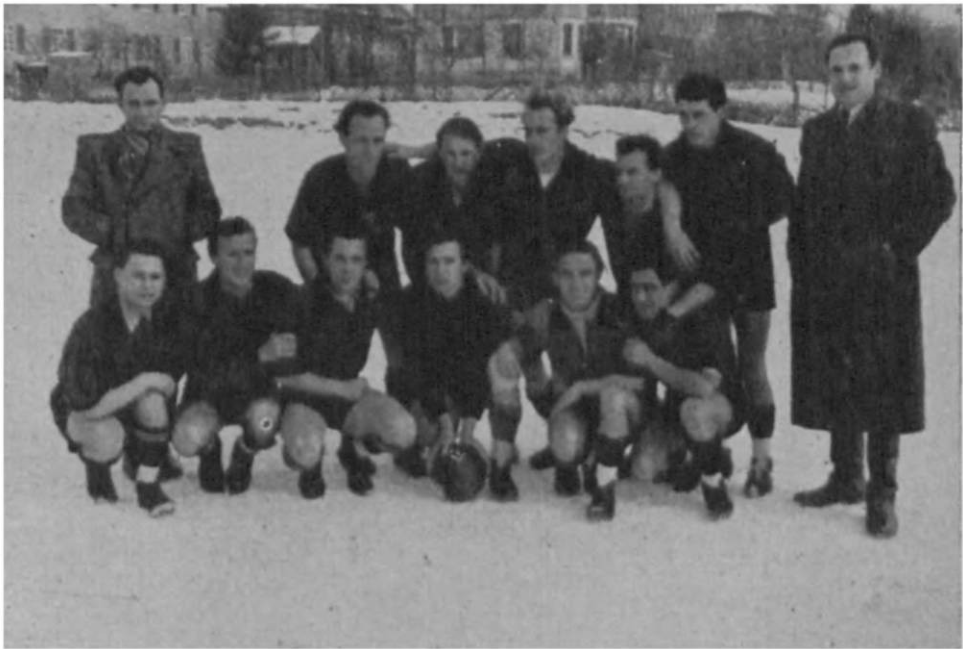
Catholic and Orthodox churches, a theatre, commercial and music schools, and youth organisations formed part of Ellwangen’s Ukrainian community. The Sokil sports society developed its own ground, opened on 25 August 1946. Its football team appears in the almanac, alongside school and workshop photographs.
Screening and later use
On 26 February 1947 the camp chronicle reports an initial screening decision depriving 435 residents of DP status and the right to remain. This was a profound disruption to a community marking its first anniversary. Ukrainian accommodation continued beyond that event: the municipal history places it in 1946–1951, followed by renewed American military use. The Bundeswehr entered the barracks on 23 July 1956.
The garrison history fills in the sequence after the camp. American engineer and medical units moved back into the barracks in 1951 and double housing blocks were built on the grounds. The Americans handed the barracks to the federal property office at Aalen in September 1955, and when the Bundeswehr moved in on 23 July 1956 Ellwangen became the first Bundeswehr garrison town in Baden-Württemberg. The site was later consolidated under the name Reinhardt-Kaserne, the last uniformed units were disbanded on 30 June 2014 with the federal language centre remaining as a civilian establishment, and since 2015 the enlarged grounds on the Hungerberg have housed the state initial reception centre for refugees in Baden-Württemberg.
Two cautions follow the name. Hungerberg is a later extension area of the same barracks and not a separate camp. Lager Mühlberg, a prisoner-of-war camp and later a Soviet special camp on the Elbe in Brandenburg and Saxony, is an entirely different place and has no connection with this site.
Sources for this section
Sources
- Ellwangen/Rainau conversion report, 14 August 2014
City of Ellwangen / municipal conversion planning · 14 August 2014
Printed 39: barracks phases, 1914–16 construction, 1923–34 orphanage, 1946–51 Ukrainian accommodation and 1956 Bundeswehr.
- One Year in Ukrainian DP Camp Ellwangen, 1947: chronicle
Ukrainian camp community at Ellwangen · 1947
Edited by M. Kushnir. Printed 8–12 (PDF 9–13), original scans visually read: 26 February 1946 advance party, 10 March 2440 people, 26 February 1947 first screening decisions.
- One Year in Ukrainian DP Camp Ellwangen: buildings and residents
Ukrainian camp community at Ellwangen · 1947
Printed 17–18 (PDF 18–19), visually read. Explicit identification as Mühlbergkaserne; population age table dated 1 January 1947. Accommodation total 3126 differs from age total 3257 and individual accommodation rows total 3125; only coherent age table reproduced.
- One Year in Ukrainian DP Camp Ellwangen: medical services
Ukrainian camp community at Ellwangen · 1947
Printed 13–16 (PDF 14–17); original hospital and medical-staff photographs on 14–15. Children’s kitchen, clinical services and German-hospital maternity referrals.
- One Year in Ukrainian DP Camp Ellwangen: education
Ukrainian camp community at Ellwangen · 1947
Printed 27–32 (PDF 28–33); original school photograph 27; 126 primary pupils and 98 gymnasium students, differing report scopes.
- One Year in Ukrainian DP Camp Ellwangen: women, sport and workshops
Ukrainian camp community at Ellwangen · 1947
Printed 50–53, 60–67; PDF 49–52, 59–66. Original scans inspected for course and community supper, 25 August 1946 sports ground opening, sewing workshop and exhibition photographs.
- R. V. Rudenko, Ellwangen, Encyclopedia of Modern Ukraine (2009)
Encyclopedia of Modern Ukraine · 2009
Institutional encyclopedia describes Ukrainian camp institutions and 1946–50 period; municipal report extends accommodation to 1951. No single exact closure date asserted.
- The Refugee Experience: Ukrainian Displaced Persons after World War II
Canadian Institute of Ukrainian Studies Press · 1992
Stebelsky chapter. In this 1992 book the Ellwangen figures are Table 7, printed page 47: “Ellwangen (Mühlberg Kaserne) 2,330 | – | 2,329 | 2,177”, three Ukrainian population returns for Ellwangen Mühlberg-Kaserne. Beware two printings of the same chapter with different table numbers: in the earlier 1986 Ukrainskyi Istoryk printing the American-zone table is Table 8, printed page 54, and it is there that the Ellwangen row and its column scopes were re-read visually on 13 September 2026.
- Mühlberg-Kaserne Ellwangen
Lexikon der Wehrmacht · Accessed 13 September 2026
German garrison history read in full: construction from 2 January 1914 to 1 October 1916, cadets to 1920, police 1921–23, Protestant provincial orphanage to about 1933, SS from August 1933 with extensions in 1935 and 1936, requisitioned buildings and huts at the Goldrain during the war, American occupation from 23 April 1945 with a military hospital, and the handover to the federal property office in September 1955. Its statement that the IRO took over the barracks in 1946 is retrospective and its figure of about 3,000 Ukrainians is undated; neither is used in place of dated returns. Its Polish camp is located in the Buchenberg school, not in the barracks.
- Außenlager und Außenkommandos des KZ Dachau; and Ellwangen local research on the barracks
Haus der Bayerischen Geschichte with the Dachau memorial; and Aktion Bleiberecht · Accessed 13 September 2026
Memorial list entry read verbatim: Ellwangen, Außenkommando SS-Kaserne, 1941, about 35 prisoners, construction work. The local article dates a Dachau satellite on the site from July 1941 to October 1942, describes its prisoners, places outer camps of Natzweiler-Struthof in the town, and records the state reception centre on the Hungerberg from 2015.
- DP camp inventory: Mühlberg-Kaserne, Ellwangen
Arolsen Archives · 26 October 2023
Entry 889 read from the spreadsheet on 13 September 2026: Ukrainian camp, opening field 20 August 1946, closing between 30 September 1950 and 31 March 1951, capacity 2,800 at the 31 October 1947 reporting date, assembly centre AC 709 and later WG 222, UNRRA Team 524 Ellwangen. Archive reference ITS Dok-ID 81976583–81976902.
- Report of the United Ukrainian American Relief Committee
United Ukrainian American Relief Committee · 30 June 1948
Printed p. 18 lists Elwangen (Jaget) DP Camp No. 709 among the main camps in the US zone, read from the project’s cached transcription of the scan. This resolves the identifier question left open by the earlier review of this page.
- Site names and identity controls for the Ellwangen barracks
Project identity note, with the municipal site plan and the Reinhardt-Kaserne name record · 13 September 2026
Alias list Mühlberg-Kaserne, Ellwangen Kaserne and Hungerberg-Kaserne taken from the project’s cached retrieval; the undated municipal site plan divides the present Reinhardt-Kaserne into the Mühlberg, technical and Hungerberg areas and is not a map of the camp. Lager Mühlberg on the Elbe, a prisoner-of-war camp and later Soviet special camp, is a different place and was excluded.
Last researched 13 September 2026