Spittal Camp
Displacement in Europe
Lagerstraße, Spittal an der Drau, Carinthia, Austria · 1945–1962
A large refugee community grew in the barracks of a wartime prisoner-of-war camp along today’s Lagerstraße, with schools, workshops, three chapels and a busy Slovenian press. Ukrainians lived among its many national groups as emigration and new housing gradually emptied the huts.
Introduction
Spittal Camp occupied the eastern part of a former wartime camp complex along what is now Lagerstraße. The British authorities took it over on 15 May 1945. After the departure of liberated prisoners, its huts became homes for displaced families who could not or would not return to their countries of origin.
Because it was in good condition the camp counted as a first-class camp. It was designated M Assembly Centre and later R Assembly Centre, and was worked by UNRRA team 330. Its capacity was 2,000 until the autumn of 1945 and was then raised to 5,000. The site covered 150,650 square metres, of which 21,865 were built on. There were 29 barracks at the outset, 18 of them used for living space, and more were added later.
A history in dates
- 1938The compound is built to quarter Spittal’s soldiers; after the war begins it becomes a prisoner-of-war camp.
- Autumn 1942Part of the camp is converted into a hospital for prisoners of war with about 1,200 beds.
- 15 May 1945British authorities take over the former camp complex.
- 16 May 1945A first count records 2,640 people on the site.
- November 1945UNRRA takes over administration; the parish chronicle dates the handover to 1 January 1946.
- 14 August 1946The Slovenian newspaper Taboriščnik begins publication at Spittal.
- June 1947UNRRA’s work ends and the British run the camp, with IRO support from November 1947.
- December 1949Responsibility for the camp passes to Austria.
- 30 June 1950An IRO return records 114 Ukrainians.
- 1954A breakdown of the camp population records 67 Ukrainians among about 900 residents.
- 1955New housing begins to replace the old barracks, funded by UNREF, Austrian sources and the refugees themselves.
- 1959The camp hospital is closed.
- 31 March 1962The refugee camp formally closes.
- 1979The last surviving barrack is demolished.
The camp before 1945
The compound was built in 1938 to quarter Spittal’s own soldiers and became a prisoner-of-war camp after the war began, one part for civilians and one for military prisoners. French officers were held there first; later it was given over entirely to Soviet prisoners, more than 11,000 of them at times, and from the autumn of 1942 that part became a hospital for prisoners of war with about 1,200 beds. The civilian internees came mainly from Britain, France and the United States. The town’s own chronicle records only that a prisoner-of-war camp was built in the east of the city and that its barracks shaped Spittal’s appearance long after 1945.
A compiled list of German Second World War prisoner-of-war and internment camps records five designations at Spittal an der Drau within Military District XVIII (Salzburg): the officers’ camp Oflag XVIII C from October 1939 to March 1941, Stalag XVIII B from March 1941 to October 1942, Stalag XVIII A/Z until September 1944, the internment camp Ilag XVIII from September 1944 to 1945, and Stalag 327 in 1945. The list is a secondary compilation that gives no primary references, says nothing about how the designations related to one another on the ground, and does not connect them to the postwar camp on Lagerstraße.
Wartime camp designations at Spittal an der Drau in one compiled list
| Designation | Dates given |
|---|---|
| Oflag XVIII C | October 1939 to March 1941 |
| Stalag XVIII B | March 1941 to October 1942 |
| Stalag XVIII A/Z | Until September 1944 |
| Ilag XVIII | September 1944 to 1945 |
| Stalag 327 | 1945 |
Sources for this section
Many communities in one camp
Slovenians formed the largest national group, alongside Croatians, Serbians, ethnic Germans, Hungarians, Ukrainians and Russians. Their separate languages and political experiences shaped everyday life and could also produce tensions. Schools taught Slovenian, Hungarian and Croatian children in their own languages.
An IRO return records 114 Ukrainians at Spittal on 30 June 1950. This is a Ukrainian population count, not the total number of people in the camp. It places a smaller Ukrainian community within a much larger settlement whose surviving educational and cultural records often concern its Slovenian residents.
A 1954 breakdown quoted from Gabriela Stieber’s work puts 345 Slovenians, 183 ethnic Germans, 131 Hungarians, 124 Croatians, 67 Ukrainians and 45 Russians in the camp alongside other nationalities. The compiled register of Austrian camps gives the same year in rounded figures, with 70 Ukrainians. Even after the camp was opened to more nationalities more than half of the residents were still of Yugoslav origin.
Nationalities recorded in 1954
| Group as recorded | People |
|---|---|
| Slovenians | 345 |
| Ethnic Germans | 183 |
| Hungarians | 131 |
| Croatians | 124 |
| Ukrainians | 67 |
| Russians | 45 |
Changing hands
The camp was British from May to November 1945. Responsibility then passed to UNRRA, although the parish chronicle of Spittal dates the handover to 1 January 1946 and the thesis that reports both cannot settle the difference. UNRRA’s work ended in June 1947, after which the British ran the camp with the IRO supporting it from November 1947, and in December 1949 responsibility passed to Austria. A British camp director remained above the Austrian camp manager, who was appointed by the provincial government.
Arrivals were deloused and medically examined, assigned quarters and issued with blankets and clothing, then registered on a set of forms: an index card, a registration sheet printed in eighteen languages, an English version of it, and a German form covering name, nationality, date and place of birth, occupation, religion and marital status. The German forms for the Spittal camp are kept in the town archive and can be consulted there.
Residents had a voice of their own. The camp committee was chosen once a year by secret ballot open to everyone aged twenty-one who had lived in the camp for at least six months, with one place for every hundred residents. Its members passed on complaints, helped draw up the weekly menu and advised the manager on who was housed where.
Recorded population of the camp
| Date | People | Source of the figure |
|---|---|---|
| 16 May 1945 | 2,640 | Stieber, quoted in the Susnik thesis |
| 26 June 1945 | 1,159 | Stieber, quoted in the thesis |
| 1 January 1946 | 2,300 | Parish chronicle of Spittal an der Drau |
| April 1946 | 3,303 | Stieber, quoted in the thesis |
| July 1946 | 3,304 | Parish chronicle |
| November 1945 – June 1947 | 3,600 average | Stieber, quoted in the thesis |
| Early 1948 | 3,500 | Parish chronicle |
| Early 1950 | 1,786 | Stieber, quoted in the thesis |
| September 1953 | 1,000 | Stieber, quoted in the thesis |
| March 1954 | about 900 | Stieber, quoted in the thesis |
| April 1958 | 400 | Stieber, quoted in the thesis |
| 1960 | about 250 | Carinthian camp list |
| 1961 | about 50 | Carinthian camp list |
| 1962 | about 30 | Carinthian camp list |
Sources for this section
Making the huts habitable
Residents initially divided shared rooms with paper or blankets. Kitchens, dining halls, workshops, a hospital, a pharmacy and a theatre served the compound. Catholic, Protestant and Orthodox worship spaces reflected its mixed population. Children received separate meals so that food donated for them reached its intended recipients.
Religion mattered enough for three separate spaces: a Catholic church with two altars, a prayer room for Protestants and an Orthodox chapel. Alongside the kitchens and dining halls there were stores, a theatre hall, a detention hut, garages and workshops, offices, a pharmacy, a camp hospital and a cemetery. A tuberculosis department was built up at Spittal and later moved to Seebach. Minimum standards set from May 1948 allowed each resident 4.2 square metres where 1.5 to 2 had been usual at the start.
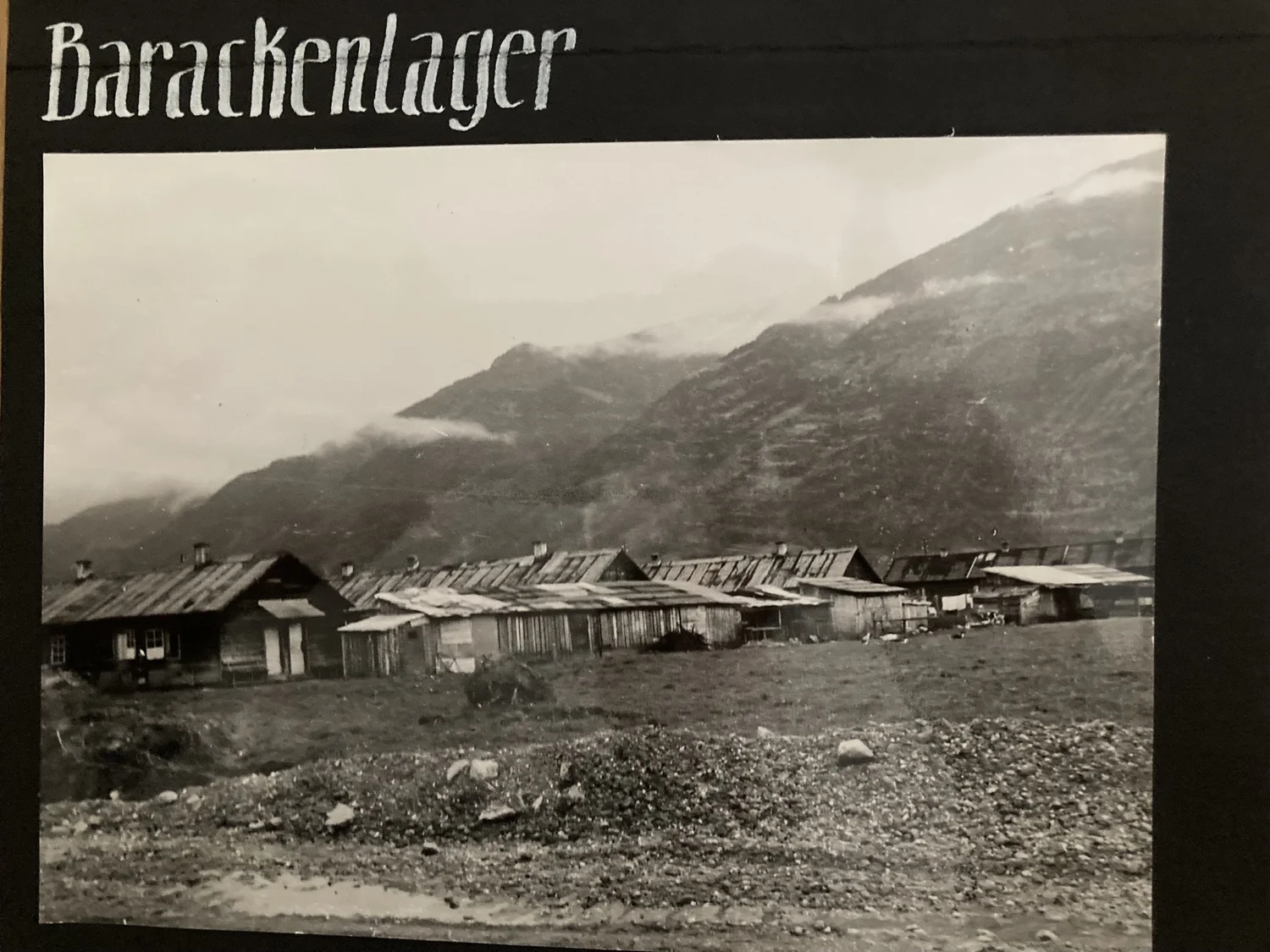
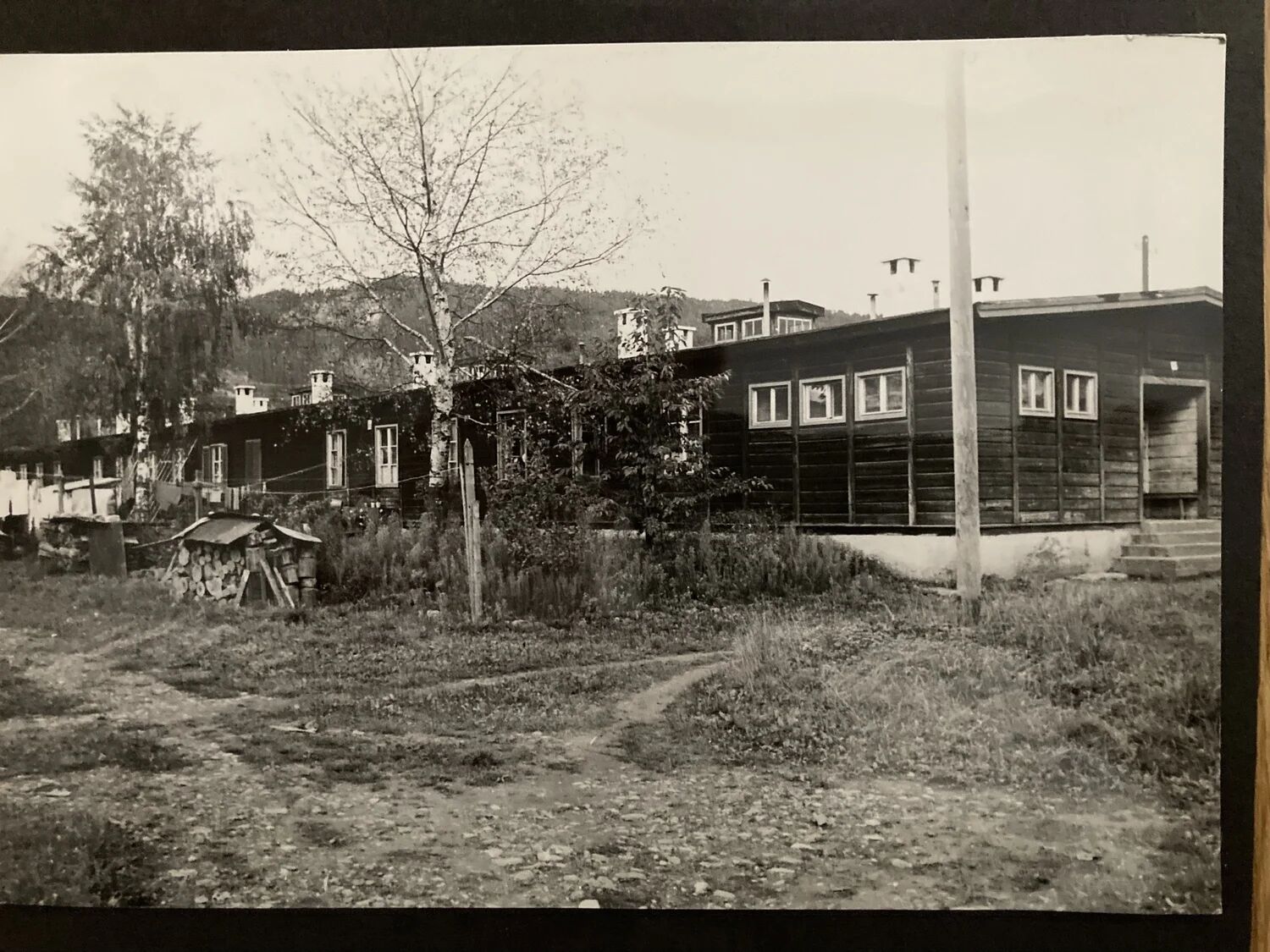
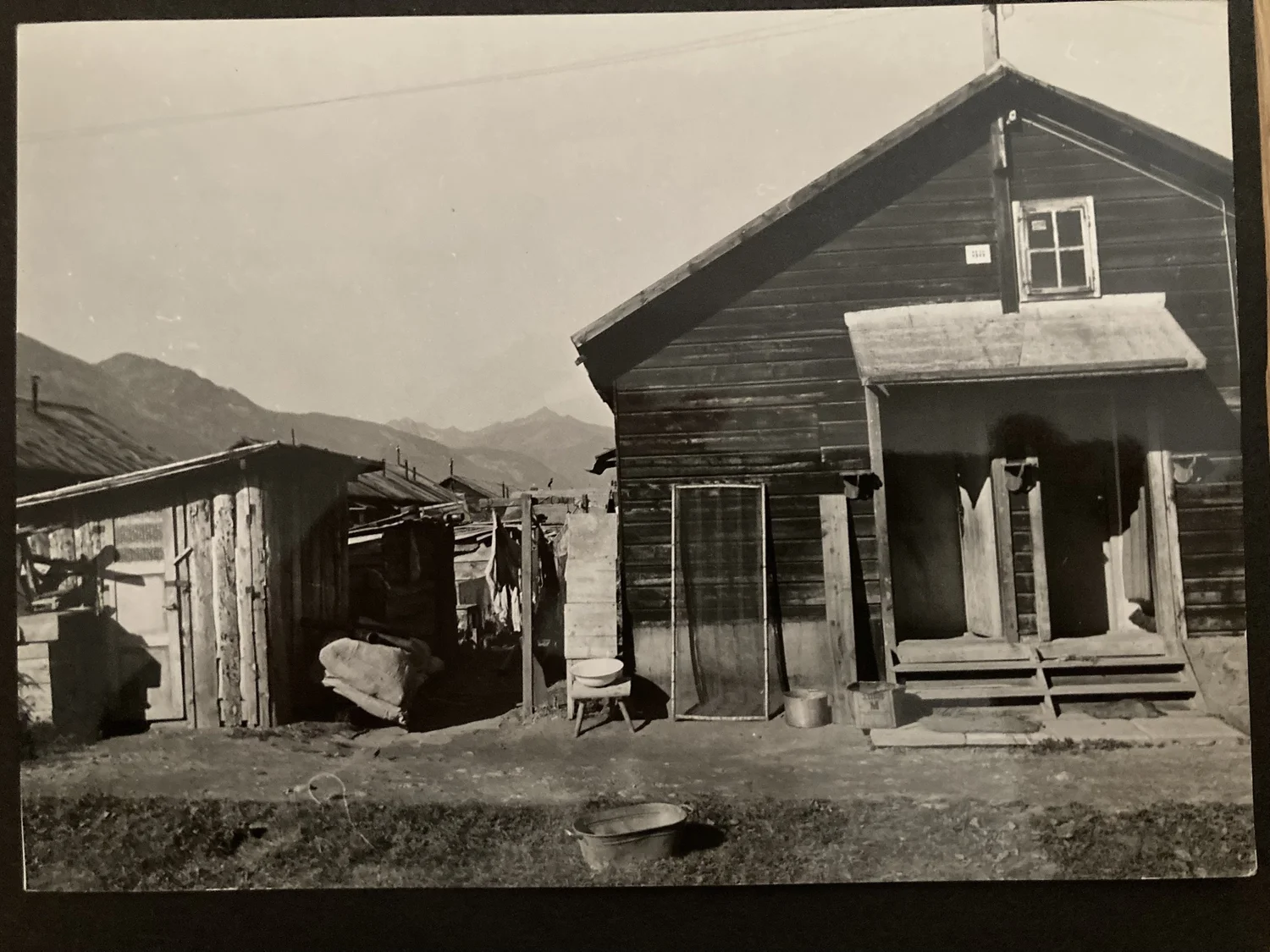
The surviving photographs show both patched timber huts and buildings improved with raised foundations, windows and entrances. Woodpiles, sheds and small planted areas reveal the adaptations made around the accommodation. The archive images record the actual Spittal settlement; their precise dates are not supplied.
School and vocational preparation
Schooling and occupational training ran alongside the search for a permanent home. By autumn 1948 young people could learn trades including shoemaking, carpentry, motor mechanics, tailoring and welding. English lessons supported plans to emigrate. Camp schools faced difficulties securing recognition for their certificates when students sought to enter Austrian institutions.
There were three kindergarten groups and separate schools by nationality, teaching in the children’s mother tongue on a curriculum close to the Austrian one, with English as a second language; most of the teachers were displaced persons themselves. The Slovenian school had a five-year primary school and a two-year gymnasium, the Hungarian a four-class primary school and an eight-class gymnasium, the Croatian a four-class primary school. The register of Austrian camps gives the three schools 270 places and the three kindergartens 130. No Ukrainian-language school is recorded at Spittal. The camp school was dissolved immediately after the handover to Austria and the children went to local schools.
A newspaper community
The Slovenian newspaper Taboriščnik began publication at Spittal on 14 August 1946. Initially twice weekly, it increased to three issues a week and then became a daily. Its print run rose from 400 to 700 copies, with 105 issues produced by the end of 1946. Publication ended on 11 May 1947 amid pressure for refugees to return to Yugoslavia.
Other publications served more particular audiences. Slovensko dekle appeared fortnightly for girls and young women, followed by Pisma sestram v tujini, addressed to women who had already emigrated. This exchange linked life inside the camp with the emerging communities abroad. These were Slovenian publications within a multinational camp; they should not be read as Ukrainian camp newspapers.
Publications from the Slovenian community
| Publication | Audience or role |
|---|---|
| Taboriščnik | General camp newspaper; began 14 August 1946 |
| Slovensko dekle | Fortnightly publication for girls and young women |
| Pisma sestram v tujini | Correspondence-oriented publication for women abroad |
Sources for this section
From camp to neighbourhood
From 1950 Spittal was classed as a residential rather than a welfare camp: the communal kitchen was wound up and residents were given raw rations and their own cooking places, two general shops rented space in the barracks, and everyone paid a charge for accommodation and food. Supported residents who could not work went on living there free of charge. The camp hospital was finally closed in 1959.
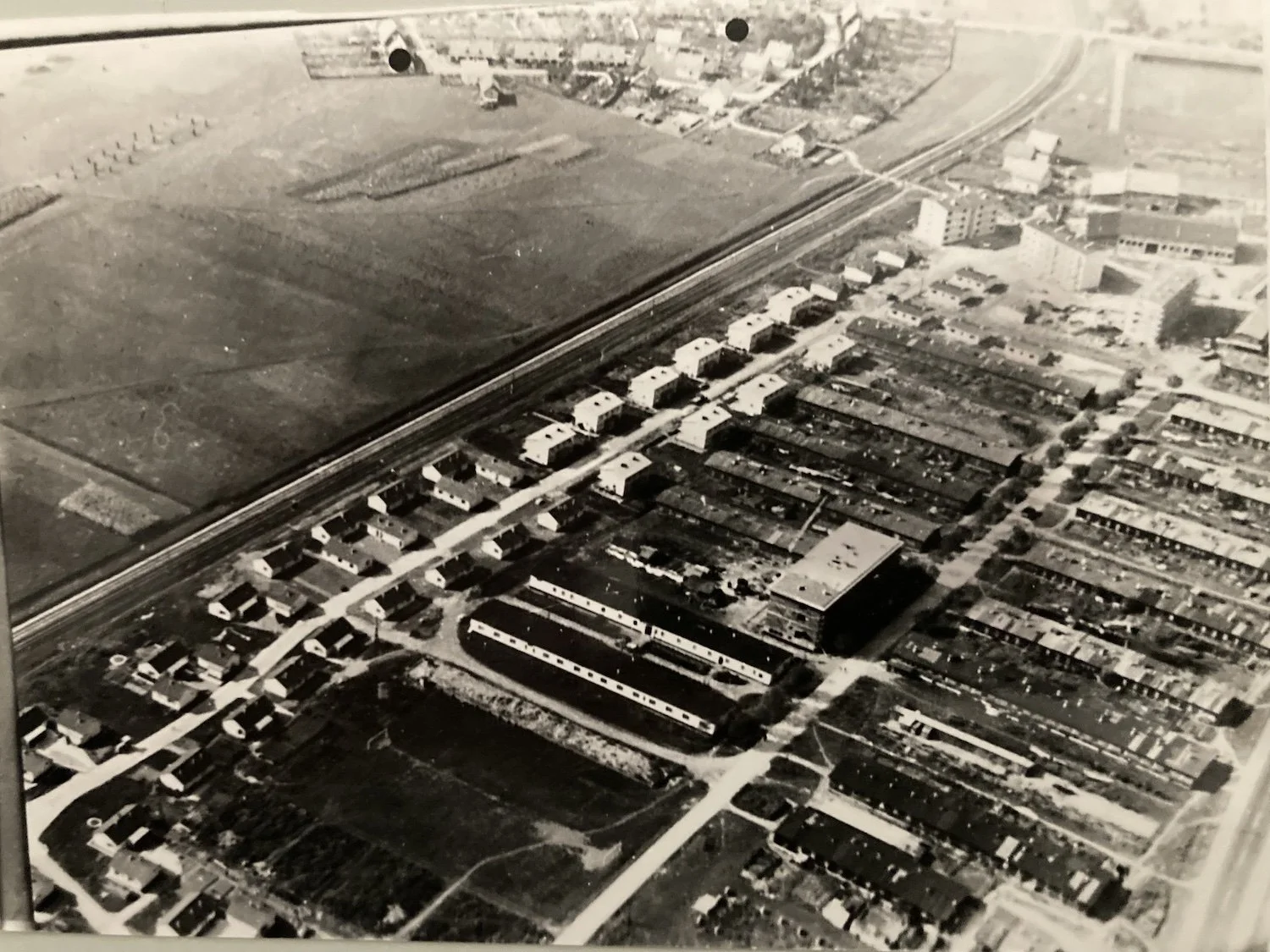
Overseas emigration reduced the population, but almost 900 people remained in 1954. New housing began to replace the barracks from 1955. Projects involving Austrian authorities and international refugee organisations created homes along Fridtjof-Nansen-Straße, making permanent settlement in Spittal possible for people who stayed.
The camp formally closed on 31 March 1962. That administrative ending came well before the disappearance of all its buildings: the last barrack was demolished in 1979. Lagerstraße still preserves the former camp in the city’s street names.
Of the roughly 250 people still in the camp in 1960, five moved to old people’s homes, four to the Feffernitz camp, one to the psychiatric hospital in Klagenfurt, two emigrated to Australia and eight moved to other Austrian towns; all the rest stayed in Spittal. After the closure the winding-up was handled from the Feffernitz camp.
Sources for this section
Sources
- Flüchtlingslager in Spittal an der Drau 1945–1962
Christina Sušnik, Fachhochschule Kärnten · 2016
Original archival thesis downloaded and read in full: chapters 3.2 to 3.4 for the wartime camp, administration, population series, layout, schools, daily life and closure. Precise closure date from page 16. The thesis works from Gabriela Stieber’s studies of 1997, 1999 and 2005, the Spittal parish chronicle of Andreas Dollinger and Carinthian provincial files; those underlying sources have not been read directly. The German passages relied on are transcribed word for word in the page source file at research-workers/section-completion/pages/spittal/sources/7-susnik-thesis-passages.txt.
- Damals & heute: Die Lagerstraße
Verena Niedermüller, MeinBezirk, with Stadtarchiv Spittal · 25 January 2017
Exact location, multinational community, housing programme and 1979 final demolition; full article read.
- Ukrainians in the Displaced Persons Camps of Austria and West Germany
Ihor Stebelsky, The Refugee Experience · 1992
Table 5, printed page 43, 114 Ukrainian residents at Spittal on 30 June 1950.
- Spittal an der Drau Displaced Persons Camp — photographs
Stadtarchiv Spittal photographs, published by Project Ancestry · Undated historical photographs
Original archive series visually inspected. Publisher states photographs supplied courtesy of Stadtarchiv Spittal; exact dates not assigned.
- Slovenski begunci v Avstriji v luči časopisa Domači glasovi
Andrej Vovko, Dve domovini / Two Homelands 2–3 · 1992
Original scholarly paper, pages 335–336, read; camp-specific Slovenian press history.
- AustriaCampsV7.xls, compiled register of camps in Austria
Klaus Fohringer, published by DP Camps.org · Workbook last saved 24 July 2021
Workbook downloaded and read; the first sheet, the Spittal an der Drau row. Gives UNRRA team 330, the M and later R Assembly Centre designations, 41 residential barracks, three kindergartens with 130 places and three schools with 270 places in Slovenian, Hungarian and Croatian, a vocational school, and the rounded 1954 nationality figures including 70 Ukrainians. A compiled secondary register with heavy abbreviation; the row cites Stieber.
- Geschichte und Chronik
Stadtgemeinde Spittal an der Drau · Retrieved 13 September 2026
Municipal chronicle page read. Confirms the wartime prisoner-of-war camp in the east of the town and that its barracks served as a refugee camp and emergency housing long after 1945.
- Liste des camps
A personal website; the list is credited to Moosburg Online · Undated
Page read in full. A compiled table of German Second World War prisoner-of-war and internment camps arranged by military district; the section ‘Région militaire XVIII – Salzburg [Autriche, Slovénie]’ carries five rows naming Spittal a.d. Drau, each with a camp designation and dates. A secondary compilation that states no primary references.
Last researched 13 September 2026