Wacol
Arrival and settlement
Brisbane · Queensland · Australia · 1949–1987
A former United States Army camp became Queensland’s largest migrant centre and a first Australian home for Ukrainian and other European families, linking temporary accommodation with work, school and settlement around Brisbane.
Introduction
Wacol was a migrant holding centre in Brisbane where Ukrainian families joined a much wider European community after the Second World War. Many Ukrainians passed through its accommodation; some subsequently bought land in Wacol, Oxley, Darra and Coopers Plains. A Ukrainian community reference work puts the associated settlement at roughly 100 families across these suburbs, rather than 100 families inside the camp.
It was the largest of the Queensland centres. It opened on 9 November 1949, ran for thirty-eight years, and by April 1960 was the only migrant holding centre left in the state.
Sources for this section
A history in dates
- 1942–1945The United States Army builds and uses Camp Columbia at Wacol.
- 1949The northern Camp Columbia accommodation becomes an immigration facility.
- 9 November 1949The Wacol holding centre opens, the first of four planned for Queensland.
- 27 December 1949The Ukrainian Association of Queensland holds its foundation general meeting in Brisbane.
- May 1950The camp’s estimated capacity is 600 people; the completed centre will hold about 1,600.
- 1950 to 1952Numbers approach 2,000 and tents supplement the huts.
- January 1952Commonwealth Hostels Limited takes over the running of the migrant hostels.
- 1952Standard accommodation capacity is recorded as 1,465 places.
- 1959Emergency accommodation arrangements under the Nest Egg Scheme extend to British migrants.
- April 1960Wacol is the only migrant holding centre left in Queensland.
- 31 March 1963Colmslie closes and its residents may move to Wacol.
- July 1968Brick accommodation blocks with 93 bedrooms open.
- March 1985The original timber army huts are disposed of.
- 1987The migrant centre closes.
- 1990The site is cleared; the Arthur Gorrie Correctional Centre is later built on it.
From army camp to migrant centre
The United States Army built Camp Columbia at Wacol, sixteen kilometres from Brisbane, to accommodate American troops during the Pacific War, and used it from 1942 to 1945. After the war the site passed to the Australian Army. The immigration facility occupied the northern side of Ipswich Road within that landscape; the southern section continued as an army establishment while the Department of Immigration acquired the northern accommodation in 1949. It became the Wacol East Dependants Holding Camp for Displaced Persons.
Holding centres accommodated dependants while family breadwinners worked and sought homes. Wacol belonged to a Queensland network that also included Enoggera, Stuart and Cairns; the Department of Immigration was planning four such centres in the state in June 1949, and Wacol was the first to open. Its standard capacity in 1952 was 1,465 places for residents of all backgrounds, and at that date thirteen holding centres were still active across Australia.
The buildings were the army’s. The original timber huts contained 340 rooms served by communal toilet and ablution blocks. The camp’s estimated capacity in May 1950 was 600 people; when the conversion was finished it stood at about 1,600. During 1950 and 1952 that capacity was exceeded and the population approached 2,000, and tents were pitched to supplement the huts. Wacol also housed some of its own staff: Australians worked mainly in administration, clerical and supervisory jobs, while migrants were employed as cleaners, in the kitchens and linen store, and as groundsmen.
Queensland holding centres: opening and 1952 capacity
| Centre | Opened | Standard places, 1952 |
|---|---|---|
| Wacol | 9 November 1949 | 1,465 |
| Stuart | 30 March 1950 | 500 |
| Enoggera | 14 April 1950 | 515 |
| Cairns | 19 August 1950 | 370 |
Accommodation at Wacol
| Date | Accommodation | Note |
|---|---|---|
| From 1949 | 340 rooms in the original timber army huts | Communal toilet and ablution blocks |
| May 1950 | Estimated capacity 600 | Conversion still in progress |
| When complete | About 1,600 | The figure the centre was designed for |
| 1950 to 1952 | Close to 2,000 residents | Capacity exceeded; tents used to supplement the huts |
| July 1968 | 93 further bedrooms in brick blocks | Added to the existing accommodation |
| March 1985 | Timber huts disposed of | The wartime buildings had fallen into disrepair |
The scheme that filled it
The Displaced Persons Scheme brought people to Australia from the first transport in November 1947 until it was discontinued in January 1954 for want of available people, and 170,700 came under it.
The people it brought had spent years in camps in Germany, Austria and elsewhere: former prisoners of war, people taken to Germany for forced labour, and people who had fled westward before the Soviet advance in 1945. Many chose Australia ahead of Canada or the United States because Australia was the first to accept family groups.
Once here, the arrangement separated households. Displaced persons went to holding centres where dependants stayed until the breadwinner, working within reach of the centre, could afford accommodation elsewhere; the Department of Immigration ran the holding centres while the Department of Labour and National Service ran the workers’ hostels. From January 1952 Commonwealth Hostels Limited, a Commonwealth-owned company, took over the running of the hostels, and from May 1978 a successor company managed them in Queensland until 1987.
Sources for this section
Rooms, meals and everyday routines
A resident describing 1959 remembered huts divided into six or eight rooms, with doors opening outdoors. Washing, toilets and laundry were in shared blocks. Walking outside at night could be unsettling. Meals came from communal kitchens, and residents could eat in the dining hall or carry food back to their rooms.
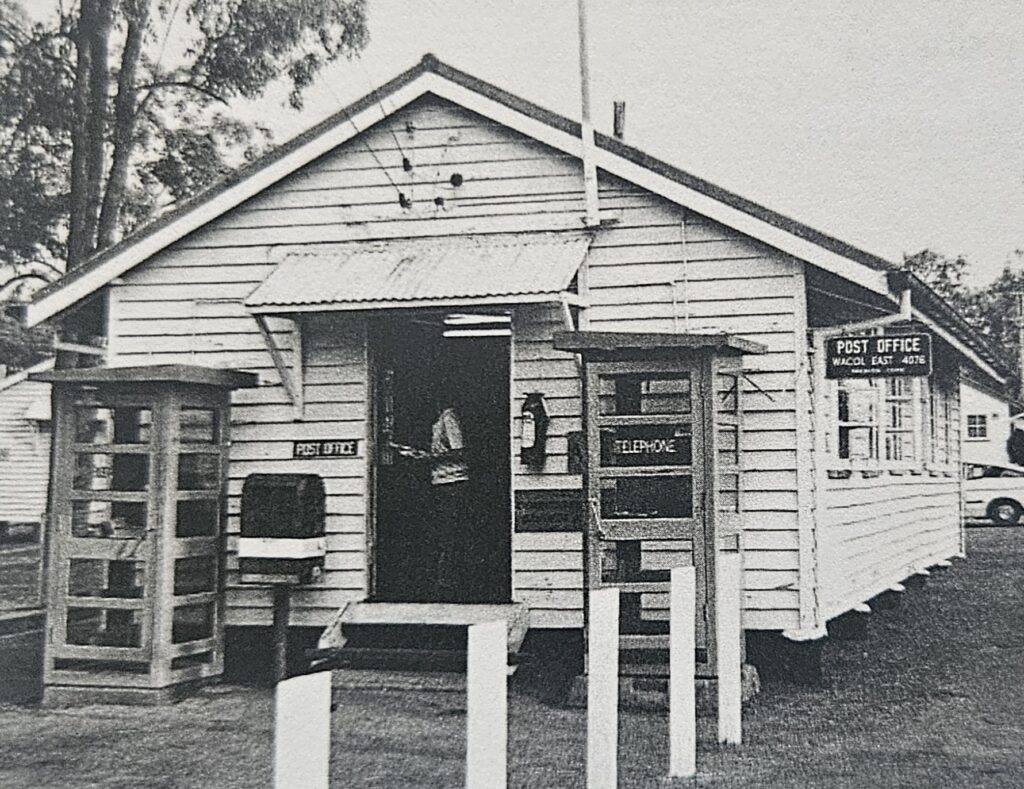
The same account describes a post office, weekly exchanges of sheets and bath towels, and announcements delivered over loudspeakers in several languages. Each accommodation block had a supervisor. The railway station was within walking distance, and a bush track led to shops at Darra. A self-service store made shopping easier for people still learning English.
Sources for this section
Families and separation
For some families, arrival in Australia brought another period of separation. Two sisters who arrived in November 1949 recalled being placed at a convent school in Ipswich from January 1950. They returned to Wacol during school holidays for the following two years. Their recollections combine the lack of toys with memories of affection and care.
Rules about dependants could also intrude into married life. One woman recalled that in 1955 officials removed her husband’s camp bed after he formally moved out, although he continued staying with her. The couple shared the remaining narrow bed. Her account gives a more personal picture of administration than a simple accommodation total can convey.
Sources for this section
School and community life
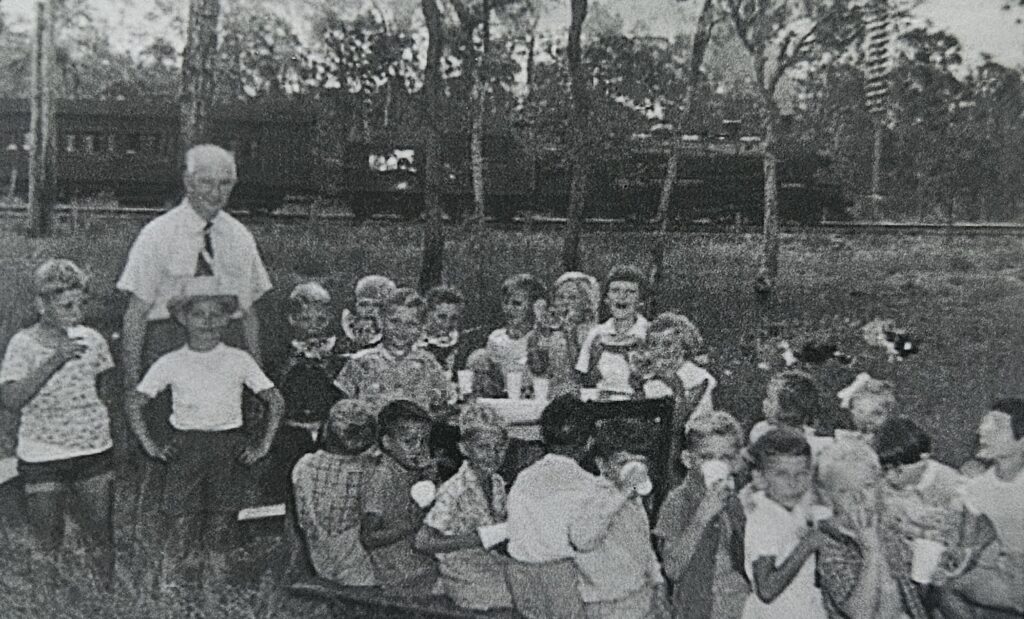
The camp had a primary school, free evening English lessons, a Catholic chapel and a cinema. In the 1959 account, a nurse was available daily and a doctor visited during the week. School, worship and medical care were part of the same small settlement as the huts and kitchens.
Sources for this section
Work and a home beyond the camp
The move out could be quick but expensive. A Dutch family arriving in July 1954 spent about two weeks at Wacol. Members first took casual cannery work, catching a steam train at 5.30 in the morning and returning after 6 in the evening. Their rented house at Eagle Farm cost £10 a week, nearly two weeks of one wage. The account illustrates how employment, long journeys and housing scarcity shaped the transition from hostel to household.
Sources for this section
Ukrainians at Wacol and afterwards
An account of the Queensland Ukrainian community written by one of its long-serving presidents describes the route plainly: people sent to Queensland passed through camps in the outer suburbs of Brisbane — Enoggera, Colmslie and the largest of them, Wacol — and it was in and near Wacol that many Ukrainians subsequently bought land. Men were often sent north or inland to cut cane, work in timber or work on the railways under the two-year labour contract, and most gravitated back to Brisbane when it ended.
Families reunited in the camps were generally the first to buy land and build. In most cases people built their own dwellings, putting up a wooden or cement-block garage as a temporary residence and then the house itself, helping one another and paying off land and houses quickly.
Organised community life began while the camps were still filling. An initiative committee started meeting in July 1949 at a house in Buranda, and from October 1949 forty or fifty Ukrainians gathered weekly in a school building lent by the Roman Catholic parish of St Luke there, where English classes were started. The foundation general meeting of the Ukrainian Association of Queensland followed on 27 December 1949. The first Ukrainian Catholic mass in Queensland was celebrated in March 1950 at St Luke’s, Buranda, and the first Ukrainian Orthodox community in the state was organised in the Enoggera resettlement camp in 1951.
The community that grew out of the camps was young and mostly of peasant background — in Queensland, largely people between twenty and thirty-five, single or recently married, some with small children. The first Ukrainian Saturday school opened in the Oxley-Darra area in 1954 and a second in South Brisbane the following year; within five years the Brisbane school had 80 children and the Oxley school 60. In the 1976 census, 1,044 people in Queensland said they spoke Ukrainian regularly.
Sources for this section
A changing population and the end of the centre
Wacol continued receiving migrants after the first displaced-person arrivals. Government policy had been that British migrants would not be sent to holding centres, but the June 1959 Nest Egg Scheme, which offered assisted passage to Britons with £500 in savings and no accommodation sponsor, created a need for emergency accommodation: Yungaba and Colmslie were to be used first, and any further British arrivals could join the Dutch migrants at Wacol. When Colmslie closed on 31 March 1963, residents who could not find other housing were allowed to move to Wacol, which Commonwealth Hostels was then taking over from the Department of Immigration.
The centre outlasted its huts. Additional brick accommodation blocks containing 93 bedrooms opened in July 1968; the original timber army huts fell into disrepair and were disposed of in March 1985. A redevelopment was considered in 1987 as part of a national move away from institutional accommodation, but it did not proceed.
The Wacol Migrant Centre ceased operation in 1987 and the site was cleared in 1990. The Arthur Gorrie Correctional Centre now stands on it. Its history spans several generations of arrivals, while the surrounding former military land acquired other institutional uses. Ukrainian settlement in the neighbouring suburbs was one lasting connection between the temporary camp and the city that grew around it.
Sources
- Wacol — Ukrainian Diaspora Encyclopedia, volume 4
Shevchenko Scientific Society · 1995
Entry ВЕЙКОЛ; Ukrainian settlement across Wacol and neighbouring suburbs, not a camp census.
- History since World War 2
Wolston and Centenary Catchments · Undated
Identifies northern migrant facility separately from southern military land.
- Queensland holding centres and Colmslie hostel
Queensland Heritage Register · Updated 2025
Entry 602465: comparative holding-centre history, dated capacities and Colmslie transfers. The register entry is 602465, the Commonwealth Acetate of Lime Factory (former) at Colmslie; its history section carries the comparative passage on the Queensland holding centres. Read in full: Wacol opened 9 November 1949 on Army land, Stuart 30 March 1950, Enoggera 14 April 1950 and Cairns 19 August 1950; 1952 standard capacities Wacol 1,465, Stuart 500, Enoggera 515, Cairns 370, with thirteen holding centres then active in Australia; by April 1960 Wacol was the only holding centre left in Queensland; the June 1959 Nest Egg Scheme and the proposal that extra British arrivals join the Dutch migrants at Wacol; Colmslie closed on 31 March 1963. The live address now returns the register’s search page rather than the entry, so it is cited from the Internet Archive capture of 21 May 2022.
- Wacol Remembered — a resident’s account of 1959
Australian Government; reproduced by Dutch Australian Cultural Centre · 2003
Printed page 81, original scanned recollection read visually; individual experience, not universal conditions.
- Childhood at Wacol: two sisters’ memories
State Library of Queensland · 9 July 2015
Library account based on OH24 oral history; original full interview not listened to.
- Life in the holding camp
State Library of Queensland · 11 June 2015
Library discussion of a 1955 resident’s recollections; full interview not reviewed.
- Wacol Remembered — arrival and work in July 1954
Australian Government; reproduced by Dutch Australian Cultural Centre · 2003
Printed page 38, original scanned recollection read visually.
- Brisbane Wacol Migrant Centre
Dutch Australian Cultural Centre · 2026
Later history and photographs credited to State Library of Queensland.
- Wacol Remembered: introduction
Department of Immigration and Multicultural and Indigenous Affairs; digitised by Making Multicultural Australia · 2003
Printed pages ix–xi read in full: the postwar migration schemes and the July 1947 agreement with the International Refugee Organisation; 170,700 people under the Displaced Persons Scheme from November 1947 to January 1954; the administration of migrant hostels and the handover to Commonwealth Hostels Limited in January 1952; and for Wacol, Camp Columbia 1942–1945, acquisition by the Department of Immigration in 1949, the name Wacol East Dependants Holding Camp for Displaced Persons, 340 rooms in the timber huts, an estimated capacity of 600 in May 1950 and about 1,600 when complete, numbers approaching 2,000 in 1950 to 1952 with tents in support, staff employment, 93 brick bedrooms in July 1968, disposal of the timber huts in March 1985, closure in 1987, clearance in 1990 and the Arthur Gorrie Correctional Centre on the site. This is the introduction to the volume from which the individual recollections cited elsewhere on this page are taken.
- Ukrainians in Queensland
Roman Pavlyshyn, in Maximilian Brandle and Steve Karas (eds), Multicultural Queensland: The People and Communities of Queensland; scan published by the Ukrainian Community of Queensland · 1988
Printed pages 237–243 read in full from the scan: the passage of Queensland-bound displaced persons through Enoggera, Colmslie and Wacol and Ukrainian land purchase in and near Wacol; two-year labour contracts and the work men were sent to; house building; the initiative committee of July 1949 and the foundation meeting of the Ukrainian Association of Queensland on 27 December 1949; the first Ukrainian Catholic mass in March 1950 and the Ukrainian Orthodox community organised at Enoggera in 1951; the Saturday schools of 1954 and 1955 and their rolls; and the 1976 census figure of 1,044 Ukrainian speakers in Queensland.
Last researched 12 September 2026