Wallangarra
Arrival and settlement
Wallangarra · Queensland–New South Wales border · Australia · Migrant contract labour: 1949–1950
Ukrainian displaced persons sent from Bathurst in October 1949 lived and worked at the Army’s stores depot on the Queensland–New South Wales break of gauge, alongside White Russian arrivals from the Philippines.
Introduction
Wallangarra, on the border between Queensland and New South Wales, was one of the Army installations to which displaced persons were sent on two-year work contracts after arriving in Australia. A group of twenty Ukrainians was posted there from the Bathurst reception centre in late 1949, among 240 men who left the train at the border. They lived inside the military camp, with food and lodging provided, and worked mainly in its kitchens.
Sources for this section
A history in dates
- January 19423 Advanced Ordnance Depot is established at Wallangarra; 1 Advanced Ammunition Depot is established at Jennings on the New South Wales side.
- March 1942 – 1945The Allied Works Council develops the Wallangarra site; Dredge and Hodge of Toowoomba build the ordnance depot.
- September 1943The commanding officers of the two depots take up their commands.
- 7 December 1943A hundred and fifty Indonesian internees are transferred to the Australian Employment Company at Wallangarra and to Toowoomba and Helidon.
- 1948The Wallangarra depot is renamed 5 Central Ordnance Depot and the Jennings depot 1 Central Ammunition Depot.
- August 1949British immigrants are on road work in the military camp; displaced persons from Bathurst and Bonegilla are awaited.
- 25–26 October 1949More than 350 displaced men leave Sydney for Army installations between Wallangarra and Brisbane.
- 27 October 1949240 of the party leave the train at Wallangarra for the holding camp; 93 continue to Brisbane.
- December 1949English classes are running for migrants working for the Army at Wallangarra and other Queensland sites.
- February 1950White Russians from the Philippines are working for the Army at Wallangarra; displaced persons are at the Army depot.
- 1954The Army powerhouse at the depot closes when mains electricity is extended from Tenterfield.
Sources for this section
- 3 Advanced Ordnance Depot (3 AOD)
- 3 Advanced Ordnance Depot (3 AOD), Wallangarra, and 1 Advanced Ammunition Depot (1 AAD), Jennings
- Harry A. Poeze, From Foe to Partner to Foe Again: the Dutch authorities and the Digoel exiles in Australia, 1943-1945
- Balts for South-West
- Migrants keen about opportunities
- Migrants keen to fish
- Migrants go to school
- 3919 migrants in State
- 13 more Balts begin work in South-West
A depot at the break of gauge
The Army established 3 Advanced Ordnance Depot at Wallangarra in January 1942. Its location was dictated by the railways: the Queensland and New South Wales systems used different gauges, so everything moving north or south had to be unloaded and reloaded at the border. Two defence sites faced each other across the state line. The stores depot stood on the Queensland side at Army Avenue; on the New South Wales side, at Jennings, 1 Advanced Ammunition Depot was set up in the same year.
Building went on for most of the war. The Allied Works Council developed the Wallangarra area from March 1942 until 1945, the Queensland Main Roads Commission built on both sides of the border, and a Toowoomba firm, Dredge and Hodge, held the contract for the ordnance depot; the commanding officers of the two depots took up their commands in September 1943. At the peak in 1944 as many as twenty-eight trains from New South Wales and thirty from Queensland came into Wallangarra in a day. The depot generated its own electricity and had its own water supply, and the Army powerhouse ran until 1954, when the mains reached Wallangarra from Tenterfield.
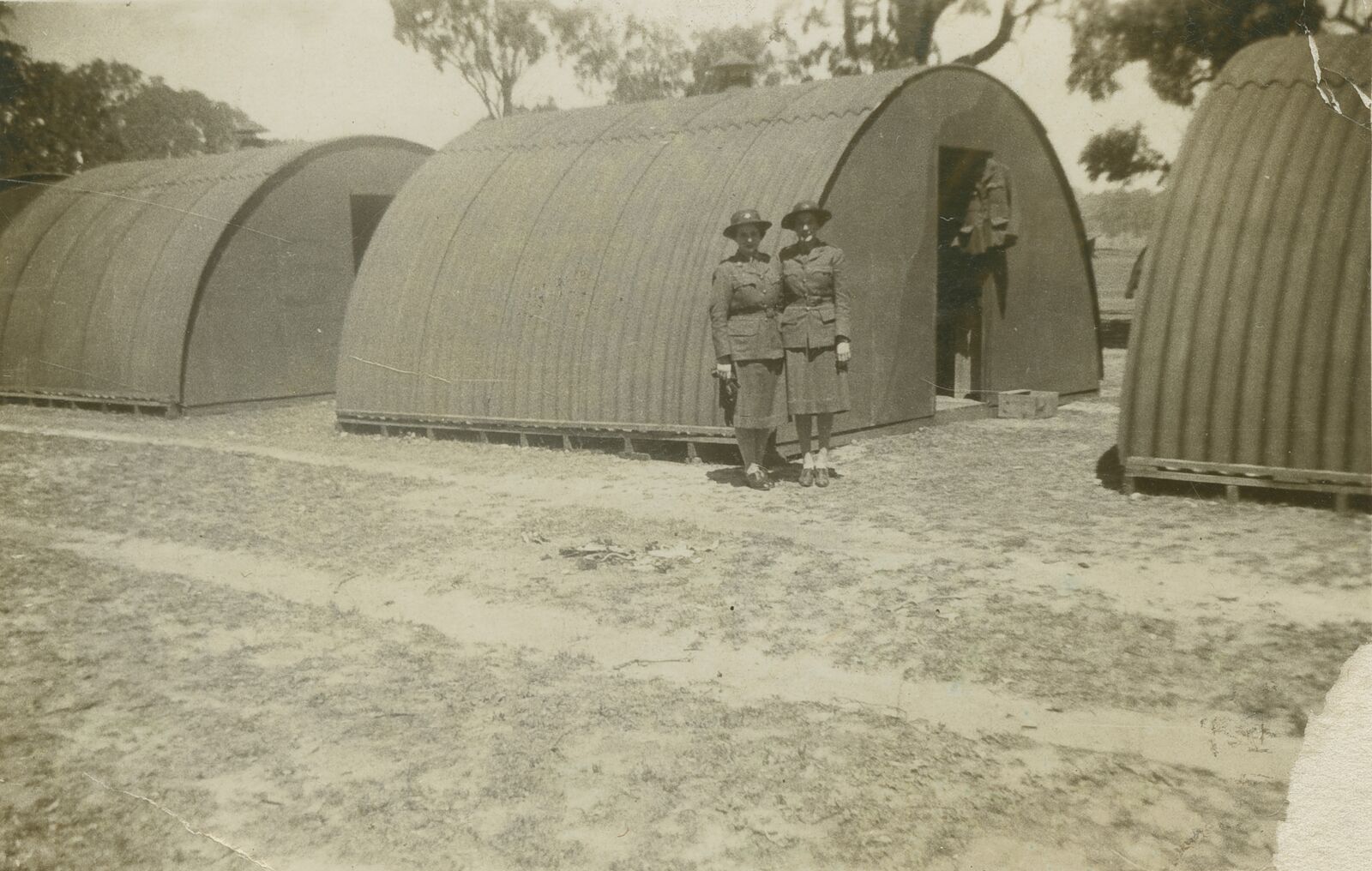
The work the depot existed for was heavy and largely manual. Ammunition arriving at the peak of the war was unloaded by hand by an employment company and carried from the Jennings railway siding to the ammunition depot by two sections of horse transport, at something like nine thousand tons a day. The buildings the labour served were plain: semi-underground ammunition shelters at first, then timber structures and prefabricated Sydney Williams huts, with the trees around them left standing to hide the site from the air.
By the time the migrants arrived the names had changed. In 1948 the Wallangarra depot became 5 Central Ordnance Depot and the Jennings depot 1 Central Ammunition Depot. The published sources for the 1949 posting say only that the migrants worked for the Army at Wallangarra, at the Army depot or in the military camp. The Ukrainian account speaks of a military camp with free food and accommodation.
The depot’s wartime workforce was not only Australian. On 7 December 1943, 150 Indonesian political internees from the Dutch internment camp at Tanah Merah were transferred to the semi-military Australian Employment Company at Wallangarra and to nearby Toowoomba and Helidon, where they worked on farms and in an ammunition depot. Around New Year’s Day 1944 two of them left Wallangarra to enter Dutch service.
The two border depots and their later names
| Wallangarra, Queensland | Jennings, New South Wales |
|---|---|
| 1943 – 3 Advanced Ordnance Depot | 1943 – 1 Advanced Ammunition Depot |
| 1948 – 5 Central Ordnance Depot | 1948 – 1 Central Ammunition Depot |
| 1973 – 112, then 131 Supply Company | 1973 – Ammunition Platoon, 112 then 131 Supply Company |
| 1983 – Wallangarra Supply Company | 1983 – Ammunition Platoon, Wallangarra Supply Company |
| 1994 – Wallangarra Logistic Company | 1994 – Ammunition Platoon, Wallangarra Logistic Company |
Sources for this section
- 3 Advanced Ordnance Depot (3 AOD)
- 3 Advanced Ordnance Depot (3 AOD), Wallangarra, and 1 Advanced Ammunition Depot (1 AAD), Jennings
- St Andrew’s Parish in Sydney, 1948–1998
- 13 more Balts begin work in South-West
- Harry A. Poeze, From Foe to Partner to Foe Again: the Dutch authorities and the Digoel exiles in Australia, 1943-1945
From Bathurst to the border
On the evening of Tuesday 25 October 1949 more than 350 displaced men of about 28 nationalities left Sydney by train after a term at the Bathurst displaced persons’ camp. Fed on the platform at Armidale the next afternoon, they were bound for Army installations between Wallangarra and Brisbane under two-year government contracts. A Ukrainian was among those a local reporter spoke to; several said they welcomed the certainty of two years’ work.
The party split at the border. Of the 350, 240 left the train at Wallangarra, where the Courier-Mail reported they would be attached to the holding camp for maintenance of drainage, building repairs and equipment maintenance. Ninety-three went on to Brisbane and were stationed at Wacol, Chermside, Gaythorne, Cooper’s Plains, Bulimba and Colmslie. Two of them stepped off the train clutching fishing rods they had brought from Europe.
The parish history of St Andrew’s Ukrainian Catholic Church in Sydney records a group of twenty Ukrainians sent from Bathurst to Wallangarra, near the Queensland border. The author of the account had arrived in Sydney on 29 September 1949 and found the Bathurst camp unpleasant, with poor food and long queues at a communal kitchen. At Wallangarra the Ukrainians worked in the kitchen, formed a choir and a volleyball team, and earned five pounds a week with free board because it was a military camp.
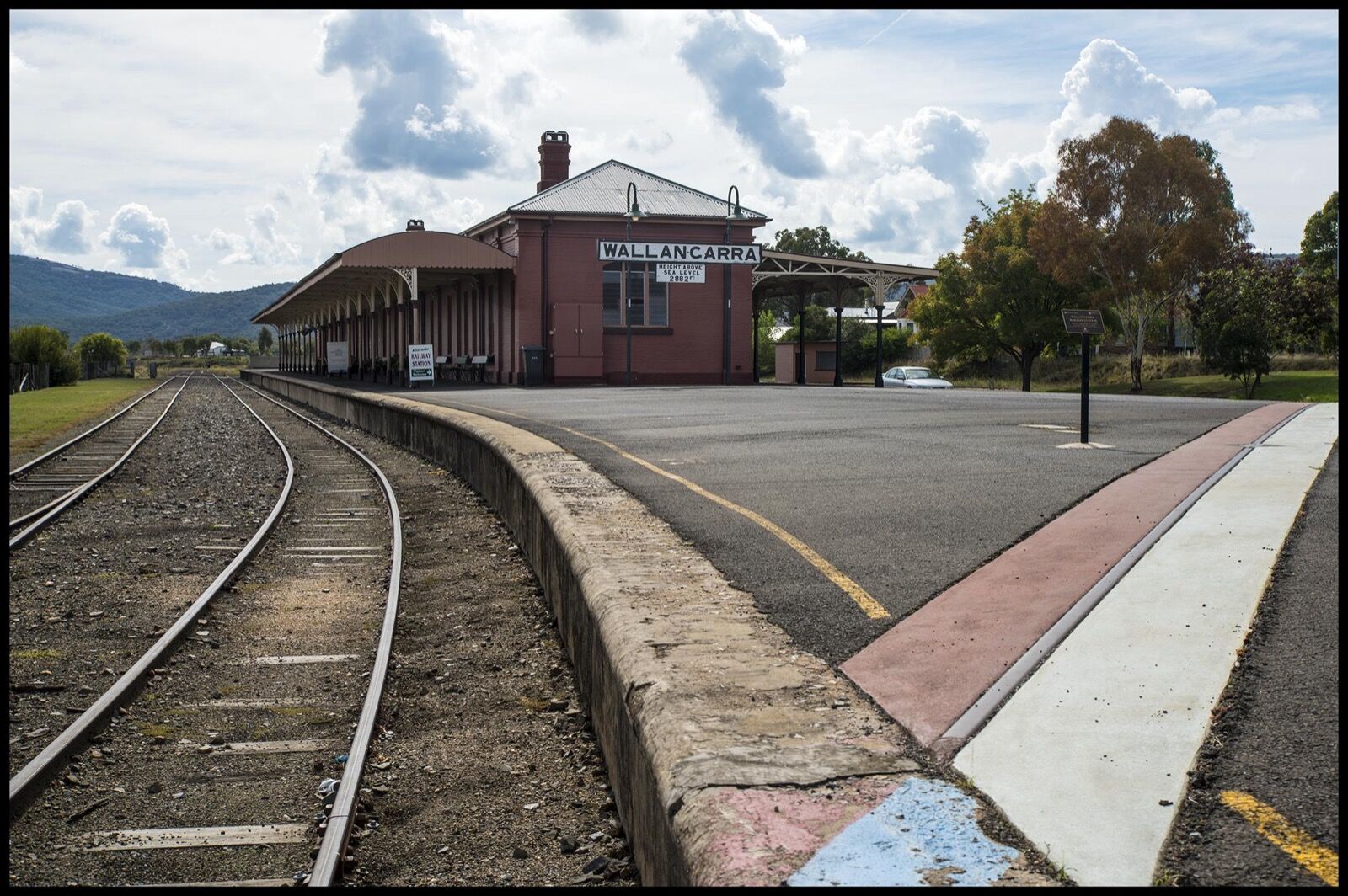
They had come up the line that made the place what it was. Trains from Sydney terminated at Wallangarra, where the long platform carried the New South Wales gauge on one side and the Queensland gauge on the other, and passengers and freight changed trains at the state border.
Published figures connected with the 1949–1950 posting
| Measure | Figure | Source scope |
|---|---|---|
| Displaced men leaving Sydney for Army installations between Wallangarra and Brisbane, 25 October 1949 | More than 350 | Armidale Express, 28 October 1949; all nationalities, several destinations |
| Of that party, men leaving the train at Wallangarra | 240 | Courier-Mail, 28 October 1949 |
| Of that party, men continuing to Brisbane | 93 | Courier-Mail, 28 October 1949 |
| Ukrainians sent from Bathurst to Wallangarra | 20 | Parish history, retrospective account, 1999 |
| Migrants working for the Army and RAAF at Queensland sites including Wallangarra, December 1949 | 300 | Courier-Mail, 27 December 1949; all sites combined |
| Displaced persons employed in the Warwick district, February 1950 | More than 300 | Warwick Daily News, 17 February 1950; district total, some at the Army depot |
| Weekly wage recalled by a Ukrainian kitchen worker | £5, with free board | Parish history, 1999 |
A mixed camp
The Ukrainians shared the camp with what the parish history calls many Russians from China. Brisbane newspapers explain who these were: White Russians who had reached Australia early in 1950 from temporary sanctuary in the Philippines and were working for the Army at Wallangarra, their families expected to follow later in the year. In February 1950 the Commonwealth Employment Officer at Warwick counted more than 300 displaced persons in his district, some of them at the Army depot at Wallangarra and others in forestry, irrigation and shire work.
Religious life reflected the mix. There was no Ukrainian priest in the camp, only an Orthodox clergyman of Belarusian origin, and the Ukrainian account records its first meeting with a Ukrainian Catholic priest only in 1952, in Sydney. Free English classes organised for migrants working at Army establishments, including Wallangarra, continued through the school holidays of 1949 to 1950.
Leaving the camp
The posting was a stage rather than a settlement. The Ukrainian account describes visiting relatives in Sydney once a year at Christmas, marriage in 1950 and later work and a shared family house in the Sydney suburb of Auburn.
Wallangarra remained an Army logistics site long after the migrant contracts ended. The unit passed through a series of names — supply companies from 1973, Wallangarra Supply Company from 1983, Wallangarra Logistic Company from 1994 — and it still functions as a stores depot.
Sources
- St Andrew’s Parish in Sydney, 1948–1998
Ivan Shevtsiv, editor; St Andrew’s Ukrainian Catholic Parish, Sydney · 1999
Printed p. 85 (PDF p. 86), read from the page image: a parishioner’s retrospective account of Bathurst and Wallangarra. Names of fellow residents are omitted here.
- Migrants keen about opportunities
The Armidale Express and New England General Advertiser, p. 6 · 28 October 1949
Contemporary report of the Bathurst party passing through Armidale on its way to Army installations between Wallangarra and Brisbane.
- Balts for South-West
Warwick Daily News, p. 2 · 4 August 1949
British immigrants on road work in the military camp at Wallangarra before displaced persons arrived.
- Migrants go to school
The Courier-Mail, Brisbane, p. 3 · 27 December 1949
English classes for 300 migrants working for the Army at Gaythorne, Wallangarra and Brisbane sites.
- 3919 migrants in State
Sunday Mail, Brisbane, p. 5 · 26 February 1950
White Russians from the Philippines working for the Army at Wallangarra; state-wide employment figures.
- 13 more Balts begin work in South-West
Warwick Daily News, p. 2 · 17 February 1950
Commonwealth Employment Officer’s count of displaced persons in the Warwick district, including the Army depot at Wallangarra.
- 3 Advanced Ordnance Depot (3 AOD)
State Library of Queensland, Anzac Square, Queensland WWII Historic Places · Accessed 2026
Depot history, location at Army Avenue, Wallangarra, and the two border sites.
- Members of the Australian Women’s Army Service outside Nissen huts at Wallangarra, 1942
State Library of Queensland, John Oxley Library, image 9976-0001-0002 · 1942 (digitised 2014)
Photograph record: huts at the 3rd Advanced Ordnance Depot. Terms of use: free to use with attribution to the State Library of Queensland; out of copyright.
- Wallangarra Railway Station, Queensland–New South Wales border
Sheba_Also, via Flickr and Wikimedia Commons · 19 April 2016
Photograph licensed CC BY-SA 2.0. Shows the platform at the break of gauge where the Queensland and New South Wales lines met and everything moving north or south had to be transferred.
- 3 Advanced Ordnance Depot (3 AOD), Wallangarra, and 1 Advanced Ammunition Depot (1 AAD), Jennings
Peter Dunn, Australia @ War, drawing on material supplied by Sergeant Bill Durrant · Page last updated 23 January 2020; read 14 September 2026
Full page read. Establishes that 3 AOD was set up on the Queensland side and 1 AAD at Jennings on the New South Wales side in 1942, describes the construction, the wartime traffic at the break of gauge, the depot’s own power plant and water supply, and gives the unit’s successive names, including the renaming of the Wallangarra depot as 5 Central Ordnance Depot in 1948. A researcher’s compilation rather than an archival record; it cites two unit histories and the history of the Queensland Main Roads Commission.
- Migrants keen to fish
The Courier-Mail, Brisbane, p. 5 · 28 October 1949
Read from the digitised newspaper page image, Trove page 2024231. Records that of the 350 migrants, 240 left the train at Wallangarra to be attached to the holding camp for maintenance of drainage, building repairs and equipment maintenance, while 93 went on to Brisbane; names two of the party and lists the Brisbane-area stations.
- Harry A. Poeze, From Foe to Partner to Foe Again: the Dutch authorities and the Digoel exiles in Australia, 1943-1945
Indonesia 94, Southeast Asia Program, Cornell University · October 2012
Printed pages 64 to 65 read: the transfer of 150 Indonesian internees from Tanah Merah to the semi-military Australian Employment Company at Wallangarra and at Toowoomba and Helidon on 7 December 1943, working on farms and in an ammunition depot, and the departure of two of them for Dutch service around New Year’s Day 1944.
Last researched 12 September 2026