Wegscheid Camp
Displacement in Europe
Landwiedstraße, Linz, Upper Austria, Austria · DP camp from 1946; continued refugee accommodation into the 1950s
Known as Camp Maurice L. Tyler and Camp 67, Wegscheid was a hutted camp in southern Linz that combined overcrowded transit accommodation with a hospital, schools, training and a community that outlasted the early emigration years.
Introduction
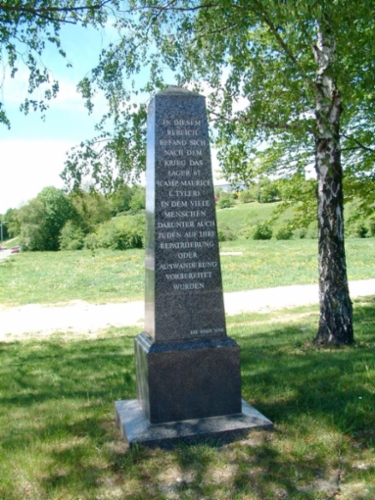
Wegscheid Camp occupied a large hut compound in southern Linz. Also called Camp Maurice L. Tyler or Camp 67, it accommodated people preparing for repatriation or emigration. Today a memorial on Landwiedstraße, near the Kaplitzstraße bus stop, marks the former camp area.
Its role changed over time. The Jewish transit camp opened in June 1946, while municipal records show a camp kindergarten still operating in the later 1950s. Ukrainians appear among the residents recorded in the international refugee statistics for 1950.
A history in dates
- May 1945More than 30,000 people are living in huts in Linz.
- Summer 1945About 40,000 foreigners from twenty-five nations are in the city, most of them in over sixty hut camps.
- June 1946The Jewish transit camp opens in about a hundred former soldiers’ huts.
- 1947Photographs are taken in barrack 44, later acquired for the Jewish Museum Vienna.
- Late 1947ORT opens an annex of its central Linz training school.
- May 1948The ORT annex is training 45 students.
- 1949The ORT school closes.
- 30 June 1950An IRO return records 191 Ukrainians.
- 1951–1952Wegscheid becomes one of three hut sites of the mixed primary school GV 7.
- 1952Austria’s barrack camps are officially renamed housing settlements.
- 1953The primary-school huts at Wegscheid are given up, and a new school building opens on 15 September.
- 1959The municipal yearbook still records a camp kindergarten.
- 1996A memorial is erected on Landwiedstraße.
Sources for this section
- Flüchtlings- und Barackenland
- Barackenstadt Linz
- Linz — ORT and the DP Camps
- 3 von 7 Fotografien aus dem DP-Lager Wegscheid, Baracke 44, Linz, 1947
- Ukrainians in the Displaced Persons Camps of Austria and West Germany
- Chronik der VS 43 / Stadlerschule
- Statistisches Jahrbuch der Stadt Linz 1959
- Gedenkstätte für das ehemalige Lager Wegscheid, Nr. 67, Camp Maurice L. Tyler
Linz as a barrack city
Wegscheid was one camp among many. Linz had more than doubled in population between 1938 and 1945 with the building of its heavy industry, and hutted camps had gone up all over the city for foreign and forced labourers and prisoners of war. In May 1945 more than 30,000 people were living in huts in Linz alone, and about 100,000 across Upper Austria; the figure was roughly halved over the following five years.
About 40,000 foreigners from twenty-five nations were in the city in the summer of 1945, some twenty per cent of its population, and most of them were housed in more than sixty hut camps in and around Linz. People were allocated to different camps according to origin: camps for foreign-language displaced persons, separate camps for Jews and camps for ethnic German refugees. Linz served for years as a central gathering point for Jewish displaced persons awaiting a way out, above all in the camps at Bindermichl, Ebelsberg and Wegscheid.
The larger camps were laid out like small towns. Alongside the living huts, Wegscheid had a sick bay, bath and lavatory huts, churches and a works yard. The mayor of Linz coined a phrase for what the city had become: it had turned from a baroque city into a barrack city.
People living in huts
| Date | Place | People in huts |
|---|---|---|
| May 1945 | Linz | More than 30,000 |
| May 1945 | Upper Austria | About 100,000 |
| Summer 1945 | Linz | About 40,000 foreigners from 25 nations in the city, most of them in camps |
| 1949 | Linz | 27,000 residents still in huts |
Sources for this section
A crowded stop on the way abroad
The camp set up in June 1946 consisted of about a hundred huts that had housed soldiers during the Nazi years. World ORT describes Wegscheid as Austria’s largest Jewish transit camp, with roughly 3,000–4,000 residents. Most came from Poland and Romania and were expected to remain only briefly before moving onward. Continuing arrivals overwhelmed the available space. Food supplies and their quality were also inadequate, and the same account records constant severe conflicts between the Jewish and non-Jewish inhabitants.
Even in these conditions, residents established institutions. The small hospital offered nursing courses, and there were a kindergarten, a school and a synagogue. These facilities gave a degree of continuity to a population whose intended purpose at the camp was temporary residence.
For most of the Jewish survivors Wegscheid was one stage in leaving Europe altogether, and after 1948 many went to the new state of Israel; for a minority it became the beginning of a longer rebuilding of Jewish life in Austria.
One room for a family
A childhood account preserved by the United States Holocaust Memorial Museum describes life at Tyler Camp in late 1947. One family shared a room about twelve by fourteen feet in a weathered wooden barrack. It contained a bed, a rough table and three chairs; water came from outdoor taps and the toilets stood in a separate row of wooden sheds.
The household carried water inside and warmed it on the stove for washing. To supplement food and fuel, the family sold concealed sugar on the black market. The recollection shows the practical work behind everyday survival: obtaining water, heating a room and caring for an older relative whose health had been damaged by persecution. It records one Jewish family’s circumstances rather than a standard ration or housing entitlement for every resident.
The wider Upper Austrian pattern was similar. The huts were barely insulated, so the winters were bitterly felt; poor sanitation kept the threat of epidemics alive, and damp rooms infested with bugs added to the strain. Only later were the large shared spaces broken up into small dwellings that allowed families four walls of their own, and football clubs, theatre groups and bands began to form.
Sources for this section
Ukrainians at Wegscheid
The IRO return for 30 June 1950, reproduced by historian Ihor Stebelsky, records 191 Ukrainians at Wegscheid. It is a nationality count, not the total population of the camp. It places Ukrainian residents within the later phase of a settlement whose best-documented earlier history concerns Jewish transit and emigration.
Sources for this section
Training and children’s education
At the end of 1947 ORT established an annex of its central Linz school at Wegscheid. It trained 45 students in May 1948 and closed in 1949. Training was one means of preparing displaced people for employment after emigration.
Children’s education continued through a different system. The Stadlerschule traces its beginnings to the 1951–1952 school year, when a mixed primary school—the Gemischte Volksschule 7, or GV 7—operated in huts at three camp sites: Lager 55 in the Niedernhartstraße, Lager 67 at Wegscheid and Lager 65 in the Hummelhofwald. Across the three sites it had seventeen classes and about 650 pupils, roughly 600 of them without Austrian citizenship. These are school-network totals, not Wegscheid-only enrolment.
Building of the present school began in August 1952. The camp classrooms at Wegscheid and Niedernhartstraße were given up in the last days of the 1953 school year, and the new building was opened on 15 September 1953 by the mayor of Linz, Ernst Koref. Separately, Linz’s statistical yearbooks record 142 children at the Wegscheid camp kindergarten in 1951 and 57 in 1959. The kindergarten figures demonstrate continued provision for young families beyond the closure of the earlier training school.
Photographs and the memorial
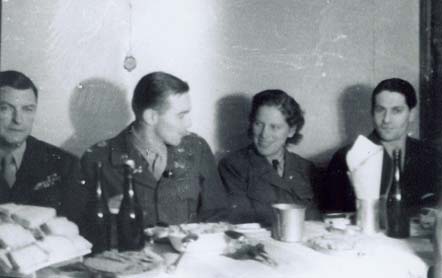
A 1947 photograph from the Crommelin family archive records a relief-staff farewell gathering at Camp Tyler. Seven small photographs taken in barrack 44 at Wegscheid in 1947, dated on the plate and ranging from six by eight and a half to eight and a half by thirteen and a half centimetres, were bought in 2011 for the Jewish Museum Vienna; they are described as rare images of the camp between the liberation and the founding of Israel.
The camps outlasted their intended purpose. In 1952 the barrack camps were officially renamed housing settlements, in recognition that people admitted for a short stay were going to remain in Austria, and the last of them were cleared only in the 1960s. The surviving memorial at Wegscheid, erected in 1996, recalls the many people, including Jewish displaced people, who prepared here to return home or leave for another country.
The memorial is a black stone obelisk. The Linz monuments database describes it standing on Landwiedstraße by the Kaplitzstraße bus stop in memory of camp 67, and lists it in its Bindermichl-Keferfeld district entries among the monuments and buildings associated with the architect Matthäus Schlager. The database does not state what his part in it was.
Records of the camp also went abroad. The YIVO Institute for Jewish Research holds a collection of records from the displaced-persons camps of Austria covering 1945 to 1951. Its administrative history counts twelve camps in all, at Salzburg, Linz, Ebelsberg, Saalfelden, Puch, Hallein, Wegscheid, Wels and Enns, and its description lists Wegscheid, under the designation Tyler 337, among the camps whose material the collection includes.
Sources for this section
- D.P. Camp Maurice L. Tyler — Farewell Party
- 3 von 7 Fotografien aus dem DP-Lager Wegscheid, Baracke 44, Linz, 1947
- Gedenkstätte für das ehemalige Lager Wegscheid, Nr. 67, Camp Maurice L. Tyler
- Flüchtlings- und Barackenland
- Matthäus Schlager, artist page in the Linz monuments database
- Denkmäler in der Kategorie „Gedenkstätten“
- DP camps in Austria (record group 294.4)
Sources
- Gedenkstätte für das ehemalige Lager Wegscheid, Nr. 67, Camp Maurice L. Tyler
Archiv der Stadt Linz · Current municipal record
Exact name, location, 1996 memorial and photograph inspected.
- Linz — ORT and the DP Camps
World ORT Archive · Undated institutional history
Wegscheid section read in full via direct request. Other Linz camps not conflated. The account of relations between inhabitants is given here in the source’s own terms.
- Ukrainians in the Displaced Persons Camps of Austria and West Germany
Ihor Stebelsky, The Refugee Experience · 1992
Table 5, page 43: Wegscheid 191 Ukrainians, 30 June 1950.
- My Dziadzio’s Legs. Lager, Late 1947
United States Holocaust Memorial Museum · 2017
First-person childhood recollection; living conditions in late 1947. Personal names omitted.
- Chronik der VS 43 / Stadlerschule
Stadlerschule, Linz · Current school history
Chronicle read in full in German: the 1951/52 start as GV 7, the three hut sites, seventeen classes and about 650 pupils of whom about 600 were not Austrian citizens, the start of building in August 1952, the giving up of the huts at Lager 55 and Lager 67 in the last days of the 1953 school year, and the opening of the new school on 15 September 1953 by Mayor Ernst Koref. The address ending /chronik/ returns HTTP 404; the working address is cited.
- Statistisches Jahrbuch der Stadt Linz 1951
Statistisches Amt der Stadt Linz · Published 1952
Page 94, kindergarten table: 73 boys, 69 girls, two kindergarten teachers and one assistant. Original PDF inspected.
- Statistisches Jahrbuch der Stadt Linz 1959
Statistisches Amt der Stadt Linz · 1959
Page 127: 28 boys and 29 girls at Lager 67 kindergarten; source-indexed original table.
- D.P. Camp Maurice L. Tyler — Farewell Party
Crommelin family archive · Photograph 1947
Original staff photograph and caption visually inspected.
- 3 von 7 Fotografien aus dem DP-Lager Wegscheid, Baracke 44, Linz, 1947
FREUNDE des Jüdischen Museums der Stadt Wien · Acquisition of 2011
Acquisition note read in full in German: the camp opened in June 1946 in about a hundred huts used for soldiers under the Nazi regime; a small hospital with nursing training, a kindergarten, a school and a synagogue; the photographs’ sizes and dating; and the onward departure of most residents.
- Barackenstadt Linz
Archiv der Stadt Linz · Accessed September 2026
City-archive account read in full in German: about 40,000 foreigners from 25 nations in the summer of 1945, over sixty hut camps, Linz as a gathering point for Jewish DPs at Bindermichl, Ebelsberg and Wegscheid, and the photograph caption listing a sick bay, bath and lavatory huts, churches and a works yard at Wegscheid.
- Flüchtlings- und Barackenland
Forum OÖ Geschichte, Oberösterreichisches Landesmuseum · Accessed September 2026
Read in full in German: over 30,000 people in Linz huts in May 1945 and about 100,000 in Upper Austria, halved in five years; the allocation of people to separate camps by origin; conditions in the huts; the renaming of the camps as housing settlements in 1952; and the clearance of the last camps in the 1960s. Statements here describe Upper Austrian camps in general, not Wegscheid alone.
- DP camps in Austria (record group 294.4)
YIVO Institute for Jewish Research, YIVO Archives · Collection covering 1945–1951
Collection control card read in full. Its administrative history counts the Jewish displaced-persons camps in Austria and names them; the description lists the camp files held, Wegscheid among them.
- Matthäus Schlager, artist page in the Linz monuments database
Stadtgeschichte Linz, Denkmaldatenbank · Undated database page; read 14 September 2026
Architect’s page read in full. Its list of monuments and buildings associated with Matthäus Schlager includes the memorial to the former Wegscheid camp, placed in the Bindermichl-Keferfeld district.
- Denkmäler in der Kategorie „Gedenkstätten“
Stadtgeschichte Linz, Denkmaldatenbank · Undated database page; read 14 September 2026
Category listing read for the Wegscheid entry, which describes the memorial as a black stone obelisk on Landwiedstraße near the Kaplitzstraße bus stop.
Last researched 14 September 2026