Wörgl Camp A
Displacement in Europe
Wörgl, Tyrol, Austria · 1945–1950s
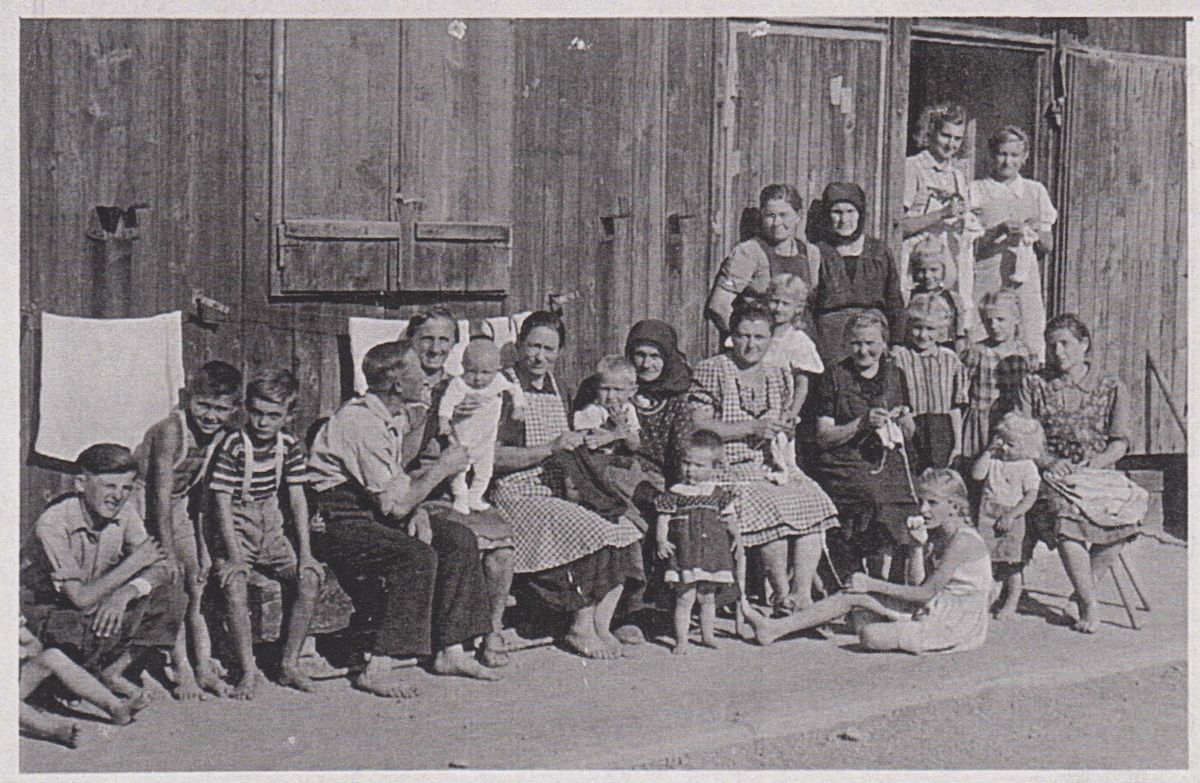
Wörgl Camp A was the postwar relief camp in the huts of a wartime transit camp built at Söcking for Russian and Ukrainian civilian labourers. Eighty-five Ukrainians were recorded there in the IRO return for 1948.
Introduction
Wörgl Camp A housed displaced people in the Austrian province of Tyrol, in the French occupation zone. It belonged to the postwar refugee landscape that developed around the former Durchgangslager in Söcking, near the meeting of the Brixentaler Ache and the Inn. Ukrainian residents were recorded here in the IRO return for 1948.
A history in dates
- December 1941Construction of the transit camp at Wörgl-Söcking begins for Russian and Ukrainian civilian labour.
- Spring 1942The camp is ready and the first transports from the occupied east arrive.
- 30 November 194210,979 people have been deloused, registered and allocated to work.
- May 1942 to September 1944Thirty-four transports with 31,759 people pass through the camp.
- 9 July 1945French troops replace the Americans in Wörgl.
- 1945The former transit camp becomes postwar refugee accommodation.
- 15 May 1947Camp A has 226 residents; Camp B has 477.
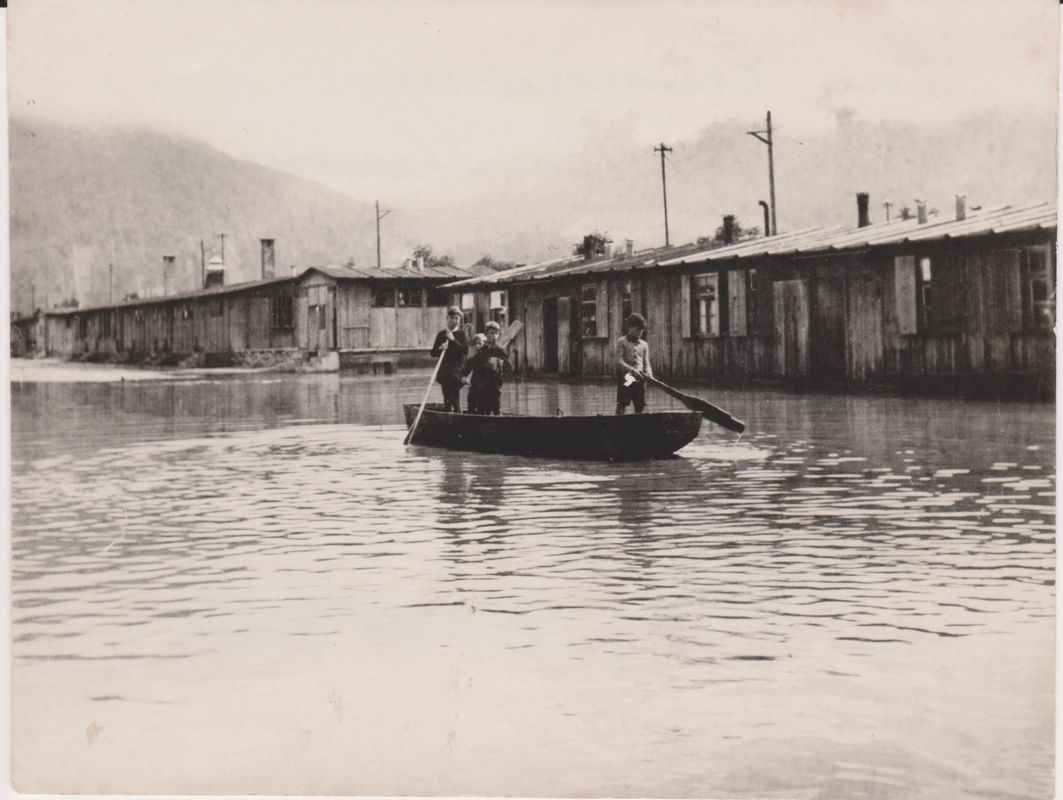
- 1948Floodwater inundates the Söcking barrack settlement; only huts in the western part still stand.
- 1948An IRO return records 85 Ukrainians at Camp A.
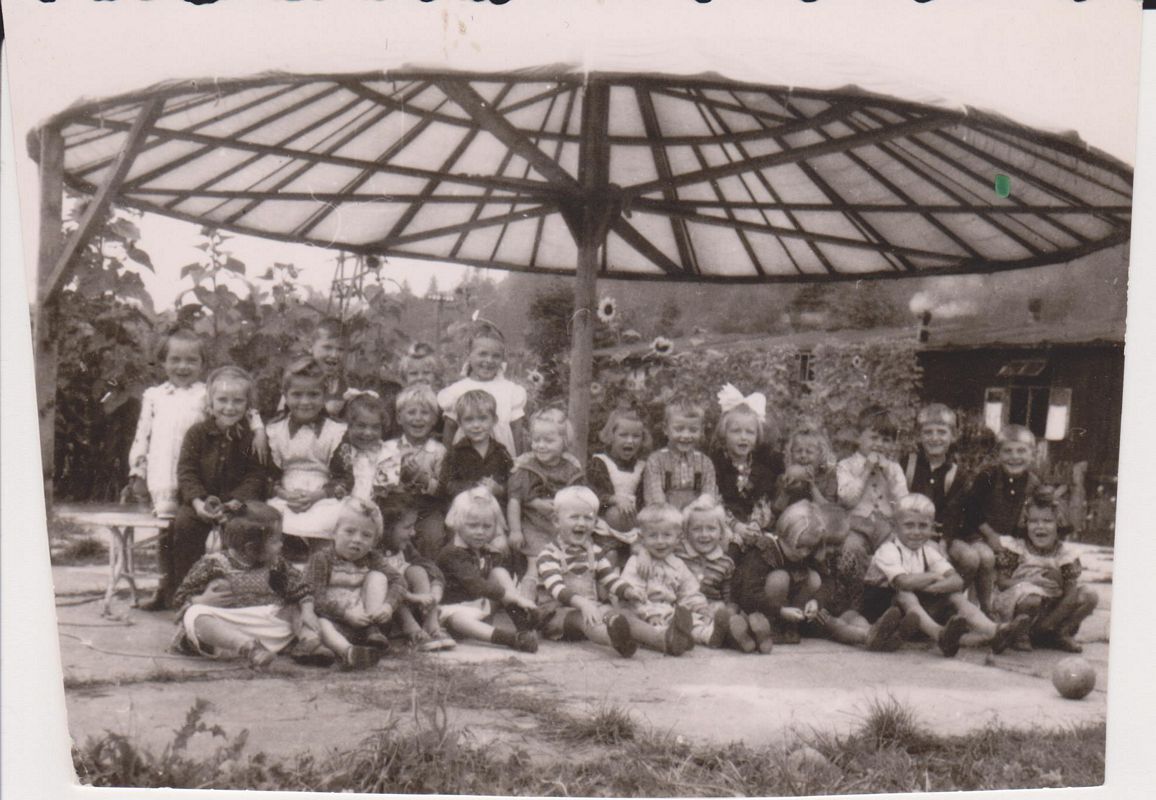
- 1951The Söcking kindergarten cares for 38 children.
- 1963One original wartime camp hut remains on the site.
The transit camp for eastern workers
Building began in December 1941 at Wörgl-Söcking, for the regional labour office Alpenland and on the instruction of the Gauleiter of Tyrol, on a Durchgangslager intended above all for Russian and Ukrainian civilian labour. Local firms took part in the construction, using foreign workers and prisoners of war. The camp was ready in spring 1942 and the first transports from the occupied eastern territories arrived.
The camp had eighteen accommodation huts and was divided into an unclean and a clean section, separated by one long hut with a delousing plant in the middle. New arrivals were taken into the unclean part; after medical examination and police registration they were moved to the clean part. Four further huts served the administration.
By 30 November 1942, 10,979 people had been deloused, examined, registered by the labour office and allocated to branches of the economy. Between May 1942 and September 1944 thirty-four transports carrying 31,759 people in total passed through. Alongside the Ostarbeiter transports, Polish, French and Warthegau transports arrived, and people were sent on not only into the Alpenland labour office district but into Bavaria as well. Until May 1943 eastern workers judged unfit for work were also sent home through the Wörgl camp.
Throughput of the wartime transit camp
| Period | Recorded figure |
|---|---|
| To 30 November 1942 | 10,979 people deloused, examined and registered |
| May 1942 to September 1944 | 34 transports, 31,759 people in total |
Sources for this section
Wörgl at the end of the war
Wörgl’s railway junction had suffered devastating bombing. In the surrounding town, housing, food and fuel were scarce; school attendance was disrupted by coal shortages, so that pupils came in only every second week in winter to hand in and collect work. French troops replaced the Americans on 9 July 1945. Reconstruction of the station area continued until December 1950, the year before Wörgl was granted town rights.
About 1.6 million displaced people were in Austria at the end of the war, and roughly 110,000 to 120,000 in Tyrol. Almost 10,000 Ukrainians were in the province in these years, more than 7,000 of them Greek Catholic, with eighteen priests serving them in 1947. Those are provincial figures and not a measure of the camp at Söcking.
Two camps, different residents
The authorities distinguished Camp A from Camp B. A French administrative return counted 226 people in A and 477 in B on 15 May 1947. These are separate camp totals, not Ukrainian population figures.
Camp B accommodated ethnic Germans, who were classed as enemy or ex-enemy displaced persons and excluded from UNRRA and its successor the IRO; those camps were administered by the French military government. Camp A belonged to the international relief system: the exhibition names Landeck, Haiming, Kematen, Kufstein and Wörgl A among the DP camps UNRRA organised in Tyrol. The distinction decided which residents received relief and resettlement help and which did not.
Stebelsky’s Table 5 of Ukrainians in the PCIRO or IRO camps of Austria records 85 Ukrainians at Wörgl A on 30 September 1948, drawn from the IRO Field Service Office in Salzburg. No figure is given for Wörgl in the column for 30 June 1950, when the French zone as a whole held 520 Ukrainians against 2,006 two years earlier. This establishes a Ukrainian presence within the camp rather than an exclusively Ukrainian institution.
Residents recorded at Wörgl
| Date | Population group | Number |
|---|---|---|
| 15 May 1947 | All residents, Camp A | 226 |
| 15 May 1947 | All residents, Camp B | 477 |
| 30 September 1948 | Ukrainians, Camp A | 85 |
Floodwater and a kindergarten
Photographs from the local museum show how vulnerable the barrack settlement remained. In 1948 floodwater spread between the huts. Another image records the kindergarten in 1951, when it cared for 38 children. The photographs belong to the Söcking settlement; the kindergarten total describes its children, without identifying their nationalities.
Sources for this section
The changing site
The camp kept its structure into the early 1950s. By 1948 only huts in the western part were still standing. Aerial photographs in the exhibition follow the site in 1953, 1963 and 1966; by 1963 a single hut of the former Durchgangslager remained.
A works site and a housing development now occupy the ground, and the 2016 exhibition recorded that nothing on the site marks the transit camp. The exhibition and its memory walk were the first sustained public account of it.
Sources for this section
Sources
- NS-Zwangsarbeit: Das vergessene Lager in Wörgl
Heimatmuseumsverein Wörgl / Anne Frank Verein Österreich · 2016
Exhibition panels read in full from the PDF, including the construction, layout and throughput of the Durchgangslager and the postwar panel on PDF page 15.
- Gedenken ans Kriegsende vor 80 Jahren
Vero Online / Museum Wörgl · 15 May 2025
Museum event account with camp photographs and captions from Museum Wörgl/Kittl.
- Ukrainian Population Migration after World War II, Table 5
Ihor Stebelsky, in The Refugee Experience: Ukrainian Displaced Persons after World War II (Edmonton: CIUS Press) · 1992
Appendix, Table 5, “Ukrainians in the PCIRO or IRO Camps of Austria”, printed page 43 (PDF page 70): Wörgl “A” 85 on 30 September 1948 and no entry for 30 June 1950. Page image rendered from the PDF and read directly. Footnote a cites the IRO Field Service Office return for the end of September 1948, Archives nationales de France, AJ 43, box 1119. Stebelsky’s earlier 1986 printing in Ukrainskyi Istoryk carries the same figures as Table 6, printed page 49, where the first column is headed 31 August 1948 against the same footnote.
- Refugee camps in Tyrol: French Control Commission return
French High Commission in Austria · 11 June 1947
German translation reproduced on exhibition PDF page 15; population return dated 15 May 1947, visually inspected.
- Der 8. Mai 1945: Neubeginn und Fremdbestimmung
Stadtgemeinde Wörgl · 2 May 2025
Municipal history of occupation, shortages and railway reconstruction.
- 120 Jahre ukrainisch-katholische Gemeinde Innsbruck
Liborius Lumma, Andreas-Petrus-Werk · 7 October 2019
Cited only for the size and pastoral care of the Ukrainian population of Tyrol. Province-level figures, not camp figures.
Last researched 13 September 2026