Caserma Zucchi
Displacement in Europe
Reggio Emilia, Emilia-Romagna, Italy · Displaced-persons camp documented in 1946
The former Zucchi barracks, a cattle market converted to an artillery barracks in 1877, served after the war as a mixed displaced-persons camp under Allied and then UNRRA administration. Its best documented episode is the antisemitic attack of May Day 1946.
Introduction
Caserma Zucchi became a displaced-persons camp in the aftermath of the Second World War. It brought Jewish refugees and Ukrainians into the same former military complex in central Reggio Emilia. The site’s postwar history is inseparable from the violence against Jewish residents on May Day 1946.
The camp was established by the British authorities and administered within the international relief system. Local historical research identifies the former Zucchi barracks as the mixed UNRRA camp where the attack occurred, rather than treating every refugee establishment in Reggio Emilia as the same place.
A history in dates
- 1877The site becomes a permanent barracks, later named after General Carlo Zucchi.
- 8 to 9 September 1943German forces seize the barracks; three Italian soldiers are killed.
- 13 January 1945The partisan commander Angelo Zanti is shot in the courtyard.
- After the Second World WarThe former barracks becomes a refugee camp.
- 1 May 1946Jewish residents are attacked during a May Day gathering.
- May 1946UNRRA lists the camp’s Russian and Ukrainian residents and their repatriation preferences.
- 14 May 1946UNRRA announces transfers of Jewish residents to camps in southern Italy.
- 5 June 1946A contemporary report records demands for punishment of the attackers.
- 1975Military use of the building ends.
- 2005The restored complex becomes a university site.
Sources for this section
- Ex Caserma Zucchi di Reggio Emilia
- La storia dell’ex Caserma Zucchi
- Caserma Zucchi - Via A. Allegri, 8a
- 1° maggio 1946 alla Caserma Zucchi: la violenza contro i profughi sopravvissuti alla Shoah
- REGGIO EMILIA CAMP, list of displaced persons, May 1946
- Jews Being Transferred from Italian Camp Where Two Were Killed by Anti-semitic DPs
- Refugee Group Protests Failure to Punish Ukrainians Responsible for Reggio Emilia Riot
From cattle market to barracks
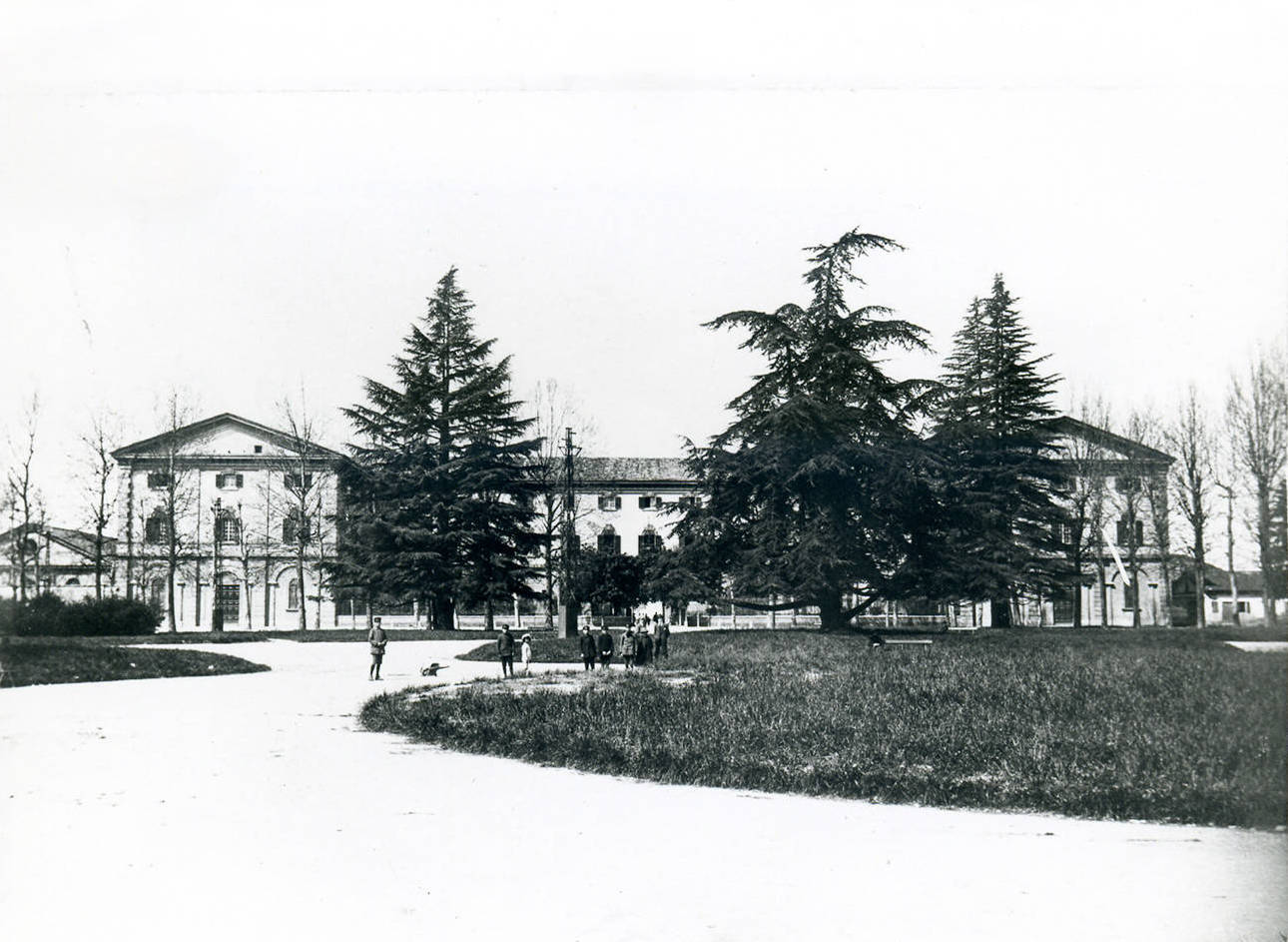
The building began as a livestock market and food-storage site before becoming military accommodation in 1877. During the German occupation, fighting and executions made it a significant local site of repression. After liberation its rooms were put to a different use: housing people displaced by war.
Duke Francesco IV commissioned it in 1845 from the architect Pietro Marchelli; it was finished in 1853. The barracks took the name of Carlo Zucchi, a Napoleonic general, and housed the 3rd Artillery Regiment.
A heritage description gives the building its original name, the Foro Boario, and sets out its arrangement: the upper floor was a warehouse for supplies and the lower floor the cattle market. When it was converted into a barracks the porticoes of the first floor were filled in.
Recorded uses of the building
| Period | Use | Source scope |
|---|---|---|
| 1845 to 1853 | Built as a cattle market for Duke Francesco IV, designed by Pietro Marchelli | University history of the building |
| 1854 to 1877 | Soldiers quartered on the site; permanent barracks from 1877, named after General Carlo Zucchi | University history and Istoreco site account |
| 1943 to April 1945 | Seized by German forces on 8 to 9 September 1943, then occupied by fascist troops | Resistance map entry for the occupation period |
| 1946 | Mixed displaced-persons camp under Allied and UNRRA administration | Istoreco site account and local historiography |
| To 1975 | Military use | University history and Istoreco site account |
| From November 2005 | University of Modena and Reggio Emilia; renamed Palazzo Giuseppe Dossetti | Istoreco gives the renaming as 2007, the university as 2013 |
Occupation and liberation
German forces seized the barracks on the night of 8 to 9 September 1943, killing three Italian soldiers who resisted: Antonio Giannone, Lino Bertone and Carlo Giannotti. On 13 January 1945 the partisan commander Angelo Zanti was shot in the courtyard.
Sources for this section
A refuge for people with nowhere to go
A contemporary report explains why Jewish refugees were taken to Reggio Emilia. UNRRA had learned that they were homeless and destitute in Milan. The agency arranged accommodation in the camp as part of its response to a continuing movement of refugees through Italy.
Many hoped to travel onward to Palestine. The report describes the Italian camps as stops within that journey, while also revealing how the need for immediate shelter could bring people with deeply opposed political experiences into a shared institution.
It was run first by the Allied military authorities and then by UNRRA, and could hold about a thousand people. Residents of dozens of nationalities shared it, and the Jewish refugees were a minority. Two British officers, Major Lewis and Lieutenant Eyston, are named as its commanders in 1946.
UNRRA’s Italy Mission records include a camp list of May 1946 covering twenty-seven Russian and Ukrainian residents, recording whether each wished to be repatriated. It is not a population count.
Sources for this section
- Jews Being Transferred from Italian Camp Where Two Were Killed by Anti-semitic DPs
- Ex Caserma Zucchi di Reggio Emilia
- Jewish Displaced Persons in Italia (1945–1950)
- 1 maggio 1946 alla Caserma Zucchi: la violenza contro i profughi sopravvissuti alla Shoah
- Refugee Group Protests Failure to Punish Ukrainians Responsible for Reggio Emilia Riot
- REGGIO EMILIA CAMP, list of displaced persons, May 1946
The May Day attack
On 1 May 1946, a group of Ukrainian former prisoners attacked Jewish refugees gathered for a May Day celebration. Local historical accounts describe the assault as antisemitic and record two deaths across the violence and its aftermath.
Istoreco’s research records two dead and calls the attack premeditated; its published accounts differ on the wounded, giving about twenty in one and about thirty on the Livello 9 site page. A survey of the Italian camps instead gives one killed and four seriously wounded, with a red flag as the trigger.
A June 1946 report gives a more detailed sequence. One Jewish victim died following the initial attack. Camp authorities then arranged to move the Ukrainians elsewhere. During a confrontation as the transfer was being organised, Italian police fired into a crowd and killed another Jewish person. The report attributes the original assault to a specific group of attackers; it does not establish collective responsibility for every Ukrainian resident.
Local accounts describe the attacking group as former prisoners of war who had fought under General Vlasov.
Sources for this section
- 1° maggio 1946 alla Caserma Zucchi: la violenza contro i profughi sopravvissuti alla Shoah
- Gli ebrei reggiani dal 1945 a oggi
- Ex Caserma Zucchi di Reggio Emilia
- 1 maggio 1946 alla Caserma Zucchi: la violenza contro i profughi sopravvissuti alla Shoah
- I campi Displaced Persons per profughi ebrei stranieri in Italia (1945–1950)
- Refugee Group Protests Failure to Punish Ukrainians Responsible for Reggio Emilia Riot
- Jewish Displaced Persons in Italia (1945–1950)
Transfers and demands for accountability
By 14 May, UNRRA announced that approximately 1,000 Jewish residents were being transferred from Reggio Emilia to camps reserved for Jewish refugees in southern Italy. This was a movement between camps within Italy, not an overseas resettlement programme.
The same report records that the commanders, while declining to punish the attackers, moved all the Ukrainian residents to another, unnamed camp.
The Organisation of Jewish Refugees in Italy subsequently submitted a memorandum to the Allied Control Commission and UNRRA demanding punishment of those responsible. The June report stated that witnesses had identified 18 participants in the initial assault and protested that the attackers had not been punished. Spanish Republican refugees were among those described as witnesses.
Reported transfers and accountability
| Report date | Information | Scope |
|---|---|---|
| 14 May 1946 | Approximately 1,000 Jewish residents to be transferred | Reported relocation group, not the camp’s total population |
| 5 June 1946 | 18 alleged participants identified by witnesses | Contemporary report of the refugee organisation’s complaint |
The building and its memory
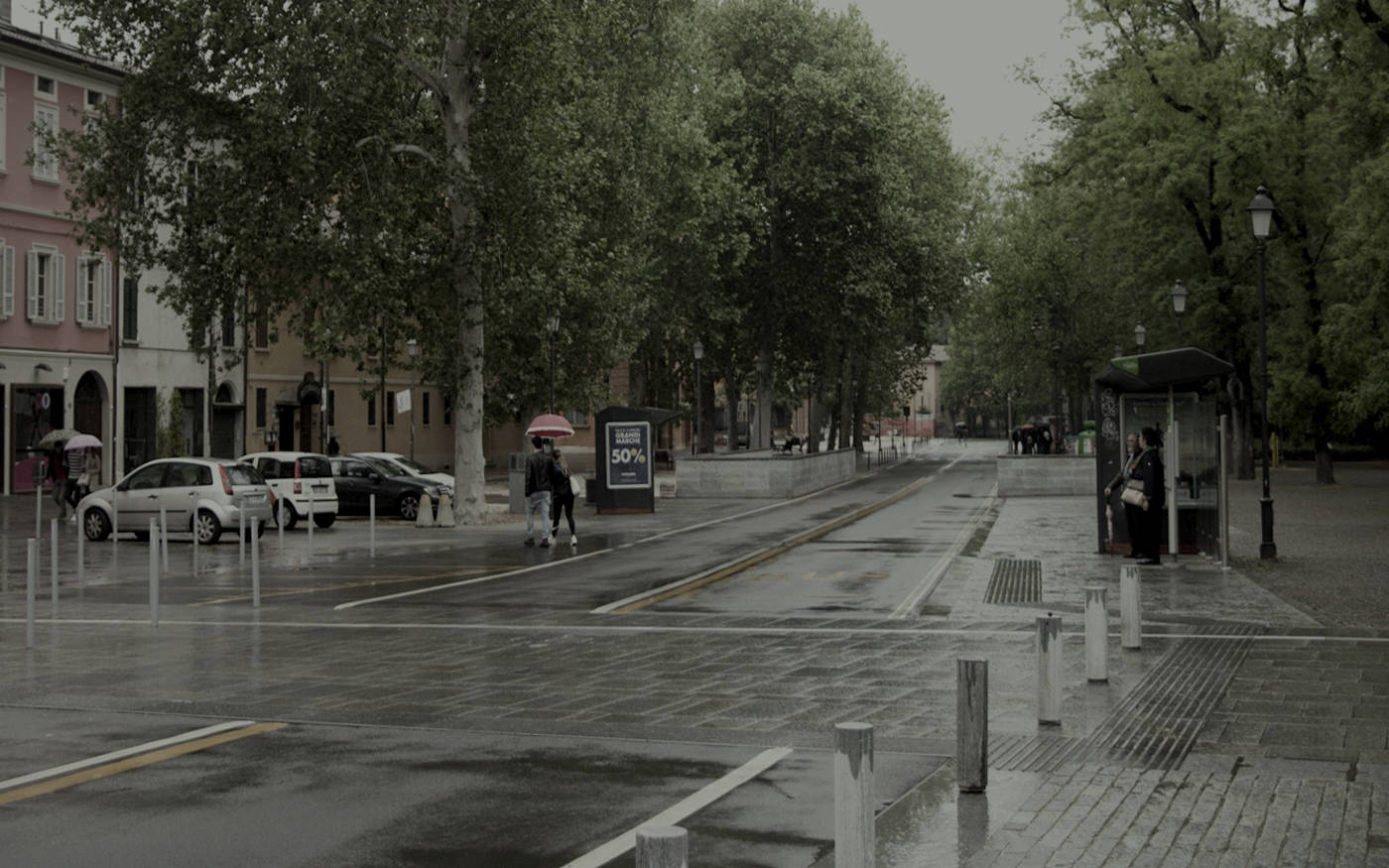
The barracks later returned to military use, which continued until 1975. Cultural institutions followed, and the restored complex became a university site in 2005. It was renamed Palazzo Giuseppe Dossetti in 2007.
After 1975 the Comune used the complex for civic museums, a music institute and a social centre. The university’s own history dates the Dossetti dedication to 2013.
The camp’s history remains part of local remembrance. A historical lecture announced for 3 May 2026 at Reggio Emilia’s synagogue focused specifically on the May Day attack and its victims, eighty years after the events.
Published work does not establish when the camp opened or closed, its population, the names of those killed, or how daily life was arranged.
Sources for this section
- Ex Caserma Zucchi di Reggio Emilia
- La storia dell’ex Caserma Zucchi
- 1° maggio 1946 alla Caserma Zucchi: la violenza contro i profughi sopravvissuti alla Shoah
- 1 maggio 1946 alla Caserma Zucchi: la violenza contro i profughi sopravvissuti alla Shoah
- I campi Displaced Persons per profughi ebrei stranieri in Italia (1945–1950)
Sources
- Ex Caserma Zucchi di Reggio Emilia
Istoreco / Livello 9 · Undated
Historical site account and archival photographs; former barracks on Viale Allegri.
- Jews Being Transferred from Italian Camp Where Two Were Killed by Anti-semitic DPs
Jewish Telegraphic Agency · 14 May 1946
Contemporary report quoting a senior UNRRA relief official.
- Refugee Group Protests Failure to Punish Ukrainians Responsible for Reggio Emilia Riot
Jewish Telegraphic Agency · 5 June 1946
Contemporary account of the refugee organisation’s memorandum and the sequence of violence.
- 1° maggio 1946 alla Caserma Zucchi: la violenza contro i profughi sopravvissuti alla Shoah
Beni Ebraici Emilia-Romagna · 2026
Announcement of the 3 May 2026 historical lecture and synagogue visit; identifies the mixed camp and the May Day attack.
- Gli ebrei reggiani dal 1945 a oggi
ESTER / Mirco Carrattieri · Undated
Local historian’s account of the postwar Jewish community and the mixed UNRRA camp.
- Caserma Zucchi - Via A. Allegri, 8a
Resistenza Mappe (Istoreco) · Undated
Occupation-era map entry: 1853 cattle market, 1877 conversion, September 1943 seizure, execution of Angelo Zanti.
- La storia dell’ex Caserma Zucchi
Universita degli Studi di Modena e Reggio Emilia, Dipartimento di Comunicazione ed Economia · Undated
University history of the building: 1845 commission, 1853 completion, 1877 barracks, the Zucchi name, 1975, November 2005, Dossetti dedication dated 2013.
- Jewish Displaced Persons in Italia (1945–1950)
E-Review / Federica Di Padova · 2017
Academic account of Jewish DPs in Italy; the mixed camp at the ex caserma Zucchi and the 1 May 1946 attack.
- 1 maggio 1946 alla Caserma Zucchi: la violenza contro i profughi sopravvissuti alla Shoah
Istoreco · 2026
Istoreco announcement quoting Di Padova on the mixed UNRRA camp, the casualties and the camp commander’s conduct.
- REGGIO EMILIA CAMP, list of displaced persons, May 1946
United States Holocaust Memorial Museum, from UNRRA selected records AG-018-009, Italy Mission · May 1946
Catalogue record for a nationality-ordered list of twenty-seven Russian and Ukrainian residents with repatriation preference.
- I campi Displaced Persons per profughi ebrei stranieri in Italia (1945–1950)
Storia e Futuro · Undated
Survey of the Italian DP camp system; variant casualty account of the Reggio Emilia attack and the red flag as trigger.
- Former Zucchi barracks (Ex caserma Zucchi)
Ducato Estense; Daniele Pascale · Undated; read 14 September 2026
Heritage entry, description section read. It gives the building’s original name and the use of its two floors, and records that the porticoes of the first floor were filled in when it became a barracks.
Last researched 13 September 2026