Northam Army Camp
Arrival and settlement
Northam, Western Australia, Australia · 1949–1951
After arriving at Fremantle, thousands of European migrants began Australian life in Northam’s former army huts, learning English and waiting for work placements across Western Australia.
Introduction
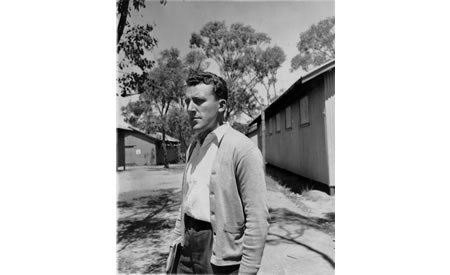
Northam Army Camp became a migrant reception and accommodation centre in 1949. Residents often called it Top Camp. About five kilometres south-west of Northam, it provided a first Australian home for displaced people arriving from Europe, including Ukrainians. Its role was reception, accommodation and preparation for work after migration to Australia.
It was separate from Holden Holding Centre, a former army hospital in Northam. Families could move between the two: workers left Top Camp for employment, while wives and children moved to Holden until the family could establish a home.
A history in dates
- August 1949The first migrants travel from Fremantle to Northam and enter the accommodation centre.
- 1949A camp hospital provides medical and maternity care.
- Early 1950A primary school opens, with about 350 children presenting for enrolment.
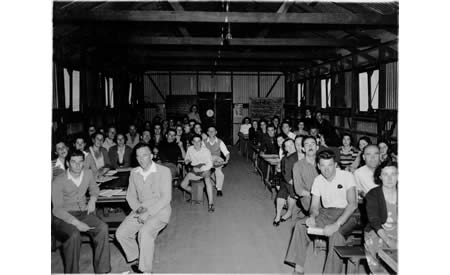
- 1950A recreation hall supports dances, concerts and indoor games.
- September 1951The migrant accommodation centre closes and the army resumes use of the site.
Sources for this section
From Fremantle to Top Camp
The military buildings needed considerable preparation. Fifty migrants helped make the site habitable, adding dining rooms, a canteen and a post office and improving the hospital. Northam’s railway connections made it a practical place from which to send workers to jobs across the state.
The first arrivals reached Fremantle on 24 August 1949. The next day, three trains carried 1,599 migrants to Northam station, followed by buses to the camp. The centre initially retained military routines: inspections, block supervisors, bed numbers and lights-out. Residents received bedding, crockery and washing equipment, and had to return the items when they left.
A museum object description at the Northam Heritage Centre sets the camp in the wider arrival traffic: some 30,000 migrants landed at Fremantle between 1945 and 1954 and were immediately put on trains to migrant centres in former army camps at Northam. The same description records a Hungarian family reaching Fremantle in 1956 and travelling by train to Northam Army camp, where six families were assigned to one corrugated iron army barrack. That date falls after the accommodation centre’s documented closure, and the description does not say under what arrangements the camp then housed migrants.
Sources for this section
Making a home behind blanket walls
Family accommodation offered little privacy. Army blankets hung inside the barracks divided one household from another; voices carried through the building, and the partitions shifted as families came and went. Single residents shared dormitories of about 20 people.
The toilets and washrooms stood away from the huts. Water ran through exposed pipes, becoming hot in summer and cold in winter, and summer shortages could interrupt the supply. A pan-collection sanitation system struggled with the crowded camp. A post office, canteen, banking services and social-security staff nevertheless made the settlement function as a small town.
Sources for this section
Meals and familiar tastes
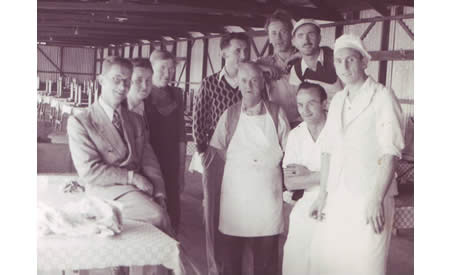
Food came from communal kitchens and messes. A separate children’s kitchen prepared meals for young children and expectant mothers. Meal times sometimes separated household members, so families collected food and ate together in their hut.
Residents frequently disliked the unfamiliar cooking, especially repeated mutton dishes and food that arrived cold or overcooked. Menus gradually changed. Shopping trips into Northam allowed people to buy familiar ingredients, though cooking in the barracks was discouraged and could provoke inspections.
The camp ration scale
| Group | Share of full ration |
|---|---|
| Males over 10 | 1 |
| Women | 6/7 |
| Children aged 2–10 | 2/3 |
| Toddlers | 1/3 |
Sources for this section
Jobs, contracts and family separation
Displaced people admitted under the assisted scheme were allocated work under a two-year agreement. Qualifications earned in Europe did not necessarily determine their jobs: many became labourers or domestic workers. Roads, railways, water supply, farming, forestry and country hotels all needed workers.
Employment could take a parent far from the family. Camp jobs were particularly valued because they helped households stay together and brought better accommodation: married employees could receive a lined room with a ceiling and door. The heritage association estimates that running the centre required around 500 migrant workers.
Sources for this section
Learning in borrowed army huts
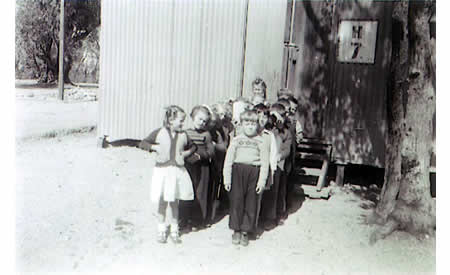
A primary school opened in early 1950 and quickly exceeded expectations. The first teachers anticipated roughly 50 children; about 350 appeared to enrol, while the Heritage Council’s assessment documentation dates the state school’s opening to March 1950 and gives 400 children attending. Lessons began around army trestle tables, with groups attending morning or afternoon sessions. Children learned English alongside counting, songs and games, while frequent family transfers constantly changed the classes.
The canteen helped fund sports equipment, paints and a second-hand piano. Adults also attended English lessons, although some preferred informal learning. Surviving photographs show classes held inside the camp’s standard huts.
Sources for this section
Health and maternity care
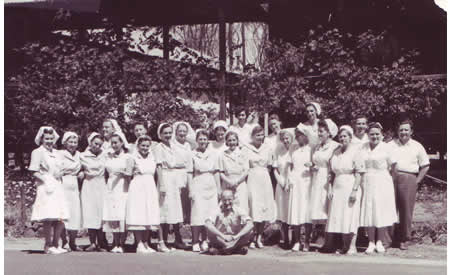
The 1949 camp hospital provided medical and maternity services, with isolation accommodation during a measles outbreak and a tuberculosis ward. Some migrants with medical qualifications worked as aides or orderlies because their credentials were not recognised. Language barriers complicated treatment; interpreters helped families understand what was happening.
Sources for this section
Music, sport and the town
The recreation hall hosted concerts, films, Christmas celebrations and twice-weekly dances. Migrant bands sometimes played alongside local musicians. Football, table tennis, badminton and billiards offered other ways to meet. Buses linked the camp and town, while local voluntary organisations arranged outings and social events.
Ukrainians arriving in Western Australia also began organising beyond the camps. Their association’s history places Northam alongside Graylands and Cunderdin in this settlement network, followed by community meetings, a choir and later a permanent hall in Perth.
The same arrival was recalled publicly in 2007. At the opening of the exhibition Ukrainians Then and Now at Perth Town Hall, Mykola Mowczan spoke of many of the original migrants arriving “with only a suitcase, no English language and little money” and recommencing their lives in the barracks and tents of Northam, Cunderdin or Graylands Hostel.
Sources for this section
Leaving Top Camp
The accommodation centre closed in September 1951, after approximately 15,000 migrants had passed through in two years. The army resumed use of the site. Holden continued accommodating migrants, so the end of Top Camp’s reception role did not mean the end of migrant camp life in Northam.
Sources for this section
The camp in official and heritage records
The official records describe the migrant use in different terms. The Australian War Memorial’s place record states that from 1949 until 1963 parts of Northam Camp were used as a reception facility for non-British migrants from Europe, a period much longer than the accommodation centre’s documented operation, and it does not explain how migrant reception continued after September 1951. The Western Australian heritage inventory notes that part of the camp was used to accommodate European migrants who came to Northam after the Second World War in 1949, and its statement of significance records that the place “has historical and social significance, being associated with WWII and the post-war immigration program.”
The heritage association’s camp timeline divides the 1949 to 1951 period in two, describing the centre as first a centre for displaced persons from eastern Europe and then a migrant reception centre for other post-war non-British immigrants. Two museum catalogue records of the Australian Army Museum of Western Australia give the same bounds for the Department of Immigration’s use of the camp, between 1949 and September 1951.
Sources
- Northam Accommodation Centre
Northam Army Camp Heritage Association · Undated
Dedicated local historical account drawing on archives, photographs and oral histories.
- Living at Northam Camp
Northam Army Camp Heritage Association · Undated
Dedicated local historical account drawing on archives, photographs and oral histories.
- Eating at Northam Camp
Northam Army Camp Heritage Association · Undated
Dedicated local historical account drawing on archives, photographs and oral histories.
- Working at Northam Camp
Northam Army Camp Heritage Association · Undated
Dedicated local historical account drawing on archives, photographs and oral histories.
- Education
Northam Army Camp Heritage Association · Undated
Dedicated local historical account drawing on archives, photographs and oral histories.
- Health
Northam Army Camp Heritage Association · Undated
Dedicated local historical account drawing on archives, photographs and oral histories.
- Social Life
Northam Army Camp Heritage Association · Undated
Dedicated local historical account drawing on archives, photographs and oral histories.
- Closure of the Camp
Northam Army Camp Heritage Association · Undated
Dedicated local historical account drawing on archives, photographs and oral histories.
- Northam Army Camp: heritage assessment
Heritage Council of Western Australia · 7 January 2000
Pages 8–10, documentary evidence of the 1949–51 accommodation centre; archives referenced but not independently read.
- History of the Ukrainian Association of Western Australia
Ukrainian Association of Western Australia · Undated
Community history confirms Northam among camps accommodating Ukrainian arrivals.
- Northam
Australian War Memorial · Undated
Place description page, Description section read: parts of Northam Camp used as a reception facility for non-British migrants from Europe from 1949 until 1963.
- Northam Army Camp, inHerit place record 06126
inHerit, State Heritage Office, Government of Western Australia · Created 18 April 1997; last updated 21 February 2020
History and Statement of Significance sections of the heritage inventory record read: accommodation of European migrants at part of the camp from 1949, and the association of the place with the Second World War and the post-war immigration programme.
- Camp Timeline
Northam Army Camp Heritage Association · Undated
Timeline entry headed ‘1949 – 1951’ read: the camp’s operation as the Department of Immigration Accommodation Centre, first for displaced persons from eastern Europe and then as a migrant reception centre, with about 15,000 people passing through.
- Ukrainians Then and Now
Australian Federation of Ukrainian Organisations · 2007
Report of the opening of the exhibition at Perth Town Hall on 17 November 2007, read for the passage describing post-war migrants recommencing their lives in the barracks and tents of Northam, Cunderdin or Graylands Hostel.
- Northam Camp, 1940, item P1995.185.1f
Collections WA / Australian Army Museum of Western Australia · Item dated 1940
Historical information section read: the camp used as an accommodation centre by the Department of Immigration between 1949 and September 1951.
- Migrant Trunk, Northam Heritage Centre
Australia’s Golden Outback; object held at Northam Heritage Centre · Undated
Museum object description read: some 30,000 migrants landing at Fremantle between 1945 and 1954 and sent by train to migrant centres in former army camps at Northam, and a Hungarian family reaching Northam Army camp in 1956 where six families shared one corrugated iron barrack.
- Northam Camp, 1940, item P1900.2154
Collections WA / Australian Army Museum of Western Australia · Item dated 1940
Historical information section read: the camp used as an accommodation centre by the Department of Immigration between 1949 and September 1951.
Last researched 12 September 2026