Winfield Camp
Arrival and settlement
Hutton, Berwickshire, Scotland · Airfield 1942 to 1945; displaced persons camp from October 1946; hostel recorded about 1951
Winfield was a Berwickshire night-fighter training airfield whose dispersed hutted camps outlived its flying. Polish soldiers and displaced persons occupied them from October 1946, a Ukrainian hostel is named there in Kormylo’s directory, and a Berwickshire archive holds a photograph of a Winfield harvest hostel taken about 1951.
Introduction
Winfield Camp near Hutton was one of the Borders places where Europeans built new lives after the war. Its accommodation served the Polish resettlement programme, and a Ukrainian community directory identifies an EVW hostel at Winfield. The camp is also remembered for Wojtek, the bear who lived alongside Polish soldiers before moving to Edinburgh Zoo.
Sources for this section
A history in dates
- First World WarWinfield, then known as Horndean, served as a landing ground.
- April 1942The training airfield opened after construction begun in 1941, planned for 686 airmen and 56 WAAFs across five sites.
- November 1945The airfield closed to flying and was transferred to the War Office; the hutted camps remained.
- 15 April 1946RAF vertical photographs record the dispersed camps still standing, the eastern communal site with at least sixteen buildings.
- 28 October 1946The 22 Artillery Support Company of the 2nd Polish Corps arrived at Winfield Displaced Persons Camp with the bear Wojtek.
- 1946Archie Brown recalled joining the Polish unit and helping with employment interviews.
- 1947The Polish unit was demobilised and Wojtek left Winfield for Edinburgh Zoo.
- About 1951Berwick Record Office dates its photograph of the Winfield Harvest Hostel to about this year.
- October 1951A motor racing meeting on the former runways drew over 50,000 spectators.
- October 1955The site reverted to RAF control and was sold off.
Sources for this section
- RAF Winfield and the Polish Connection (Part 1)
- Winfield (Horndean), Airfield Finder
- Winfield Airfield, Waaf Accommodation Camp (NRHE 100792)
- RAF Winfield and the Polish Connection (Part 2)
- Krystyna Caulfield, The Story of Archie Brown and Wojtek the Bear
- Wojtek, the Bear That Went to War
- Photo Centre Index, black and white, printed page 310
An airfield with a second purpose
Winfield had served as a landing ground during the First World War, when it was known as Horndean. The airfield proper was built over 1941 and 1942 and opened in April 1942 as the satellite of Charterhall in the night-fighter training programme. Squeezed between two roads, it had only two runways, of 1,600 and 1,100 yards, with thirty-seven hardstands and four blister hangars. As a satellite station it was planned for 686 airmen and 56 WAAFs spread over five sites: three airmen’s sites, a WAAF site and a communal site, with a small sewage plant nearby.
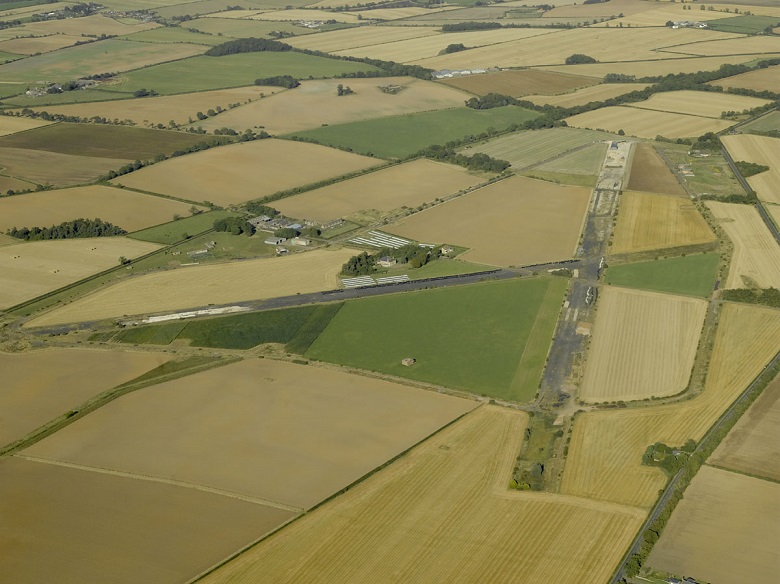
That dispersed accommodation is what mattered after the flying stopped. Historic Environment Scotland records the camps in Hutton parish, north of the airfield, centred at NT 90451 51889 and NT 90421 51830, with further dispersed sites and a sewage works. Vertical air photographs flown on 15 April 1946 show the huts still standing, the eastern communal camp then consisting of at least sixteen buildings and three emergency air-raid shelters. The Airfields of Britain Conservation Trust records that the airfield itself closed in November 1945 and passed to the War Office. The later aerial photograph below shows the surviving runway pattern amid fields, a broad view of the former airfield rather than the footprint of the Ukrainian hostel.
Winfield’s changing roles
| Phase | Date | Evidence |
|---|---|---|
| Landing ground | First World War | Used by 77 Squadron under the name Horndean |
| Training airfield | April 1942 to November 1945 | Satellite of Charterhall; closed to flying and transferred to the War Office |
| Displaced persons camp | From 28 October 1946 | 22 Artillery Support Company, 2nd Polish Corps, demobilised about a year later |
| Ukrainian accommodation | Undated | EVW hostel named in Kormylo’s map and directory |
| Harvest hostel | About 1951 | Berwick Record Office photograph BRO 1944/1/55/9 |
| Disposal | October 1955 | Returned to RAF control and sold off after a USAF period |
The dispersed camps in April 1946
| Feature | Recorded detail |
|---|---|
| Accommodation camps | Centred NT 90451 51889 and NT 90421 51830, Hutton parish |
| Eastern communal camp | At least sixteen buildings and three emergency air-raid shelters |
| Further dispersed camps | NT 9098 5175 and centred NT 9064 5211 |
| Sewage works | NT 90924 51428 |
| Photographs | RAF verticals 106G/Scot/UK 20, frames 7076 to 7078, flown 15 April 1946 |
The displaced persons camp, 1946
On 28 October 1946 the 22 Artillery Support Company of the 2nd Polish Corps arrived at what Aviation Trails calls Winfield Displaced Persons Camp. Lady Brigid McEwen’s account for Gavinton places the same movement in its wider Berwickshire setting: the 1st Corps had trained in the county from 1942, and after the war men of the 2nd Corps came to Britain, some to Winfield near Berwick in 1946. As displaced persons the Polish men went into Berwick, where local people grew fond of them. About a year after their arrival the unit was demobilised and moved away. A makeshift memorial to the Polish Armed Forces still stands on the former camp ground.
Finding work after military service
A personal recollection preserved by Erskine Veterans Charity describes the practical work of resettlement at Winfield. Krystyna Caulfield recounts meeting veteran Archie Brown, who told her that he was seconded to the Polish artillery unit there in 1946. He interviewed men to assess their English and help them find employment in Britain. His account puts an individual face to the transition from military service to civilian work. It concerns the Polish unit; the Ukrainian EVW hostel is separately documented in Kormylo’s directory.
The Ukrainian hostel
Kormylo’s map names the accommodation as the EVW Hostel, Winfield Camp, Hutton. His appendix lists Winfield Camp under Berwick-on-Tweed among hostels holding significant numbers of ethnic Ukrainians. The two descriptions locate the named hostel in the same border district and preserve its place in the Ukrainian network of accommodation. They establish the Ukrainian connection without turning the whole Polish resettlement camp into a Ukrainian institution.
The wider pattern behind that entry is documented in the Ukrainians in the United Kingdom encyclopaedia. From 1947 responsibility for administering such camps began to pass from the War Office to the National Assistance Board, the National Service Hostels Corporation and other civilian bodies, and the camps were officially redesignated as hostels. Hostels usually accommodated workers of more than one nationality, and most residents were only able to leave after the beginning of 1951, when employment restrictions started to be lifted. That is the framework within which a Winfield hostel would have operated; the encyclopaedia does not name Winfield itself.
Sources for this section
A harvest hostel, about 1951
The one contemporary trace of the civilian hostel is a photograph. Berwick Record Office’s photographic index lists item BRO 1944/1/55/9 as “Camp - Winfield Harvest Hostel”, dated by the cataloguer N.D. [C.1951]. The name is a recognised one: the Central Office of Information made a recruitment film called Harvest Hostel in 1948, the file for which survives at Kew as INF 6/238. Harvest hostels housed the seasonal agricultural labour that the postwar Borders depended on, and the entry shows accommodation of that kind still running at Winfield around 1951. The photograph itself has not been obtained, and the date is an archivist’s estimate rather than a recorded one.
Between the departure of the Polish unit in 1947 and that catalogue entry the record is silent. A search of the National Archives Discovery catalogue on 13 September 2026 returned no entry of any kind for a Winfield camp or hostel, and the Gazette holds no naturalisation notice giving a Winfield address. Who ran the hostel, how many people it held, which nationalities lived there and when it closed are all unknown. The requisition and de-requisition file for the Winfield land, AIR 2/16942, runs to 1958 and has not been read.
Wojtek and the memory of Winfield
Wojtek came to Winfield with the 22nd Artillery Supply Company. Local people grew familiar with the bear around the airfield. Archie Brown’s story includes the surprise of finding a bear on the regimental roster and his role in helping arrange its move to Edinburgh Zoo. Wojtek entered the zoo in 1947 as the soldiers moved towards civilian lives, and he died there in 1963. His story became a lasting symbol of the Polish experience in Scotland and of Winfield’s place in it, marked now by statues in Duns and in Edinburgh.
The site afterwards
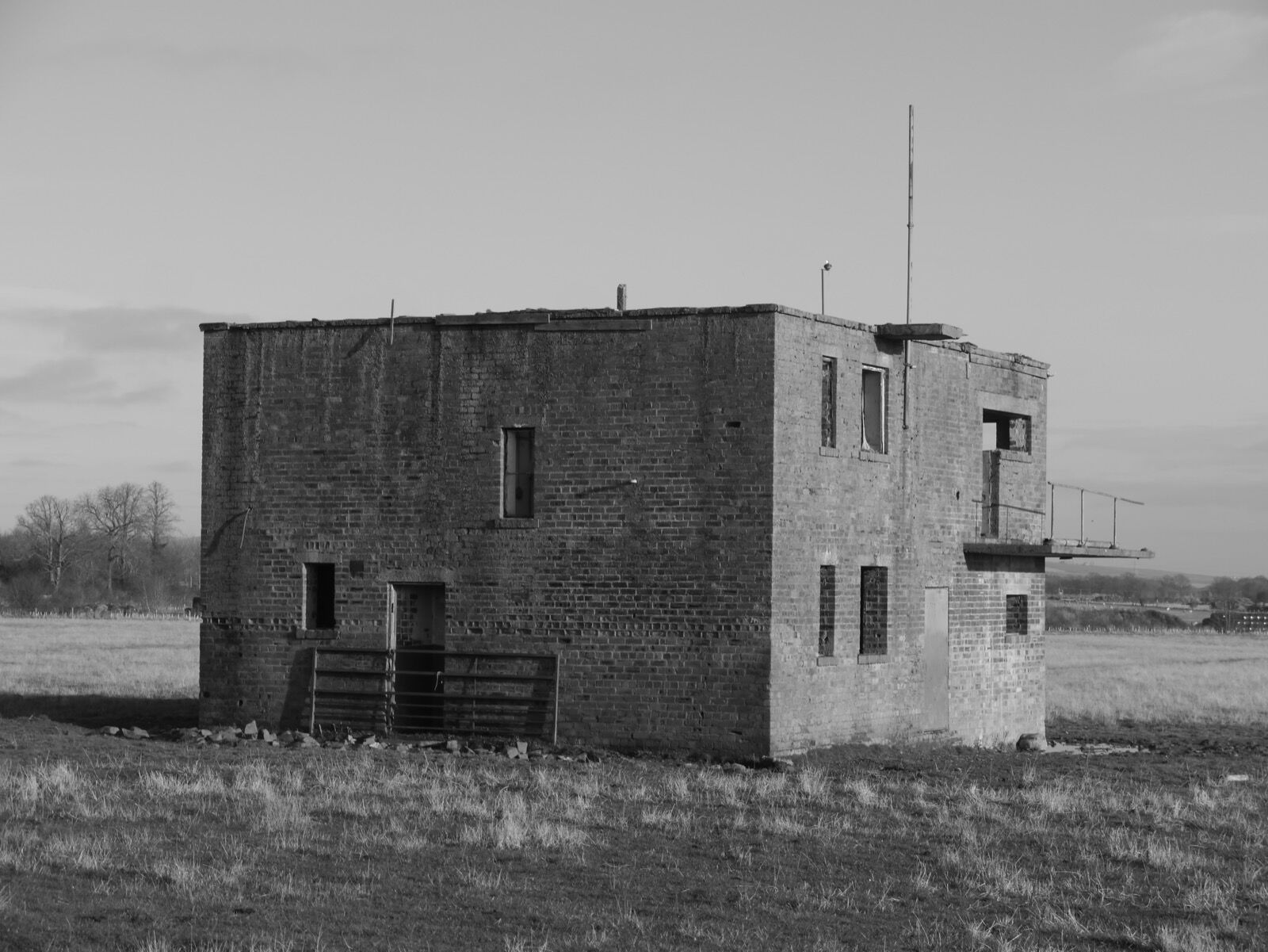
After the Polish troops left, the site was allocated to the USAF and earmarked for development that never came. It reverted to RAF control in October 1955 and was then disposed of and sold. The runways found a second life in motor sport: a meeting in October 1951 drew an attendance of over 50,000. A small group of private flyers later reopened the site and renovated the watch office, but that operation ceased and the building fell into disrepair. The accommodation sites have largely been removed, though buildings survive on the former WAAF ground where the camp stood.
Sources for this section
Sources
- Peter Kormylo, Ukrainians in Scotland, PhD thesis
University of Glasgow · 2021
Original printed 100 map identifies EVW Hostel Winfield Camp Hutton; 322 entry 13 lists Winfield Camp Berwick on Tweed.
- Wojtek, the Bear That Went to War
Historic Environment Scotland · 4 May 2018
Complete institutional article and actual aerial DP036104 inspected; flight date absent. Polish resettlement population not Ukrainian population.
- Krystyna Caulfield, The Story of Archie Brown and Wojtek the Bear
Erskine Veterans Charity · 21 November 2023
Original published recollection of interviewer read. Archie Brown seconded 1946; English and employment interviews at Winfield. No claim these Polish unit interviews included Ukrainian EVWs.
- RAF Winfield and the Polish Connection (Part 1)
Aviation Trails · 28 May 2017
Full text read. Construction 1941 to 1942, opening April 1942, runway and hardstand figures, planned accommodation of 686 airmen and 56 WAAFs over five sites. These are RAF establishment figures, not hostel capacities.
- RAF Winfield and the Polish Connection (Part 2)
Aviation Trails · 4 June 2017
Full text read. Arrival of 22 Artillery Support Company at Winfield Displaced Persons Camp on 28 October 1946, demobilisation about a year later, USAF allocation, return to RAF control October 1955, disposal, motor racing, Polish Armed Forces memorial on the camp ground. Secondary aviation history; silent on the civilian hostel.
- Winfield Airfield, Waaf Accommodation Camp (NRHE 100792)
Historic Environment Scotland, National Record of the Historic Environment · Notes 1996 and 2006
Full record read. Dispersed camps in Hutton parish at NT 90451 51889 and NT 90421 51830; RAF verticals 106G/Scot/UK 20 frames 7076 to 7078 flown 15 April 1946; at least sixteen buildings and three shelters in the eastern communal camp. Military archaeology only; no postwar occupation recorded.
- Winfield (Horndean), Airfield Finder
Airfields of Britain Conservation Trust · Undated
Read in full. Airfield closed November 1945 and transferred to the War Office; held until the mid-1950s with the USAF in charge in the first half of that decade; October 1951 motor sport attendance over 50,000. Makes no mention of a camp or hostel.
- Photo Centre Index, black and white, printed page 310
Berwick Record Office, index issued 17 June 2022
Original index downloaded and the matching row visually checked. BRO 1944/1/55/9, described Camp - Winfield Harvest Hostel, dated N.D. [C.1951]. The photograph itself has not been obtained; the date is the cataloguer’s estimate.
- Discovery catalogue searches, including INF 6/238 and AIR 2/16942
The National Archives · Searched 13 September 2026
INF 6/238, Harvest Hostel (recruitment), 1948, Central Office of Information film production documents. AIR 2/16942, requisition, works, compensation and de-requisition, RAF Station Winfield, Berwickshire, 1941 to 1958, not read. Searches for Winfield Camp and Winfield Hostel returned no results; Discovery indexes descriptions, not file contents.
- Brigid McEwen, Polish Troops in Berwickshire in the 1940s and Wojtek the Bear
Gavinton, Fogo and Polwarth community website · April 2020
Full text read. Contributed by Lady Brigid McEwen. Men of the 2nd Corps came to Winfield Camp near Berwick in 1946; demobilisation 1947; Wojtek died at Edinburgh Zoo in 1963; statues at Duns and Edinburgh. Polish context, not Ukrainian.
- Roman Krawec, Post-war camps and hostels
Ukrainians in the United Kingdom online encyclopaedia · Published 10 February 2013
Read in full. Transfer of camp administration to civilian bodies from 1947 and redesignation as hostels; mixed nationalities; departures from 1951; closure of most hostels by the mid-1950s. General framework; Winfield is not named in the article.
- RAF Winfield – Watch Office
James T M Towill, Geograph Britain and Ireland, via Wikimedia Commons · 16 December 2012
Photograph of the surviving watch office at Winfield airfield, taken in December 2012. Licensed under the Creative Commons Attribution-ShareAlike 2.0 Generic licence.
Last researched 13 September 2026