Graylands Migrant Centre
Arrival and settlement
Mount Claremont, Perth, Western Australia, Australia · From 1947; later hostel to 1987
Graylands brought together an early reception camp in former army barracks and a neighbouring Commonwealth hostel built of Nissen huts, where newcomers learned English, found work and began life in Perth. It was the Western Australian reception point for displaced people, and Ukrainian community life in Perth grew out of the years its residents spent there.
Introduction
Graylands received Ukrainian newcomers in former army barracks near Mount Claremont. A separate migrant hostel opened on neighbouring ground in the early 1950s.
Sources for this section
A history in dates
- 1947The reception and training centre begins in former army barracks.
- 11 October 1948The first sixty Ukrainian men arrive at Fremantle on the Kanimbla and are sent to work parties.
- January 1949Photographs record Dutch newcomers cleaning barracks at the early camp.
- 27 June 1949A Commonwealth list names Graylands as the Western Australian reception centre.
- 1951The adjoining Commonwealth hostel and a camp school open; a parliamentary return dates the hostel’s start of operation to 9 May 1952.
- 1953Camp-school pupils and teachers transfer to Graylands Primary School.
- March 1977A Child Migrant Resource Centre opens at the school as South-Asian refugees reach the hostel.
- 1979Four teachers are dedicated to the local Intensive Language Centre.
- 1987The later migrant hostel closes.
Barracks and a neighbouring hostel
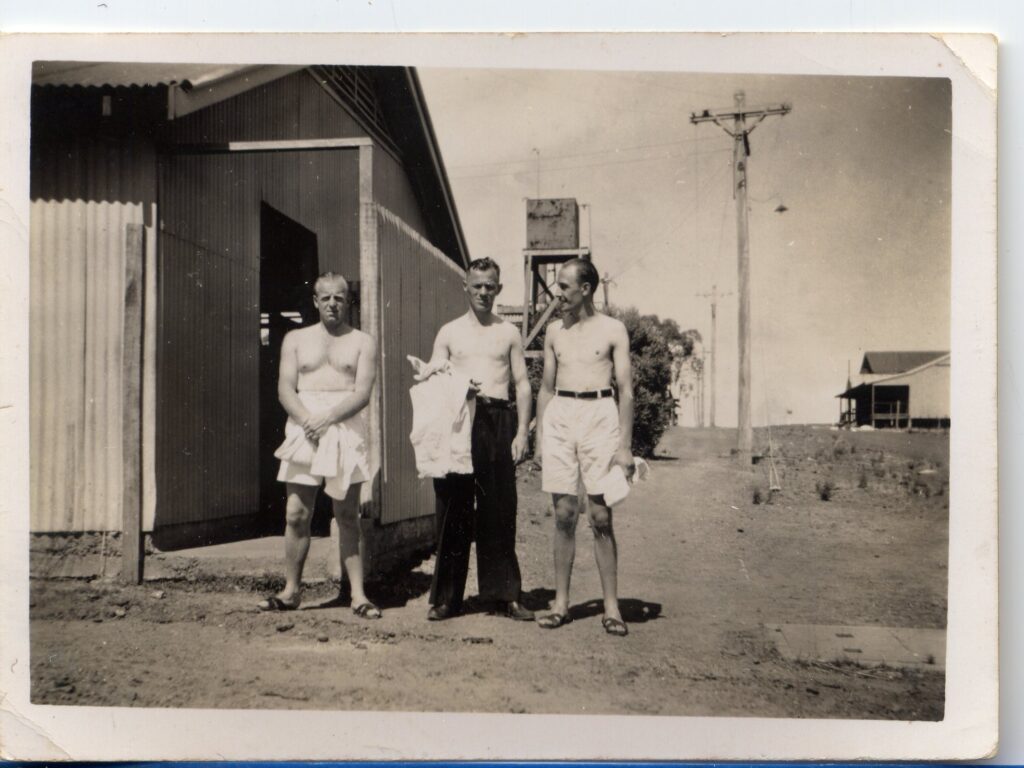
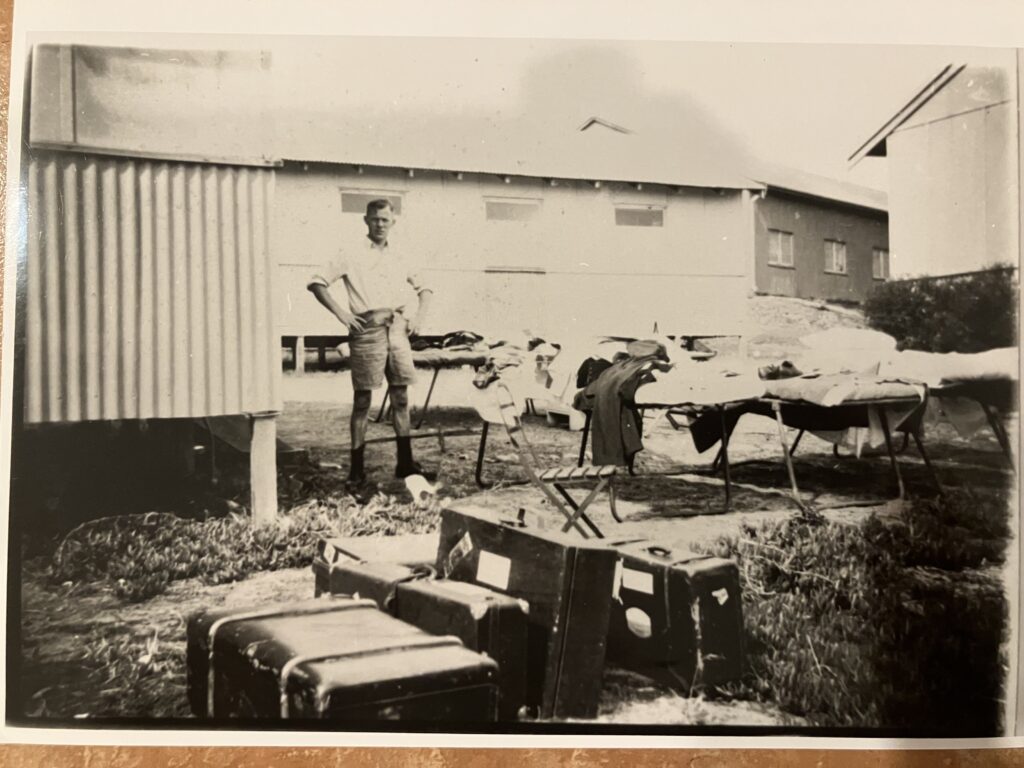
The reception and training centre opened in 1947 in unlined wartime army barracks. Its huts contrasted with the adjoining hostel’s Nissen accommodation, built with purpose-designed huts intended primarily for British migrants but also used by Dutch families, who were allocated a couple of rooms each and described the change as a considerable improvement. Photographs from the collection of Nonja Peters show newly arrived Dutch men cleaning the barracks and standing with their luggage outside the ablution block in January 1949.
Graylands stood at the head of the Western Australian system. A Commonwealth list of 27 June 1949 names it as the state’s reception centre, distinct from the holding centres at Northam and Cunderdin. The neighbouring hostel is dated to 1951 in the Peters research and to 9 May 1952 in a parliamentary return, which probably reflects the difference between building work and the formal start of hostel operation; both dates are given here rather than reconciled. The hostel stood in Lantana Street.
Both belonged to a government system intended to receive newcomers and connect them with employment. Under the agreement with the International Refugee Organisation, Australia paid displaced people’s passages in return for two years in allocated work. Former military accommodation helped provide places to live during this transition.
The two Graylands facilities
| Facility | Accommodation | Main role |
|---|---|---|
| Reception and Training Centre, from 1947 | Former army barracks, corrugated iron and asbestos, unlined | Initial reception and adjustment; the Western Australian reception centre in the Commonwealth list of 27 June 1949 |
| Commonwealth Hostel, Lantana Street, from 1951 or 1952 | Purpose-built Nissen huts; brick and tile from the late 1970s | Longer-term migrant housing until closure in 1987 |
The rhythm of camp life
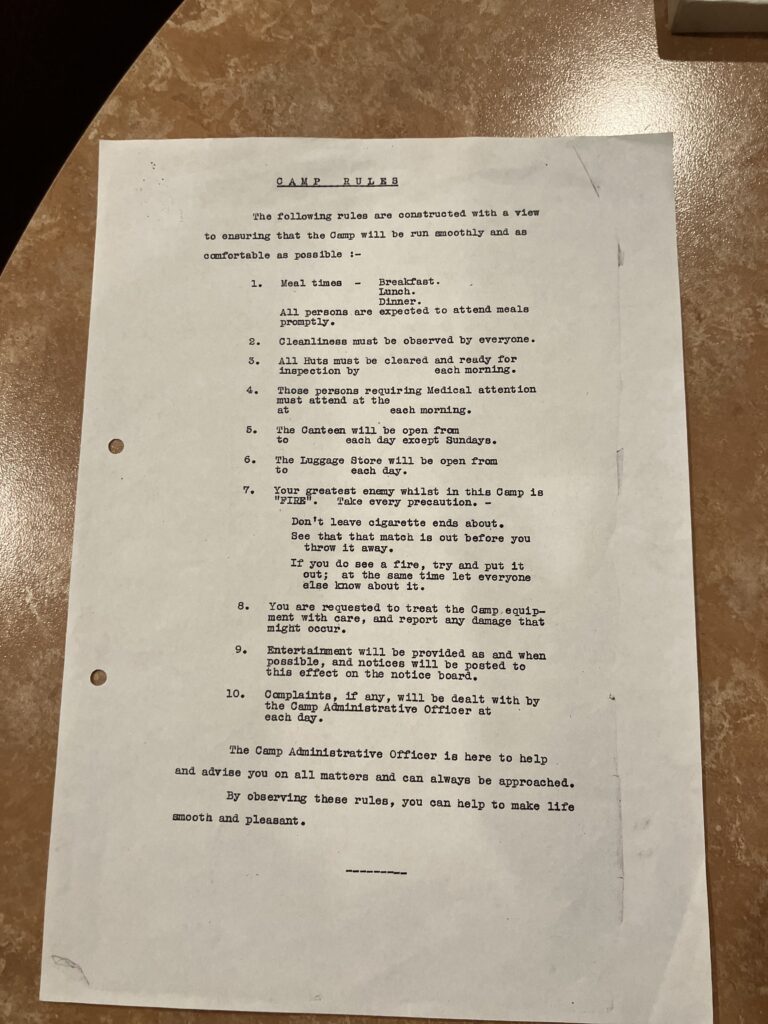
A surviving camp-rules sheet sets out a closely regulated routine. Residents were expected to attend meals promptly, leave huts ready for morning inspection, care for issued equipment and report damage. It also provided for medical attention, a canteen and luggage storage. Entertainment was advertised on the noticeboard, while complaints went to the administrative officer.
The document’s strongest emphasis was on preventing fire: cigarette ends, matches and equipment needed careful handling. Its printed spaces for opening hours remain blank in the surviving copy, leaving the rules clearer than the actual daily timetable.
Former residents remembered the communal side of it. The accommodation provided shelter and adjustment training but little privacy, and the food was unfamiliar; Helene Melnema, who arrived from the Netherlands in 1953 after a stay at Holden in Northam, recalled puffed wheat for breakfast, tomato soup at midday and plum jam sandwiches at school, and found Graylands the friendlier place of the two. Brian Brown, who came from England in 1958 with a family of seven while his father worked at the Kwinana refinery, remembered it as lively and difficult at once, and noted that many people could not manage it and went home.
Sources for this section
Children and the local school
A camp school opened in 1951 as an extension of Graylands Primary School. By 1953 the arrangement had been outgrown, and its teachers and pupils transferred to the main school. Over subsequent decades, successive arrivals changed the school’s work. Specific provision for English as a second language developed in the 1970s, with four teachers assigned to the Intensive Language Centre in 1979.
The school’s own heritage record describes the relationship from the other side. Graylands Primary School had been founded as an infants school in 1917 and was established as a full primary school in 1949; by the early 1950s, with post-war migration and new housing, enrolments had passed four hundred. The hostel in Lantana Street and the school remained connected for decades, and in March 1977, as South-Asian refugees began arriving at the hostel, a Child Migrant Resource Centre was opened at the school.
Sources for this section
A Ukrainian community forms
Ukrainian organised life in Perth began at almost the same moment as the camps. The Ukrainian Association of Western Australia records that the first sixty Ukrainian men reached Fremantle on the Kanimbla on 11 October 1948, formed a dancing group and a choir, and gave what it describes as the first Ukrainian concert in the state before being split into work parties for the Kalgoorlie goldfields, the railways and the Mundaring Weir. As more people arrived they were settled in hostels and camps, named in the association’s history as Graylands, Northam and Cunderdin.
The organisations that followed were based in Perth rather than in the camps. A first committee was formed in October 1949, and the first annual meeting was held at St Patrick’s Church in Perth on 25 February 1950 with seventy-eight people present. A choir was founded on 6 June 1951 and first rehearsed in an Anglican church hall in Aberdeen Street, which the Ukrainian Orthodox congregation was also using for Sunday liturgy; the Kyiv soccer team followed in 1952 and the first Ukrainian Catholic priest in the state arrived in 1953. Land for a hall in Hann Street, Leederville, was bought in 1955 and the building was finished in 1962.
Ukrainian community milestones in Perth
| Date | Event |
|---|---|
| 11 October 1948 | First sixty Ukrainian men arrive at Fremantle on the Kanimbla |
| October 1949 | First Ukrainian Association committee formed in Perth |
| 25 February 1950 | First annual meeting at St Patrick’s Church, with seventy-eight present |
| 6 June 1951 | Association choir founded; first rehearsal in an Aberdeen Street church hall |
| 1 September 1951 | Ukrainian Association of Western Australia incorporated |
| 1952 | Kyiv soccer team formed |
| 1953 | First Ukrainian Catholic priest arrives in Western Australia |
| 1955 to 1962 | Land bought in Hann Street, Leederville, and the hall completed |
Sources for this section
From temporary rooms to Perth homes
One Dutch family remembered moving from Holden to Graylands in 1953, then into a Subiaco house where they took in Dutch boarders while the father worked in the building industry: a route from rural temporary accommodation into Perth.
For Ukrainians, Graylands formed part of a wider Western Australian settlement network alongside Northam and Cunderdin. Community organisation gradually moved beyond the camps, with meetings in Perth and later a hall in Leederville.
Sources for this section
Later arrivals
The hostel outlasted the displaced-person years by a generation. Further blocks of family accommodation were built on the site during 1967 and 1968, and by the late 1970s the Nissen huts had been demolished and replaced with brick and tile buildings with landscaped gardens and a swimming pool. South-Asian refugees arrived from 1977, and Vietnamese and Iranian residents followed. The hostel closed in 1987, by which time more than 35,000 migrants were said to have passed through, and the land was afterwards redeveloped, leaving little trace of its migrant past.
Sources for this section
Sources
- Graylands remembered
Dutch Australia Cultural Centre · 23 January 2026
Historical account drawing on Nonja Peters’s research, a newspaper article by Malcolm Quekett and the recollections of former residents Helene Melnema and Brian Brown. Distinguishes the two adjacent camps, dates the reception and training centre 1947–1952 and the hostel from 1951, and states that more than 35,000 migrants had passed through by its closure in 1987.
- Graylands camp rules
Camp administration; reproduced from the Nonja Peters collection · Undated postwar document
Original photographed rules sheet visually read; blank timing fields not reconstructed.
- Mount Claremont Primary School centenary booklet
Mount Claremont Primary School · 22 October 2017
School history: camp school 1951–53 and later language education.
- History of the Association
Ukrainian Association of Western Australia · Undated
Association timeline read in full. Records the arrival of the first 60 Ukrainian men at Fremantle on the Kanimbla on 11 October 1948, their allocation to gold mining at Kalgoorlie, railway work and the Mundaring Weir, and states that later arrivals were settled in hostels and camps, namely Graylands, Northam and Cunderdin. Also gives the first committee of October 1949, the first annual meeting at St Patrick’s Church on 25 February 1950, the founding of the choir on 6 June 1951, incorporation on 1 September 1951, the Kyiv soccer team in 1952, the arrival of the first Ukrainian Catholic priest in 1953 and the Leederville hall, bought as land in 1955 and completed in 1962. Community-authored history without document citations.
- Aliens to Australians
John Curtin Prime Ministerial Library · Undated
Institutional exhibition on migration policy; independently captions hostel Nissen huts around 1951.
- Graylands Primary School, place record 27178
City of Nedlands municipal inventory, published by the Heritage Council of Western Australia · Adopted 23 October 2018
Full record read. States that Graylands Primary School was established in 1949, that the Graylands Migrant Hostel was established in nearby Lantana Street with continuing involvement between hostel and school, that South-Asian refugees began arriving at the hostel in 1977 and that a Child Migrant Resource Centre opened at the school in March that year, and that the suburb of Graylands ceased to exist in the late 1980s.
- Commonwealth Government Hostels
Migration Heritage Project · 12 April 2022
Reproduces the list of centres as at 27 June 1949 from National Archives of Australia A6006, 1949/04/07, in which Graylands is the Western Australian reception centre, and Table 9, derived from House of Representatives Hansard of 12 November 1957 and 27 September 1967, which gives the Graylands hostel as commencing operation on 9 May 1952 with further units in 1967.
Last researched 13 September 2026