Victoria Camp
Arrival and settlement
Eriswell, near Mildenhall, Suffolk, United Kingdom · Second World War–1948
Victoria Camp 85 was a purpose-built prisoner-of-war working camp at Codson Hill in Eriswell parish, run from a headquarters at Mildenhall and served by satellites, hostels and billets. Foreign Office inspection papers date the arrival of Ukrainians at the main camp to the spring of 1947 and show them still holding it in January 1948.
Introduction
Victoria Camp, numbered 85, was a purpose-built prisoner-of-war working camp at Codson Hill on the Brandon road near Mildenhall, in Eriswell parish. Ukrainians lived here in the postwar years, alongside the site’s successive Italian and German populations.
The Lakenheath parish timeline places its building in 1939, at first under canvas, on what is now the A1065 between Barton Mills and Brandon. The Suffolk historic environment record fixes it at TL 7307 7672 and gives its life as 1939 to 1948. An Anglian Water works now covers the ground.
Mildenhall was also the centre of a wider network. Its July 1948 total of 1,401 Ukrainians is given in the source as men in camps at or near the town, so it covers the main camp with its satellites and hostels, not Victoria alone.
A history in dates
- 1939Victoria, Camp 85, is built at Codson Hill on the Barton Mills to Brandon road, at first using tents.
- Mid-1941Italian prisoners of war begin to arrive.
- 23 March 1946An inspection records a Ukrainian camp spokesman, one German hostel and a German strength of 184, with the Italians preparing for repatriation.
- 29 November–1 December 1946An inspection records four hostels and a total strength of 1,943 Germans and Austrians.
- 23–26 April 1947An inspection records one satellite, two hostels and a total strength of 1,732.
- 28–31 May 1947A progress report gives the German strength as 998 and records complete disruption at headquarters through displacement by Ukrainians.
- July 1947Three men from the Woodcock hostel are charged with burglaries that included houses at Eriswell and Lakenheath.
- October–November 1947Ely camp is attached to the Victoria network.
- 19 January 1948An inspection records the main camp as Ukrainians plus 20 Germans, with two German hostels holding 1,119 men and 230 billetees.
- July 1948A survey records 1,401 Ukrainians in camps at or near Mildenhall.
- August–October 1948Former Galicia Division personnel nationally enter civilian EVW status and the camps holding them become hostels.
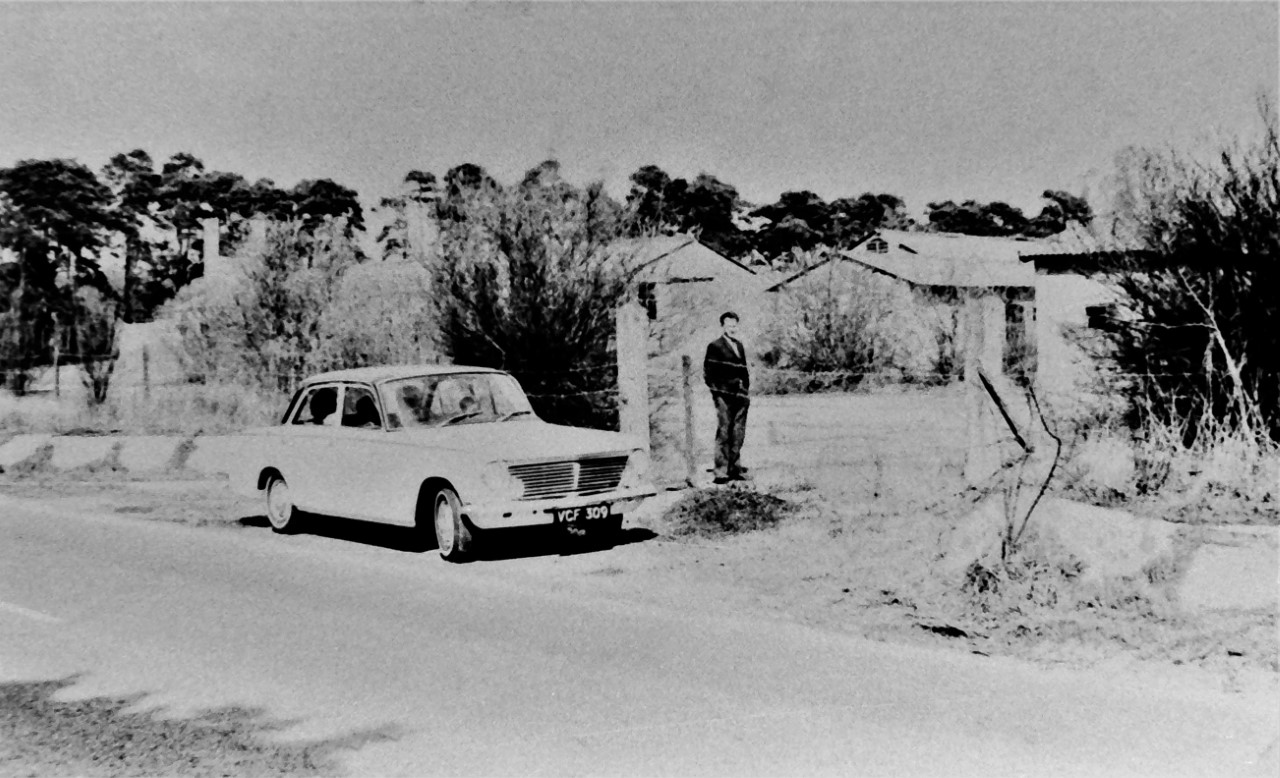
- 1960sA local photograph records camp buildings still standing.
- 1–14 March 2016Archaeologists investigate the camp before extension of the water-treatment site.
One camp and a wider network
The 2016 excavation report distinguishes the headquarters at Mildenhall, the Eriswell main camp and satellite accommodation. Ely was attached around October–November 1947; Cranwich was another satellite and later a hostel. Hostels at Woodcock, Cheveley, Soham, Histon and West Tofts, with other billets, served the surrounding farms.
Historic England and the Suffolk record classify Victoria as a standard working camp, listing water towers, guard rooms, barrack huts, ablution and cell blocks, a camp reception station serving as hospital and a cookhouse.
The camp’s paperwork survives at The National Archives as FO 939/165, covering 1946 to 1948 and not digitised; the passages below come from pages reproduced in the excavation report. The Norfolk record for Cranwich mentions only a 1930s labour camp and a wartime military camp, so the satellite relationship rests on the Foreign Office papers.
Victoria’s accommodation network
| Place | Role recorded in 2016 report |
|---|---|
| Mildenhall | Headquarters |
| Eriswell / Codson Hill | Main Victoria Camp 85 |
| Ely | Camp 26, satellite attached October–November 1947 |
| Cranwich | Satellite camp, subsequently a hostel |
| Woodcock, Cheveley, Soham, Histon and West Tofts | Hostels in the wider network, with further billets |
Sources for this section
- Archaeological excavation at Prisoner of War Camp 85 Victoria
- Prisoner of War Camp 85, Historic England research record 1412188
- Monument record ERL 233, Prisoner of War Camp 85 “Victoria Camp” (MSF27408)
- 85 Working Camp, Victoria Camp, Mildenhall, Suffolk, FO 939/165
- Cranwich Labour Camp and World War Two Military Camp, NHER 25240
Italians, then Ukrainians, then Germans
Italian prisoners began arriving from the middle of 1941 and by March 1946 were being prepared for repatriation. An inspector’s form of 23 March that year records one German hostel and a German strength of 184. The camp spokesman on the same form is described simply as Ukrainian.
Through 1946 and early 1947 the camp filled with Germans and Austrians. An inspection of 29 November to 1 December 1946 recorded four hostels and a total of 1,943; another of 23 to 26 April 1947 gave 1,732.
The change came at the end of May. A progress report on a visit of 28 to 31 May 1947 gives the German strength as 998, roughly half what it had been five weeks earlier, and says why: there had been complete disruption at headquarters through displacement by Ukrainians. The German theatre group, it added, had disintegrated on the Ukrainian invasion.
By the inspection of 19 January 1948 the arrangement had settled. The form lists the main camp as Ukrainians plus 20 Germans, two German hostels holding 1,119 men and 230 billetees, and a Ukrainian camp spokesman; the one entry in the beginners’ row of the English classes grid reads Ukrainians. No number is typed against them, so the Ukrainian population at Codson Hill cannot be recovered from the form.
These men had come from Italy: in May and June 1947, 8,570 Ukrainians, mostly former soldiers of the Galicia Division, were shipped from Venice to Britain, reclassified as prisoners of war and set to agricultural work.
Strengths recorded in the Foreign Office inspection papers
| Date of visit | Recorded strength | Population described |
|---|---|---|
| 23 March 1946 | 25 in the main camp, 159 in one hostel, total 184 | Germans; Italians being prepared for repatriation; camp spokesman recorded as Ukrainian |
| 29 November–1 December 1946 | 663 plus 185 in the main camp, 1,095 in four hostels, total 1,943 | Germans and Austrians |
| 23–26 April 1947 | 698 in the main camp, 879 in hostels, total 1,732 | Germans and Austrians; one satellite and two hostels |
| 28–31 May 1947 | 2 officers and 996 other ranks, total 998, of whom 250 at Cranwich, 84 at Cheveley, 304 at Woodcock and 156 billeted out | Germans only; the report records complete disruption at headquarters through displacement by Ukrainians |
| 19 January 1948 | Main camp Ukrainians plus 20 Germans; hostels 1,119 with 230 billetees | Ukrainians in the main camp, Germans in two hostels; camp spokesman Ukrainian |
Work, learning and local connections
Oral histories collected for the excavation describe farm work, transport by lorry and huts warmed by stoves, trips into Mildenhall, and a Ukrainian prisoner making a ring from a silver coin. One resident remembered the Italians coming first, then a load of Ukrainians, and the Germans last.
The inspection reports document English teaching, newspapers, libraries, discussion groups, lectures, films and religious provision, but they were written for the re-education of German prisoners.
The camp was classified grey with a strong white leaning, prisoners could walk into Mildenhall in the afternoons, and inspectors found that heavy agricultural labour bred apathy towards politics. In July 1947 three men from the Woodcock hostel were charged with burglaries that included houses at Eriswell and Lakenheath, and a revolver taken from a house at Barton Mills was recovered when they were caught; the Bury Free Press reported the case on 18 July.
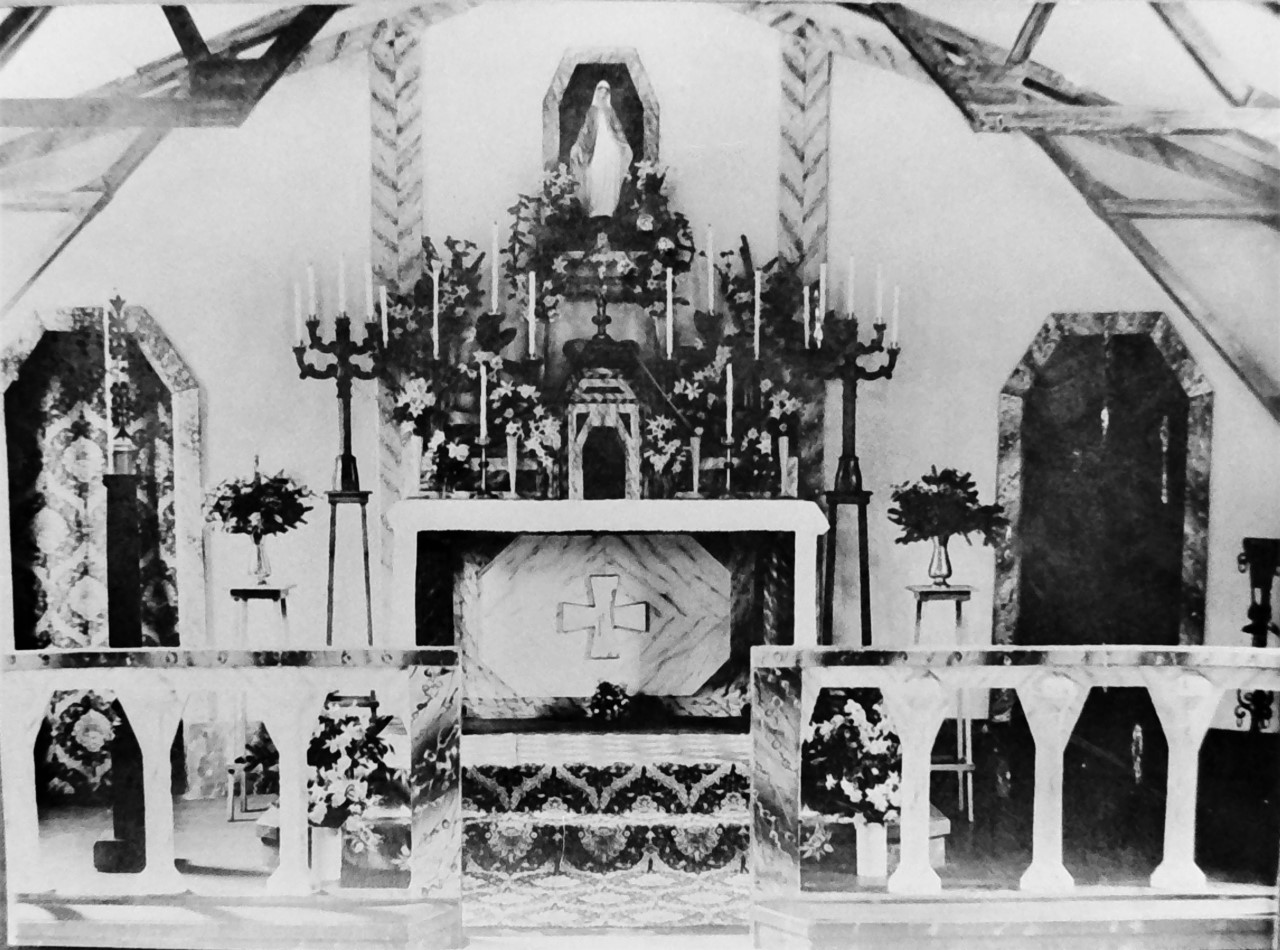
The parish history preserves a photograph of a Ukrainian former prisoner’s wedding at Victoria, and the chapel interior created by Italian prisoners: different communities on the same site at different moments.
The move into civilian accommodation
Former Galicia Division soldiers were released from POW status in August–October 1948 and admitted to the European Voluntary Workers scheme, after which the camps holding them passed to civilian authorities and became hostels.
The parish account recalls temporary accommodation for families whose homes had been bombed, and the interviewees remembered displaced families from London moving into the Nissen huts. Most structures were later taken apart by villagers and farmers; two concrete-framed huts survive in farm use.
Recovering the camp beneath the ground
Excavation between 1 and 14 March 2016, ahead of an Anglian Water development, revealed the foundations and services of living huts, a probable shower or drying room and a kitchen, with drainage and part of the fence dividing the prisoners’ compound from the guards’.
The records and the excavation also prevent confusion with other facilities nearby. Victoria is Camp 85 at Codson Hill, two miles from Mildenhall station and separate from the airfields at Mildenhall and Lakenheath.
What survives in the record
| Evidence | What it shows |
|---|---|
| Historic environment records (Historic England 1412188, Suffolk ERL 233) | Camp 85 identity, Codson Hill grid reference, building list and working-camp function |
| FO 939/165, The National Archives | Camp administration 1946–1948; inspection and progress reports quoted through the excavation report |
| 2016 excavation | Hut bases, drainage, services and the inner perimeter fence |
| Local photographic collection | Chapel interior, a Ukrainian former prisoner’s wedding, and camp buildings in the 1960s |
| July 1948 survey | 1,401 Ukrainians in camps at or near Mildenhall |
Sources
- Archaeological excavation at Prisoner of War Camp 85 Victoria
Oxford Archaeology East, report 1928 · June 2016
Pages 19–21 (PDF 20–22), original visually inspected; March 2016 excavation, satellite network and oral history. Appendix B is the interview transcript; Appendix F reproduces inspection and progress reports from FO 939/165, read here from the page images.
- Post-war camps and hostels
Roman Krawec, Ukrainians in the United Kingdom · 2013
Mildenhall locality total for July 1948, expressly given as men in camps at or near the location, not a single-compound count; national 1948 legal-status transition and redesignation of camps as hostels.
- Prisoner of War Camp 85, Historic England research record 1412188
Historic England / Heritage Gateway · Historic environment record
Codson Hill identity, grid reference TL 7300076730, working-camp classification and building list. Names only Italian and German prisoners.
- Lakenheath heritage timeline: 1935–1948
Lakenheath Parish Council · Accessed 13 September 2026
Actual Victoria camp and chapel photographs; retrospective account. Construction in 1939, Italian arrivals from mid-1941, and the July 1947 Woodcock hostel burglary case citing the Bury Free Press of 18 July 1947, where the hostel is named Woodstock and Barton Mills is given as the house from which a recovered revolver was taken rather than as a charge location. Its 1947 closure date is not adopted because FO 939/165 runs to 1948 and the camp was inspected in January 1948.
- Monument record ERL 233, Prisoner of War Camp 85 “Victoria Camp” (MSF27408)
Suffolk Heritage Explorer, Suffolk County Council · Record updated 9 January 2025
Grid reference TL 7307 7672 and site extent, building list, operational range 1939–1948, and the note that structures have been removed but subsurface remains may persist.
- 85 Working Camp, Victoria Camp, Mildenhall, Suffolk, FO 939/165
The National Archives, Kew · Covering dates 1946–1948
Catalogue entry read through the Discovery API. Control Office for Germany and Austria and Foreign Office, German Section: Prisoners of War: Files; former reference CO Files 152/90; not digitised. The file itself has not been consulted here.
- Cranwich Labour Camp and World War Two Military Camp, NHER 25240
Norfolk Heritage Explorer, Norfolk County Council · Accessed 13 September 2026
Cranwich as a 1935–1939 Ministry of Labour camp for the unemployed, reused for military purposes in the Second World War. Makes no mention of prisoners of war or of Camp 85.
- Former soldiers of the Galicia Division
Roman Krawec, Ukrainians in the United Kingdom · Accessed 13 September 2026
8,570 Ukrainians shipped from Venice to Britain in May and June 1947, reclassified as prisoners of war, employed as agricultural labourers, and screened into EVW status between August and October 1948.
Last researched 13 September 2026