The 1947 transfer from Rimini to Britain
Italy to Britain·1 April 1947 to December 1948
In May and June 1947 the British authorities moved 8,570 Ukrainian surrendered enemy personnel by sea from Venice to prisoner of war camps in Britain, a decision taken by the Cabinet on 1 April 1947 before British troops left Italy. Between August and October 1948 almost all of them were released from prisoner of war status into the European Voluntary Worker scheme.
Introduction
The men held at Rimini were Ukrainians who had served in the Galicia Division, a Ukrainian formation raised within the German armed forces, and who had surrendered to the British Army in Austria in May 1945. Interned first near Spittal, then at Bellaria and from October 1945 near Rimini, they were classified in Italy as surrendered enemy personnel. Bohdan Panchuk, a Canadian Ukrainian serviceman whose reminiscences were published in 1983, wrote that they had laid down their arms before the British in Austria and had been sent, route march, across the Alps to camps near Rimini. Their transfer to Britain in 1947 and their release into civilian work in 1948 form a distinct movement, separate from the recruitment of displaced persons out of the German and Austrian camps.18
A history in dates
- May 1945Most members of the division, about 10,000 men, surrender to the British Army in Austria and are interned near Spittal.1
- May to June 1945The division is moved to Italy and interned near Bellaria; about 1,000 men are persuaded to return to the Soviet Union.1
- October 1945The remaining men are moved to a camp near Rimini.1
- August 1945 and February 1947A cross-section is screened by a Soviet mission, and a further cross-section by the Refugee Screening Commission.2
- February 1947The treaty of peace with Italy is signed, to come into force that September.1
- 1 April 1947The British Cabinet decides to transfer the men to the United Kingdom, where they are reclassified as prisoners of war.1
- May and June 19478,570 Ukrainians are transported by sea from Venice to Britain.1
- 18 June 1947The Foreign Office tells the Commons that some 8,000 have been brought from Italy and that screening found no war criminals.2
- November 1947The Ministry of Agriculture begins considering the men for the European Voluntary Worker scheme.1
- July 1948Camp counts record the men distributed across eight locations in eastern England and southern Scotland.3
- August to October 1948
- 28 December 1948A general strike of Ukrainian European Voluntary Workers follows a decision to deport about 300 men; the Home Office reduces the number to 81.1
- 31 May 1950The Canadian Cabinet decides that members of the division should be admitted to Canada, subject to individual screening.7
- 1 January 1951
- 5 January 1951The Canadian government endorses the processing of Ukrainian applicants from England.7
Origins and purpose
The Soviet authorities held that the Ukrainian members of the division were Soviet citizens and demanded their repatriation under the Yalta agreement of February 1945. The British position was that the agreement covered only people who had been Soviet citizens before September 1939, which excluded the majority, who came from pre-war Polish-ruled Galicia. Where individuals did fall within the agreement the British government was still reluctant to enforce return. About a thousand men had already been persuaded to return voluntarily by a Soviet repatriation commission at Bellaria in 1945.1
What forced a decision was the treaty of peace with Italy, signed in February 1947 and due to come into force that September. Britain did not want to leave the men behind once its troops withdrew, fearing that the Italian government would give way to Soviet demands for forced repatriation. On 1 April 1947 the Cabinet decided to move them to the United Kingdom. The change of place brought a change of legal category: men designated surrendered enemy personnel in Italy were reclassified as prisoners of war on arrival in Britain.1
A comparative study of post-war Ukrainian migration records that many of the division's members avoided repatriation after an intervention by the Vatican, and that the British government wanted to distribute them throughout the Commonwealth.7
Contact between the men at Rimini and Ukrainians overseas ran through Rome. Panchuk recorded establishing direct contact with the Ukrainian Catholic Bishop Ivan Buchko, who chaired the Ukrainian Relief Committee in Rome, and through him with the division, whose men were being held at Rimini as surrendered enemy personnel; direct links with Rimini followed.8
How the transfer worked
The movement took place during May and June 1947 by sea from Venice. The recorded total is 8,570 Ukrainians, including seventeen female nurses, a number of priests and several civilian relatives of members of the division. Screening had already taken place twice: a cross-section of the division was screened by a Soviet mission in August 1945 and a further cross-section by the Refugee Screening Commission in February 1947. The Foreign Office told the Commons in June 1947 that no war criminals had been discovered by those processes.12
That statement did not settle the matter in Parliament. The question that produced it asked directly whether extradition had been sought by any Allied government and what status the men would have; a member pressed the minister on the division's record of killings and asked for an assurance that no one who had taken part would be admitted. The minister replied that extensive precautions had been taken and that further screening was to be expected. The men's status in Britain was that of other prisoners of war.2
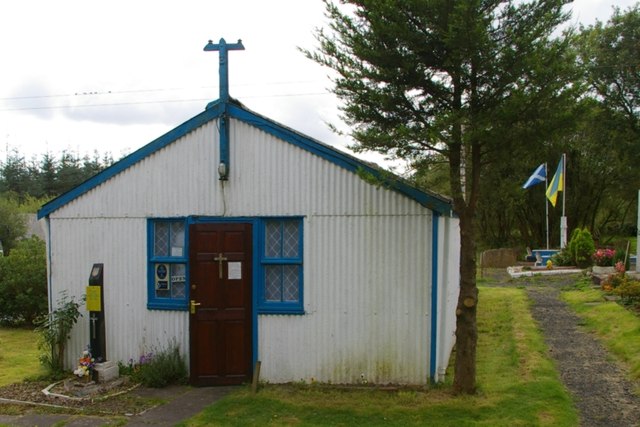
On arrival they went into prisoner of war camps, mainly in the agricultural districts of eastern England and southern Scotland, and men were moved between camps from time to time. Most were put to work as agricultural labourers. A count for July 1948 records 1,682 men at Hempton in Norfolk, 1,401 at Mildenhall in Suffolk, 1,319 at Allington in Lincolnshire, 1,264 at Moorby in Lincolnshire, 1,010 at Botesdale in Suffolk, 958 at Dalkeith in Scotland, 463 at Lockerbie in Scotland and 300 elsewhere, including hospitals where invalids were held. The Lockerbie camp is the one now remembered for the Hallmuir Ukrainian Chapel.3
Panchuk recorded that he was consulted when the question arose of moving the division from Rimini to the United Kingdom between May and October 1947. He went to Italy and helped to close the camp, made a film of the closure, and put the Ukrainians aboard a train with British officers bound for the ships. He met them at Sheffield as they disembarked and organised them into committees for the camps and hostels to which they were sent around Britain.8
Numbers recorded for the transfer and release
| Measure | Figure | Source scope |
|---|---|---|
| Surrendered to the British Army in Austria, May 1945 | about 10,000 | Division members; whole formation |
| Returned voluntarily from Bellaria in 1945 | about 1,000 | Persuaded by a Soviet repatriation commission |
| Transported by sea from Venice, May to June 1947 | 8,570 | Includes 17 female nurses, priests and some civilian relatives |
| Stated in the Commons, 18 June 1947 | some 8,000 | Ministerial round figure for those brought from Italy |
| Released from prisoner of war status into the EVW scheme, August to October 1948 | 8,128 | Ukrainian community encyclopaedia figure |
| Proposed for deportation, December 1948 | about 300 | Decision later reduced |
| Actually leaving after the reduction | 81 | 45 who chose to go and 36 with unsatisfactory conduct records |
| Remaining in Britain as EVWs | over 8,000 | After the December 1948 reduction |
Men in camps by location, July 1948
| Camp location | Men |
|---|---|
| Hempton, Norfolk | 1,682 |
| Mildenhall, Suffolk | 1,401 |
| Allington, Lincolnshire | 1,319 |
| Moorby, Lincolnshire | 1,264 |
| Botesdale, Suffolk | 1,010 |
| Dalkeith, Scotland | 958 |
| Lockerbie, Scotland | 463 |
| Other locations, including hospitals holding invalids | 300 |
The 1948 release into civilian work
The transfer had been treated as a temporary expedient rather than a settlement, and the Home Office continued to look for ways of removing the men. Transfers to Canada, the United States and Argentina were investigated and proved unrealistic. In November 1947 the Ministry of Agriculture began to consider taking some of the men into the European Voluntary Worker scheme, under which it was already recruiting from the camps in Germany and Austria. Its first position was to take 4,700 and to send the rest, including men in poor health and disabled men, to the British zone of occupation in Germany.1
That proposal drew protests from the Association of Ukrainians in Great Britain and from a number of British charities, and rising demand for labour changed the calculation. The decision taken instead was that almost all of the former soldiers would be released from prisoner of war status and engaged under the European Voluntary Worker scheme. The process ran from August to October 1948 and covered 8,128 people. Most continued in agriculture, the sector they had worked in as prisoners. The camps that had held them were handed to civilian authorities and redesignated as hostels.143
One further removal was attempted. In December 1948 a decision was taken to deport about 300 former members of the division to Germany at the end of the month. A general strike of Ukrainian European Voluntary Workers followed on 28 December 1948, and two days later the Home Office announced that only 81 people would leave: 45 who chose to go, mainly to rejoin relatives, and 36 with records of unsatisfactory behaviour as prisoners of war. Over 8,000 remained in Britain as European Voluntary Workers.1
Sources for this section
What happened afterwards
As European Voluntary Workers the men came under the same employment restrictions as recruits from the German and Austrian camps: they could not change their place of work without Ministry of Labour approval. The relaxation announced in July 1950 applied to them as well, and from 1 January 1951 those with at least three years' residence could apply to be released from the restriction. Most were able to leave the hostels only after that date, and by the mid 1950s most hostels had closed.43
The community life the men had organised at Rimini carried over into the camps and hostels. The Burlaka, Slavuta and Dnipro choirs and the Rimini camp theatre group continued to perform in Britain. Many of the former soldiers later emigrated to other countries. Those who stayed formed part of the Ukrainian settlement in Britain alongside the workers recruited from the continental camps, and the two groups came together in the same hostels and the same Association of Ukrainians branches.31
Some of the former soldiers moved on to Canada under a separate admission process. The Canadian Cabinet decided on 31 May 1950 that members of the division should be let into the country, subject to careful screening of each case, and on 5 January 1951 the Canadian government endorsed the processing of Ukrainian applicants from England.7
Sources
- Former soldiers of the Galicia Division
Roman Krawec, Ukrainians in the United Kingdom: online encyclopaedia · Updated 2014; consulted 13 September 2026
Full entry read: the 1945 surrender and internment near Spittal, the Yalta argument and the pre-September 1939 test, Bellaria and the voluntary returns, the move to Rimini in October 1945, the Italian peace treaty as the trigger, the Cabinet decision of 1 April 1947, the reclassification from surrendered enemy personnel to prisoners of war, the sea transfer of 8,570 from Venice with 17 nurses, the Home Office search for removal options, the Ministry of Agriculture's initial 4,700, the protests, the August to October 1948 release, and the December 1948 deportation decision, strike and reduction to 81.
- Ukrainians, HC Deb 18 June 1947 vol 438 cc1980-1
Hansard, UK Parliament · 18 June 1947
Full text read: Mr Bramall's question and Mr McNeil's answer giving some 8,000 Ukrainians brought from Italy, the two screening exercises of August 1945 and February 1947, the finding of no war criminals, the refusal of the Soviet request on the ground that most came from territory incorporated after 1 September 1939, prisoner of war status, and the supplementary exchanges.
- Post-war camps and hostels
Ukrainians in the United Kingdom: online encyclopaedia · Accessed 13 September 2026
Full entry read: accommodation in prisoner of war camps in eastern England and southern Scotland, the July 1948 counts by location, the redesignation of the camps as hostels after the release, the carry-over of Rimini choirs and theatre, and departure from hostels after the beginning of 1951.
- European Voluntary Workers
Roman Krawec, Ukrainians in the United Kingdom: online encyclopaedia · Published 12 February 2010, updated 27 March 2016
Full entry read for the figure of 8,128 released into the scheme in autumn 1948, their continuation in agriculture, and the July 1950 decision effective 1 January 1951.
- Hallmuir Ukrainian Chapel
Tiger, via Geograph Britain and Ireland and Wikimedia Commons · Photographed 3 September 2012
Photograph of the exterior of the Hallmuir Ukrainian Chapel at the site of the Lockerbie camp, geograph.org.uk image 3114052, released under the Creative Commons Attribution-ShareAlike 2.0 licence.
- The interior of Hallmuir Ukrainian Chapel
James T M Towill, via Geograph Britain and Ireland and Wikimedia Commons · Photographed 11 January 2014
Photograph of the interior of the Hallmuir Ukrainian Chapel, geograph.org.uk image 3815681, released under the Creative Commons Attribution-ShareAlike 2.0 licence.
- Building a Home Abroad: A Comparative Study of Ukrainian Migration, Immigration Policy and Diaspora Formation in Canada and Germany after the Second World War
Julia Lalande, Universität Hamburg doctoral dissertation · 2006
Printed pages 149 and 151 read: the statement that many of the division's members avoided repatriation after an intervention by the Vatican and that the British government wanted to distribute them throughout the Commonwealth, the Canadian Cabinet decision of 31 May 1950 to admit members of the division subject to individual screening, and the Canadian endorsement on 5 January 1951 of processing Ukrainian applicants from England. No archival citation for the Vatican intervention is given in the passage read.
- Heroes of Their Day: The Reminiscences of Bohdan Panchuk
Bohdan Panchuk, edited by Lubomyr Y. Luciuk, The Multicultural History Society of Ontario; digitised by Diasporiana · 1983
Printed pages 74 to 77 read: the route march across the Alps to the camps near Rimini, the contact made with Bishop Ivan Buchko's Ukrainian Relief Committee in Rome and through him with the division, and the author's own part in the move of mid to late 1947, closing the camp, filming the closure, putting the men on the train for the ships, meeting them at Sheffield and organising committees for the camps and hostels.
Last researched 13 September 2026