Benalla Migrant Camp
Arrival and settlement
Benalla, Victoria, Australia · 1949–1967
Ukrainian families deported to Germany as forced labourers reached this former flying training school by way of Bonegilla, and lived in its huts while work, school and a camp soccer team took shape around them. Benalla was Victoria’s longest lasting holding centre, open from September 1949 to December 1967.
Introduction
Benalla Migrant Camp operated at the former military airfield from September 1949 to 8 December 1967. It provided holding accommodation for migrants arriving through Bonegilla, including mothers and children whose husbands worked elsewhere. Ukrainian families were among its residents. Work, classrooms and shared recreation shaped a community that endured for eighteen years.
Sources for this section
A history in dates
- 1928A landing ground was laid out by Benalla members of the Port Melbourne Flying Club.
- 26 June 1941No. 11 Elementary Flying Training School opened on the enlarged airfield.
- October 1944The Empire Air Training Scheme ended; nearly three thousand pilots had trained at Benalla.
- Late 1948The remaining RAAF aircraft were transferred to Tocumwal, New South Wales.
- September 1949The migrant camp opened.
- 16 November 1949Benalla Aerodrome State School, SS 4651, opened for the camp children.
- 20 October 1949The Chlebnikowski family arrived from the holding centre at Cowra.
- April–May 1950The Fergin family moved to Benalla.
- 1950Aleksandr Pandik and Luba Wysocka married at Pforzheim and sailed from Genoa with her parents.
- After May 1950Bishop Ivan Prashko’s ministry included visits to Benalla.
- 1951Occupancy peaked at 1,063 residents; the school enrolment was 174 on 9 July.
- 1951The Bihun family arrived from a farming labour camp in Germany.
- August 1955The Good Neighbour featured the kindergarten and its thirty-eight children.
- August 1957Kateryna Horbul arrived with her daughter Maria and was assigned work at Latoof and Callil.
- 1958The camp was renamed the Benalla Migrant Accommodation Centre.
- 11 September 1963The camp school closed and its pupils transferred to Benalla East Primary School.
- 8 December 1967The migrant camp closed.
- 1992The council acquired the airfield and the surviving camp structures.
- October 2012A volunteer community project began gathering the photographs and stories of former resident families.
- 13 May 2016The Heritage Council declared the camp’s remaining structures to have cultural heritage significance and to merit inclusion in the Heritage Register.
- 19 May 2016The former camp was registered as heritage place H2358.
- 2017–2018Former child residents were interviewed for a twenty-two-minute film recorded mostly in Hut 11.
- 5 December 2018Benalla Rural City adopted a conservation management plan for the site.
- July 2024Camp memorabilia, including a page of the Benalla Standard printed in 1963, were shown in a lakeside exhibition at Benalla.
Sources for this section
- Former Benalla Migrant Camp, Victorian Heritage Register H2358
- Benalla Migrant Camp Inc., Camp History Overview
- Migrant Stories
- Wasyli and Anna Chlebnikowski
- Rozalie Dean née Fergin, Teodor and Maria Fergin
- Aleksandr and Luba Pandik
- Mikola and Aleksandra Wysocki
- Ukrainians in Australia, volume 1 (1966)
- Wasyl and Pelagia Bihun
- They are assimilated while at play, The Good Neighbour, August 1955, p. 6
- Kateryna Horbul
- Benalla Migrant Camp 1949–1967 – Online Archive
- Remembering the Benalla Migrant Camp
- Victoria Government Gazette G20, 19 May 2016
- Migrant camp memorabilia honours Benalla’s history in lakeside exhibition
The airfield before the camp
A landing ground was laid out here in 1928 by Benalla members of the Port Melbourne Flying Club, and until 1939 it served as an emergency landing ground on the route between Melbourne and Sydney. No. 11 Elementary Flying Training School opened on the site on 26 June 1941 under the Empire Air Training Scheme, and the landing ground was doubled in size to take it. The base was built from the standard RAAF P-type hut, a module adapted for mess halls, canteens, medical aid posts, classrooms and offices, and an annotated site plan held by the council shows more than a hundred structures, hangars, a sports oval and a parade ground.
Nearly three thousand pilots had been trained at Benalla when the scheme ended in October 1944. The base became a care and maintenance unit, and in late 1948 its aircraft went to Tocumwal in New South Wales. The buildings left behind were what the Department of Immigration took over the following year.
Sources for this section
A temporary home at the airfield
Former military huts became living quarters with little insulation or privacy. Residents added gardens and soft furnishings to make them more comfortable. The camp included a hospital, canteen, cinema and school. Local clothing and chain factories offered employment, and some families remained at Benalla for years.
Sources for this section
Administration and numbers
Benalla was a holding centre attached to Bonegilla, where non-British arrivals were first registered. Families were sent on once work had been allocated in the district, and men were frequently posted away while women and children stayed behind. The camp suited hard-to-place migrants: at any one time about a third of the residents were mothers without a husband present, and some families stayed for years rather than the four to six months a holding centre was designed for.
Heritage Victoria records a peak occupancy of 1,063 in 1951, a resident population of about 400 through the 1950s with roughly two hundred people moving in and out each year, and no more than 250 by the mid-1960s. The community archive gives the camp’s normal full capacity as about 500 people in some sixty accommodation and service huts. The two figures measure different things and are given here as they were published.
A cumulative figure is also published. The community archive, a 2016 local report and a 2024 newspaper account each give about 60,000 European post-war migrants housed at Benalla across the camp’s eighteen years. That is a throughput estimate rather than a census, and it is not comparable with the occupancy figures recorded by Heritage Victoria. The Dutch Australian Cultural Centre records that the arrangements developed at Benalla to provide accommodation, employment and childcare for widows and single mothers became known as the “Benalla Experiment”.
Recorded occupancy of the camp
| Date or period | Figure recorded | Source of the figure |
|---|---|---|
| 1951 | Peak occupancy of 1,063 residents | Heritage Victoria registration history |
| Through the 1950s | About 400 residents, with about 200 moving in and out each year | Heritage Victoria registration history |
| Mid-1960s | Occupancy not exceeding 250, annual turnover about 240 | Heritage Victoria registration history |
| 1967 | 135 residents at closure | Heritage Victoria registration history |
| Unspecified | About 500 at full capacity, in about sixty accommodation and service huts | Benalla Migrant Camp Inc. camp history overview |
| 1949 to 1967 | About 60,000 people accommodated in total | Both sources, as an estimate |
Sources for this section
- Benalla Migrant Camp Inc., Camp History Overview
- Former Benalla Migrant Camp, Victorian Heritage Register H2358
- Benalla Migrant Camp 1949–1967 – Online Archive
- Remembering the Benalla Migrant Camp
- Migrant camp memorabilia honours Benalla’s history in lakeside exhibition
- Benalla Migrant Camp: a temporary home for Dutch and European migrants
Ukrainian families and worship
The 1966 Ukrainian community history names Benalla among the Victorian camps where families lived. Its account describes the wider difficulty of family separation when men worked far from their dependants, and the efforts families made to find homes outside the camps. In his account of ministry in Victoria, Bishop Ivan Prashko includes Benalla among the camps visited for children’s religious instruction. Prashko describes beginning this work after arriving in Melbourne in May 1950, and spending two or three hours a day teaching during camp visits. That teaching pattern describes the travelling ministry across several camps.
Sources for this section
The Ukrainian families in the archive
The Benalla Migrant Camp community archive identifies seven families from Ukraine among its records: Bihun, Chaszcziwisky, Chlebnikowski, Danyluk, Merunovich, Pandik and Wysocki. Wasyl and Pelagia Bihun reached Benalla in 1951 from a farming labour camp in Germany, having waited at Bari for a ship to Canada that was full; their sons Slawomir and Wasyl appear in the camp school register in 1951 and 1955. Sofija Merunovich was entered on that register on 16 November 1949, the day the school opened its books.
Anna Chlebnikowski was born at Monaczyn and her husband Nicholai at Ternopil. They landed at Port Melbourne on 31 May 1949 from the Skaugum with two small sons, the children’s grandfather Wasil and great uncle Peter. Nicholai was sent to tank maintenance at Puckapunyal while his wife and children went first to the holding centre at Cowra and then, on 20 October 1949, to Benalla, where they stayed until February 1951. Nicholai and Wasil had made shoes in Germany, and Wasil and Peter became barbers at the camp to earn extra money. The family had brought a button accordion and a balalaika from Europe, and their daughter Irene, who wrote the account, was born at the Benalla bush hospital in 1951.
Aleksandr Pandik was taken from the street at Konstantinivka in 1941, aged fifteen, and sent to Germany, where he worked as a locomotive fireman on the Rhine line between Koblenz and Mainz. Luba Wysocka’s family were deported from Zynkowszcyna; her twin brother and sister were sent separately and were never seen again. Both trained under the International Refugee Organisation, he as a motor mechanic at Pforzheim and she as a dressmaker at Ludwigsburg, and they married at Pforzheim in 1950. With Luba’s parents Mykola and Aleksandra Wysocki they embarked at Genoa on the Castelbianco and came through Bonegilla to Benalla, where they lived at hut 36/7 until 1955. Their daughter was born in the camp hospital and christened in the camp’s non-denominational chapel. The archive records them as the only family it knows of to have arrived at Benalla in three generations.
Kateryna Horbul was from Synkiw and recorded as Ukrainian by nationality. Her work card carries a labour registration stamp of 21 July 1942 for Pegnitz in Bavaria, and she was still registered there when her daughter Maria was born in the summer of 1945. She landed at Newcastle in September 1949, was sent to the Greta centre to work in the kitchens, and left Maria in an orphanage at Maitland. Mother and daughter came to Benalla together in August 1957 on the family account, although the camp school register gives Maria a camp date of 20 August 1951. Kateryna was assigned work at Latoof and Callil. Maria’s account, published by the archive, is frank about the harm her mother carried out of the war and into the camp years.
Families from Ukraine recorded in the camp archive
| Family | Recorded period at Benalla | Detail held |
|---|---|---|
| Bihun, Wasyl and Pelagia | 1951 | Arrived from a farming labour camp in Germany; two sons on the school register |
| Chaszcziwisky, Wasyl and Paraska | Not stated | Photographs only |
| Chlebnikowski, Wasyli and Anna | 20 October 1949 to February 1951 | Written family account, photographs and Bonegilla cards |
| Danyluk, Antin and Jadwiga | 1951 | Photographs; recorded as Ukraine and Belarus |
| Merunovich | 1949 to 1952 | School register entry for Sofija Merunovich, 16 November 1949 |
| Pandik, Aleksandr and Luba | 1949 to 1955 | Written family account; hut 36/7 |
| Wysocki, Mikola and Aleksandra | 1949 to 1955 | Written family account; arrived with their daughter and son-in-law |
The camp school
Benalla Aerodrome State School, SS 4651, opened on 16 November 1949 for the children living at the camp. The Department of Immigration gave the Department of Education four huts, one as a dwelling for the head teacher and three partitioned into classrooms, and added an army hut in 1951. The enrolment on 9 July 1951 was 174 pupils. Assistant teachers had single rooms and took their meals with the administrative staff. On 11 September 1963 Benalla East Primary School took over the children of SS 4651 and the camp school closed. Its register, transcribed by a volunteer from the original in the Public Record Office Victoria, is the fullest surviving list of the children who lived here.
Sources for this section
The Fergin family
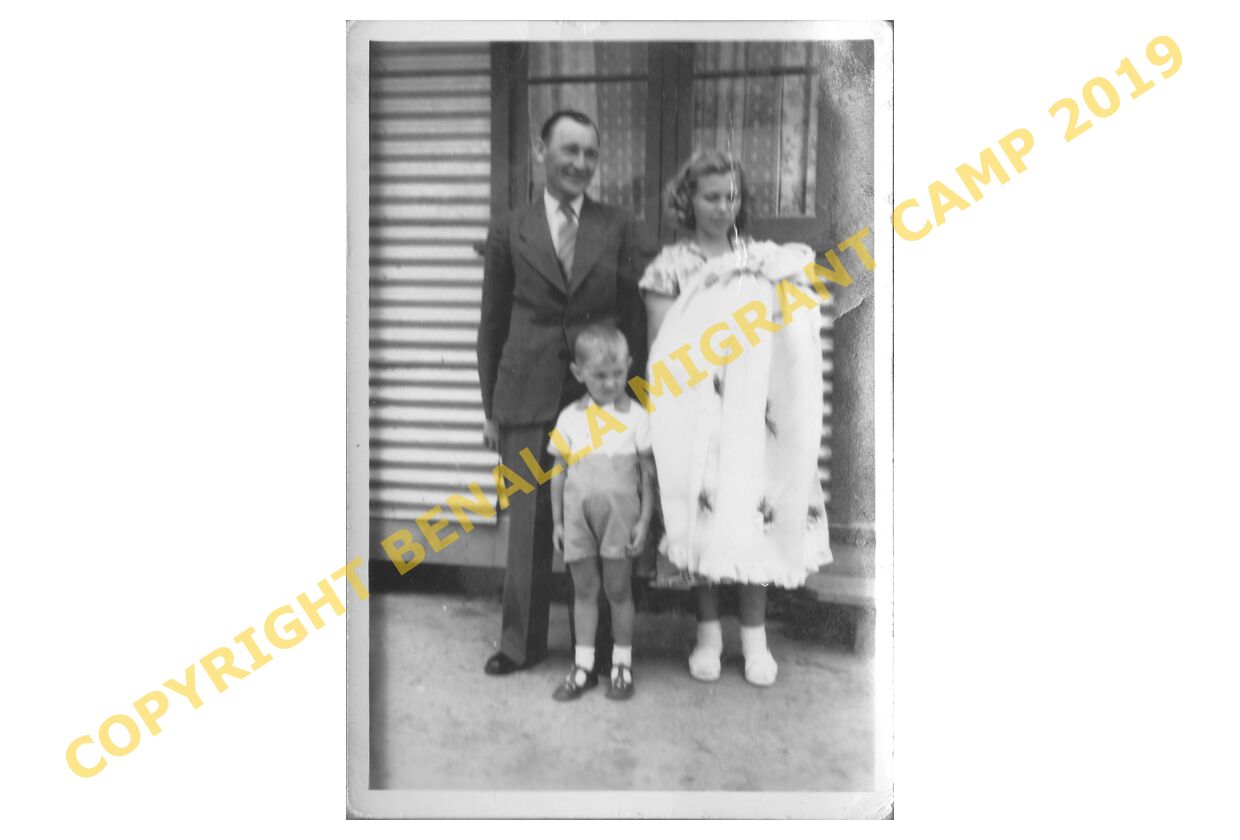
Rozalie Dean recalls her Polish parents Teodor and Maria Fergin moving to Benalla in April or May 1950 after Bonegilla and Rushworth. Teodor picked fruit and tobacco, worked in the communal kitchen and earned extra money repairing shoes and cutting hair. Maria joined the Polish choir and attended English classes. She decorated their hut with crocheted furnishings and paper flowers.
A family’s movements and working life
| Date or stage | Fergin family experience |
|---|---|
| April–May 1950 | Moved from Rushworth to Benalla |
| Camp years | Teodor: agricultural work, communal kitchen, barbering and shoe repairs |
| Camp years | Maria: English classes and Polish choir |
| February 1953–end 1954 | Eugeniusz attended the camp school |
Sources for this section
Objects of working life
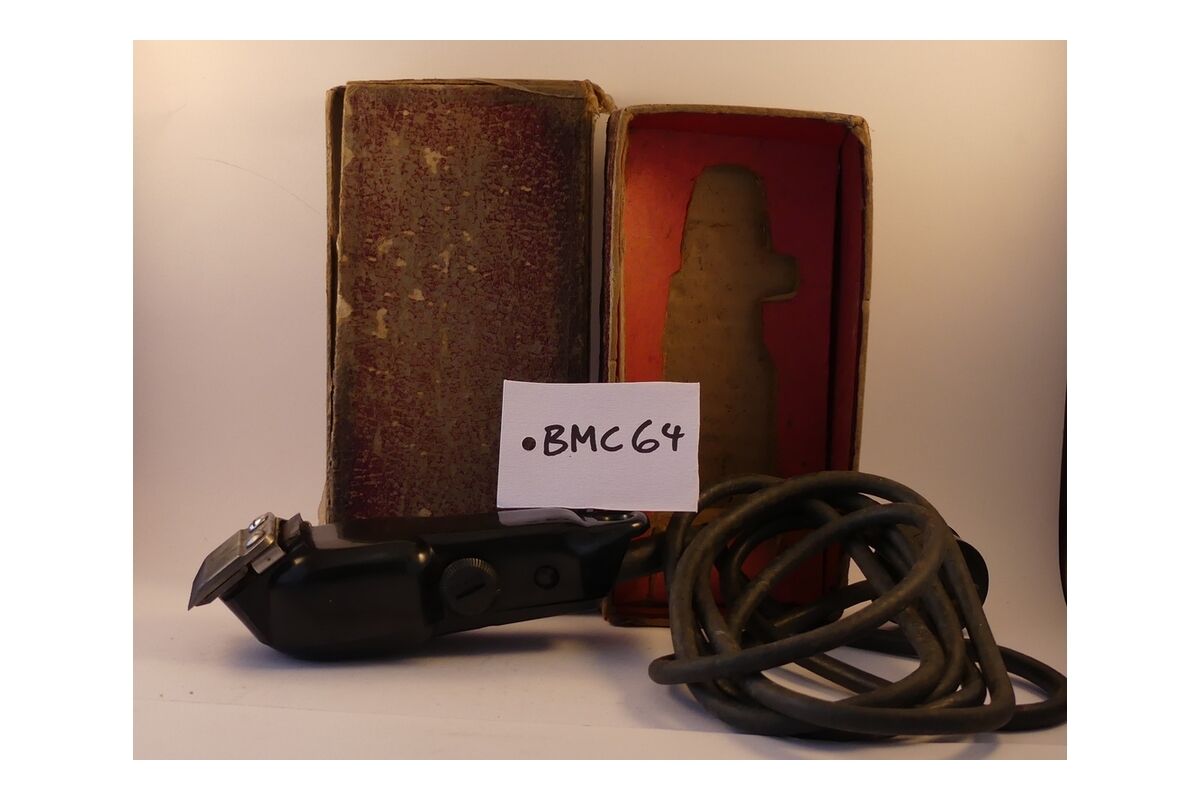
Teodor’s hair clippers survive in the community collection, donated by his daughter. The catalogue records their use on his own hair and that of other camp residents. Together with the family’s photographs, this everyday object connects work in the camp with the skills residents had brought from Europe.
Sources for this section
Children at the play centre
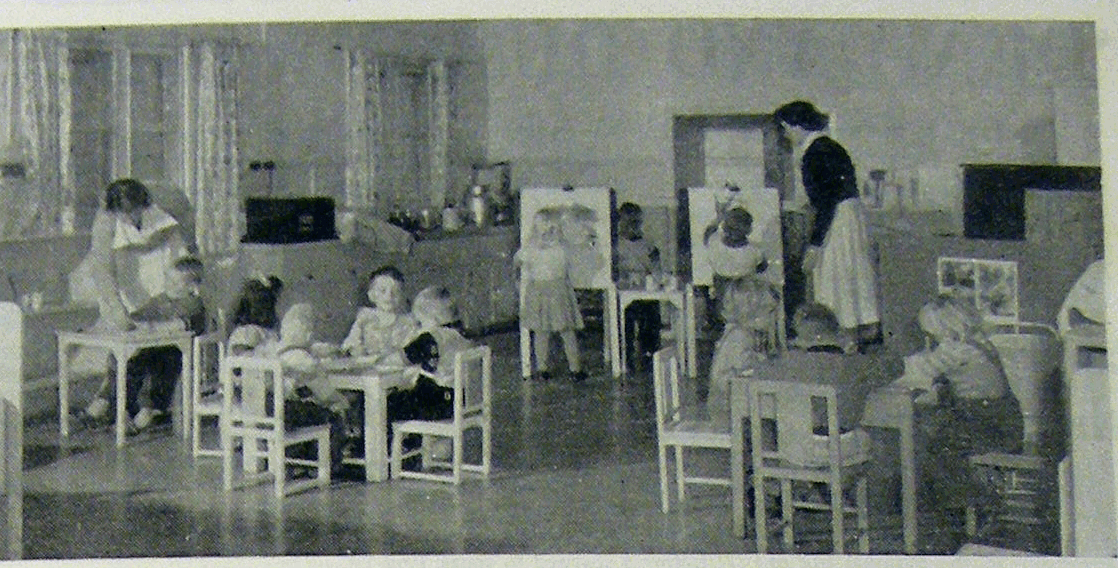
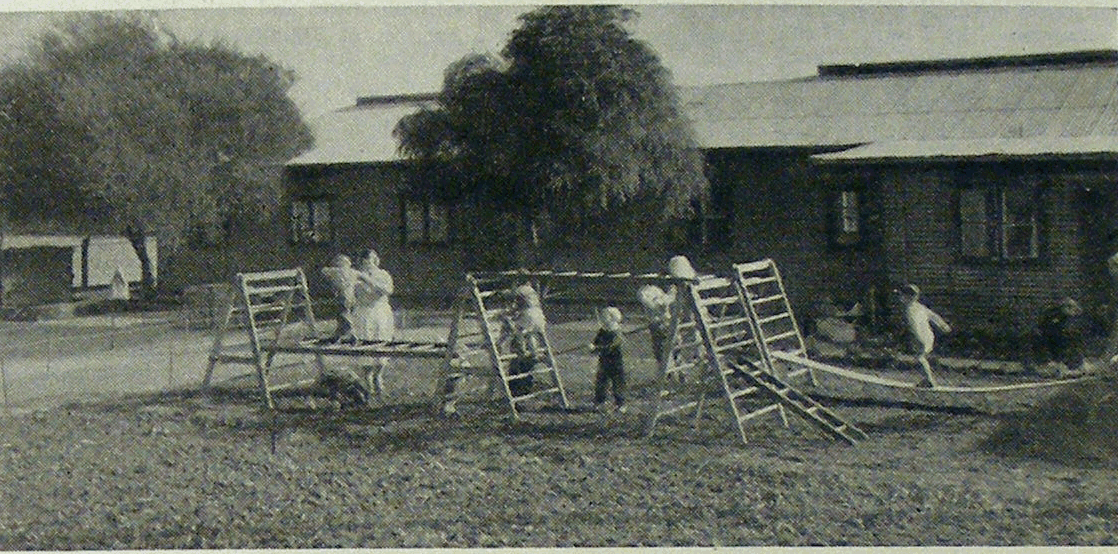
In August 1955, The Good Neighbour reported thirty-eight children at Benalla’s kindergarten, aged three to five. Teacher May Edmonds had two assistants. Children of mothers working as sole wage-earners stayed all day; others attended a morning or afternoon session. The article describes children painting, gardening, playing music and learning English through games and conversation.
Sources for this section
Learning and family routines
The 1955 photographs show an indoor playroom and outdoor climbing equipment. The accompanying report describes warm milk and fruit, individual towels and regular medical visits. These were practical supports for families living in shared accommodation and for mothers employed nearby. Its language of assimilation also shows how the government presented early-childhood education as part of migration policy.
Sources for this section
Evenings, sport and worship
Films were screened in the camp theatre, and former residents recall concerts, opera and ballet visiting the same building. The main hall was the centre of camp social life, and every Christmas the children were given a present there. A resident priest, Father Wozniczek, lived in one of the huts with the church behind it and preached in both English and Polish; the chapel where the Pandik child was christened is described as non-denominational. Residents walked to the Broken River to swim and picnic.
The camp fielded a soccer team, the Benalla Rovers, which won five of six premierships in a regional competition including Dookie Agricultural College and Wangaratta. The camp bus took the team to away games, and the son of the team’s manager recalled that at least four players had played internationally. Those games and their social evenings were among the camp’s strongest links with the town.
Sources for this section
Closure and the surviving camp
The centre closed on 8 December 1967. Many buildings were later removed, but surviving huts and other features became the focus of community preservation. In May 2016 the former camp was entered in the Victorian Heritage Register as H2358. The registration identifies land at 1 and 57 Samaria Road, preserving a physical connection with the families who lived here.
The centre was renamed the Benalla Migrant Accommodation Centre in 1958, when it and Bonegilla were two of only six government operated centres left in Australia. By 1967 only 135 residents remained. After the closure the airfield went on being used for gliding and ballooning, most of the buildings were demolished in the 1980s to make way for the Cooinda retirement village, and the council acquired the airfield and the surviving structures in 1992. Nine P1-type huts, two toilet blocks, the concrete gate posts at Barc Avenue, a below-ground cistern and lengths of kerb, channel and drainage survive within the registered area. Benalla Rural City adopted a conservation management plan for the site on 5 December 2018.
A local account gives the reason for the closure: the government stopped funding centres such as Benalla and Bonegilla, opting instead to build hostels in the capital cities where migrants found work more easily. The same account records that on 13 May 2016, before the registration took effect, the Heritage Council declared that the camp’s remaining structures had cultural heritage significance and should be included in the Heritage Register.
Much of what survives of the camp is held by a community project. Benalla Migrant Camp Inc., a volunteer body, began gathering the photographs and stories of former resident families in October 2012, and in 2017–2018 it recorded a twenty-two-minute film of interviews with former child residents, made mostly in Hut 11, an original camp hut. Donated personal items are usually on display in Hut 11 at the former camp site at the airport, and in July 2024 they were shown in a lakeside exhibition that included a page of the Benalla Standard printed in 1963 telling the stories of some of the camp’s residents.
Sources for this section
- Victoria Government Gazette G20, 19 May 2016
- Benalla Migrant Camp Inc., Camp History Overview
- Former Benalla Migrant Camp, Victorian Heritage Register H2358
- Remembering the Benalla Migrant Camp
- Benalla Migrant Camp 1949–1967 – Online Archive
- Migrant camp memorabilia honours Benalla’s history in lakeside exhibition
Sources
- Ukrainians in Australia, volume 1 (1966)
Parent visually inspected original pages 84 and 118; author heading verified on printed 74. Locators: {"printed_pages": [84, 118]}
- Victoria Government Gazette G20, 19 May 2016
Original downloaded PDF and diagram 2358 visually inspected. Locators: {"printed_page": 1197, "pdf_page_one_based": 27}
- Benalla Migrant Camp Inc., Camp History Overview
Full institutional community archive history read directly; dates September 1949–8 December 1967. Capacity and cumulative estimate not adopted as verified census.
- Rozalie Dean née Fergin, Teodor and Maria Fergin
Full daughter-authored family account and object captions read; family identified as Polish. Fergin photograph and hair clippers original JPEGs visually read.
- They are assimilated while at play, The Good Neighbour, August 1955, p. 6
Complete original page visually read. Benalla is named in the opening paragraph. The account describes 38 kindergarten children, Miss May Edmonds and full-day provision for children of working mothers. Contemporary official promotional framing is distinguished from testimony.
- Former Benalla Migrant Camp, Victorian Heritage Register H2358
Heritage Victoria, Victorian Heritage Database place 196487 · Registered 19 May 2016
Full statement of significance, history and extent read on 13 September 2026. Supplies the 1928 landing ground, No. 11 Elementary Flying Training School from 26 June 1941, P-type hut construction and £85,000 capital cost, the 1944 end of training, the 1951 peak occupancy of 1,063, the 1950s population of about 400, the 1958 renaming and the 135 residents of 1967.
- Migrant Families index
Benalla Migrant Camp Inc. · Read 13 September 2026
Index of the family records held in the community archive; the country cross-references on the family pages identify Bihun, Chaszcziwisky, Chlebnikowski, Danyluk, Merunovich, Pandik and Wysocki as the families from Ukraine.
- Wasyl and Pelagia Bihun
Benalla Migrant Camp Inc. · Information gathered October to November 2012
Family page read in full. Arrival at Benalla in 1951 from a German farming labour camp, the full ship to Canada at Bari, and the school register entries for Slawomir and Wasyl Bihun.
- Merunovich
Benalla Migrant Camp Inc. · Read 13 September 2026
Family page read in full. Ukraine, 1949 to 1952; school register entry for Sofija Merunovich, camp date 16 November 1949.
- Wasyli and Anna Chlebnikowski
Benalla Migrant Camp Inc. · Account by Irene Kornienko
Family account read in full. Skaugum arrival 31 May 1949, Puckapunyal work, Cowra then Benalla from 20 October 1949 to February 1951, the barbering, the accordion and balalaika, and the birth at the Benalla bush hospital.
- Aleksandr and Luba Pandik
Benalla Migrant Camp Inc. · Account emailed 10 April 2020
Family account read in full. Deportation from Konstantinivka in 1941, IRO training, the Castelbianco from Genoa, hut 36/7, the camp hospital birth and the non-denominational chapel, the community centre and the Broken River.
- Mikola and Aleksandra Wysocki
Benalla Migrant Camp Inc. · Account by Ludmila Walsh née Pandik, emailed 10 April 2020
Family account read in full. Zynkowszcyna, the deportation of the twins Mihail and Halya, IRO vocational certificates at Ludwigsburg, and the archive note that this is the only three-generation arrival it knows of at Benalla.
- Kateryna Horbul
Benalla Migrant Camp Inc. · Read 13 September 2026
Daughter-authored account read in full. Ukrainian nationality, Synkiw origin, forced labour near Pegnitz from 21 July 1942, arrival at Newcastle 2 September 1949, Greta, and arrival at Benalla with her daughter in August 1957 with work at Latoof and Callil.
- Migrant Stories
Benalla Migrant Camp Inc. · Read 13 September 2026
First page of the story collection read in full. Supplies the Benalla Aerodrome State School entry (SS 4651, opened 16 November 1949, four huts, 174 pupils on 9 July 1951, closed 11 September 1963), the Bateman account of the soccer team and the main hall, and the Bialy account of the theatre and of Father Wozniczek.
- Benalla Migrant Camp 1949–1967 – Online Archive
Benalla Migrant Camp Inc. · Read 13 September 2026
Homepage read in full, including the sections ‘Benalla Migrant Camp Overview’, ‘Benalla Migrant Camp Short Film’ and ‘About This Website’: the cumulative estimate of about 60,000 post-war migrants, the short film recorded in 2017–2018 mostly in Hut 11, and the start of the volunteer project in October 2012.
- Remembering the Benalla Migrant Camp
Tomkinson, incorporating an ABC Goulburn Murray story · 2016
Article read in full: the Heritage Council declaration of 13 May 2016, an estimated 60,000 people through the camp between 1949 and 1967, and the withdrawal of government funding in favour of capital-city hostels at the 1967 closure.
- Migrant camp memorabilia honours Benalla’s history in lakeside exhibition
Dairy News Australia, by Simon Ruppert · 19 July 2024
Article read in full: a July 2024 lakeside exhibition of camp memorabilia, the usual display of donated items at Hut 11 at the former camp site, and a page of the Benalla Standard printed in 1963 among the exhibits.
- Benalla Migrant Camp: a temporary home for Dutch and European migrants
Dutch Australian Cultural Centre · Read 13 September 2026
Article read in full; used here for the statement that the arrangements developed at Benalla to provide accommodation, employment and childcare for widows and single mothers became known as the ‘Benalla Experiment’.
Last researched 13 September 2026