Botesdale Camp
Arrival and settlement
The Warren, Redgrave Park, Botesdale, Suffolk, United Kingdom · Ukrainian phase documented 1947–1948
Camp 56 at Redgrave Park received Ukrainians in 1947 after its earlier use for German and Italian prisoners, and a Ukrainian return counted 1,010 men at or near Botesdale in July 1948. Farm work, life inside the huts and the transition towards civilian employment connect Botesdale with the wider history of resettlement in Britain.
Introduction
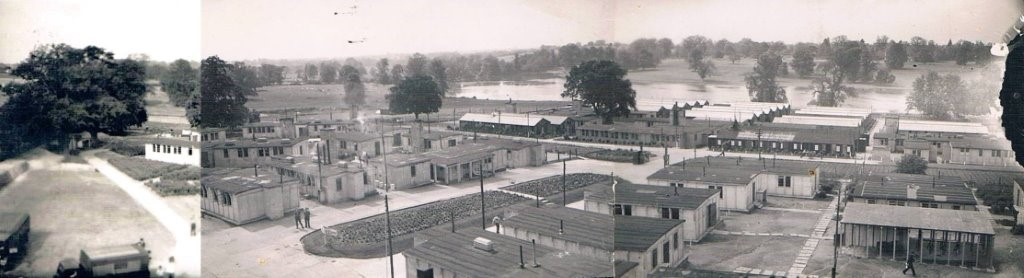
Botesdale Camp, numbered 56, stood at The Warren on the southern side of the lake in Redgrave Park. Ukrainians arrived in 1947 after imprisonment in Italy, including Rimini. They entered an existing prisoner-of-war camp, rather than arriving directly into permanent civilian homes.
The Suffolk Historic Environment Record describes a purpose-built camp of standard type, centred at TM 0565 7647 and covering about 513 metres by 325 metres, whose prisoners were sent out to work on local farms. The Foreign Office file of inspection reports, FO 939/138, is catalogued under the camp’s postal address as 56 Working Camp, Botesdale Camp, Diss, Norfolk, although the camp itself lay in Suffolk.
A history in dates
- 1939–1948A purpose-built working camp of standard type operates at The Warren, Redgrave Park.
- 16–17 December 1946An inspector records the main camp and its two dependent hostels.
- 1947Ukrainian prisoners arrive after the earlier German and Italian residents.
- June 1947A staff roll documents the services supporting camp life.
- 6 August 1947The Foreign Office tells Parliament that the Ukrainians brought to Britain will be screened again.
- July 1948A return records 1,010 Ukrainian men at or near Botesdale.
- August 1948A transfer instruction anticipates 80 further Ukrainian prisoners.
- August to October 1948Ukrainians are released from prisoner-of-war status into the European Voluntary Workers scheme and the camps become hostels.
- 2019A field survey photographs the surviving water tower.
- 2025A planning assessment maps the camp boundary and distinguishes it from the former hospital site.
Sources for this section
- Monument record BOT 031 – Prisoner of War Camp 56
- Camp 56 inspection report, FO 939/138
- Prisoner-of-War Camp, Botesdale
- Ukrainian Prisoners of War in Redgrave Park
- Ukrainian Prisoners of War, HC Deb 6 August 1947 vol 441 cc167-8W
- Post-war camps and hostels
- PoW Camp 56 Botesdale
- Stone Cottages Solar Farm: historic environment assessment
Two institutions across the lake
The camp’s prefabricated buildings stood opposite Redgrave Hall and its military hospital. The hospital was a separate establishment: an original inspection places Camp 56 about a mile from No.231 Redgrave Park prisoner-of-war hospital, and the Suffolk record gives Camp 231 a grid reference of its own, TM 0561 7724, describing German prisoners held at a former military hospital and letters from inmates dated 1947 and 1948. During the war that hospital site had been the 65th General Hospital of the United States Army, with 1,450 beds in purpose-built accommodation. Their shared park setting can obscure the distinction between them.
The park itself was an eighteenth-century landscape. Lancelot Brown remodelled the hall in the 1760s and formed the serpentine lake beside which the camp was later laid out.
Photographs taken by an employee from the camp’s water tower show rows of huts spread across the grounds. The panorama provides a view of the residential site as it existed after the war.
The camp before the Ukrainian arrivals
An inspection on 16–17 December 1946 counted 815 German and Austrian prisoners in the main camp and another 319 in two associated hostels. Thornham Park held 267 and Long Stratton 52. The combined figure of 1,134 therefore described a network, not one enclosure.
The same report recorded three English classes and private study, electric lighting and stove-heated classrooms. A theatre could accommodate 400. The inspector wanted more accessible reading material and noted contact with the local Anglican clergyman. These observations belong to the earlier German/Austrian phase.
Main camp and dependent hostels, December 1946
| Facility | Prisoners |
|---|---|
| Camp 56, Botesdale | 815 |
| Thornham Park hostel | 267 |
| Long Stratton hostel | 52 |
| Combined total | 1,134 |
Sources for this section
The Ukrainian community
In July 1948 a return of the former Galicia Division personnel recorded 1,010 men in camps at or near Botesdale, one of the larger concentrations in eastern England. The wording describes a locality, not the occupancy of the Camp 56 compound alone. A parliamentary answer of 6 August 1947 had already made clear that these men, described by the government as members of the 1st Ukrainian Division of the Wehrmacht, would be screened again in Britain.
Local research preserves a June 1947 staff roll listing cooks, bakers, sanitation workers, barbers, tailors, cobblers, teachers and other services. It shows the labour needed to keep the camp running alongside work on surrounding farms.
A document dated August 1948 instructed the commandant to expect another 80 Ukrainian prisoners. The continuing transfers show that arrival and release did not happen in a single movement. Release from prisoner-of-war status into the European Voluntary Workers scheme was carried out across the country between August and October 1948, after which the camps passed to civilian authorities and were redesignated as hostels. Some former residents subsequently built civilian lives in Suffolk.
No branch record, news sheet or concert programme from Botesdale itself has been traced. What is documented for the Ukrainian camps generally is that residents ran English classes and lectures, kept libraries and reading rooms, published news sheets, formed choirs, dance and drama groups and sports teams, and received occasional visits from the Association of Ukrainians in Great Britain and from Ukrainian priests.
Ukrainian men in camps at or near eastern England locations, July 1948
| Location | Men |
|---|---|
| Hempton, Norfolk | 1,682 |
| Mildenhall, Suffolk | 1,401 |
| Allington, Lincolnshire | 1,319 |
| Moorby, Lincolnshire | 1,264 |
| Botesdale, Suffolk | 1,010 |
Farm work and civilian life
The War Agricultural Executive Committee operated at the site. Earlier prisoners had worked on neighbouring farms, sometimes under formal arrangements for billeting with farmers. Local accounts describe exchanges with villagers and everyday contact through work. One Botesdale woman, Beryl Churchyard, born in 1930, has recorded her memories of working at the camp.
A later account reports plans to convert part of the camp into a hostel for civilian agricultural workers. Former huts were also used as temporary housing before local council accommodation became available, and the Rainbow Valve Company took over one of the huts as a workplace. These successive uses should not be treated as one unchanged prisoner population.
What survives
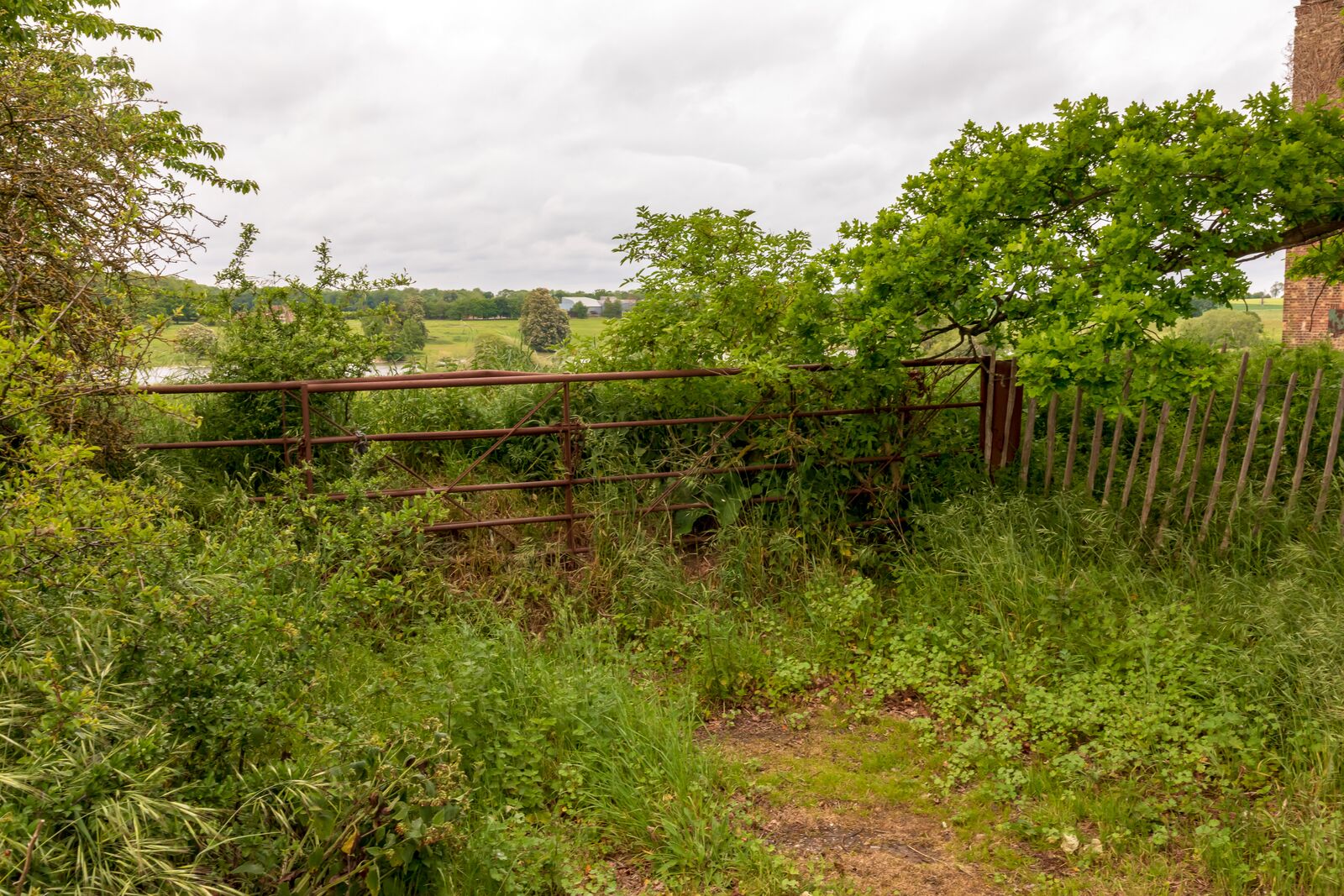
A 2019 photographic survey records the water tower as the camp’s surviving prominent structure and documents the view towards the former hospital. The Suffolk Historic Environment Record likewise states that the camp has been demolished and only the water tower survives, while the hospital site is reduced to foundations. The published inspection photographs preserve the numbered camp’s administrative identity even though most of its buildings have disappeared.
Recent archaeological assessment continues to distinguish the two former camps within Redgrave Park. The 2025 Stone Cottages Solar Farm assessment locates Camp 56 northwest of the proposed site and records that its historic boundary did not extend south across Bury Road into the development area.
Sources
- Prisoner-of-War Camp, Botesdale
Jean Sheehan / parish magazine · March 2015
Page 27; local testimony, camp identity and historical panorama.
- Ukrainian Prisoners of War in Redgrave Park
Jean Sheehan / parish magazine · April 2022
Page 31; 1947 staff roll and 1948 transfer document described by the researcher.
- Camp 56 inspection report, FO 939/138
UK Foreign Office / The National Archives · 16–17 December 1946
Original photographed report, first three pages visually read; reproduced by Repatriated Landscape.
- PoW Camp 56 Botesdale
Repatriated Landscape · 2019 fieldwork
Site photographs and original inspection documents. Hospital number verified from original report, not webpage typo.
- Stone Cottages Solar Farm: historic environment assessment
Planning application environmental assessment · 2025
Section 6.3.19; boundaries and relationship to proposed development.
- Monument record BOT 031 – Prisoner of War Camp 56
Suffolk Heritage Explorer, Suffolk County Council · Record updated 4 February 2026
Purpose-built standard-type camp centred TM 0565 7647, about 513m by 325m; German prisoners working on local farms; demolished apart from the water tower.
- Monument record RGV 056 – Prisoner of War Camp 231
Suffolk Heritage Explorer, Suffolk County Council · Accessed 13 September 2026
Camp 231 at Redgrave Park, TM 0561 7724, German prisoners at a former military hospital, inmates’ letters of 1947–1948, now reduced to foundations. A separate establishment from Camp 56.
- The history of Redgrave Park
Redgrave Park estate · Accessed 13 September 2026
Capability Brown’s parkland and lake; the 65th General Hospital, US Army, with 1,450 beds; POW Camp 56 south of the lake and its water tower; the Rainbow Valve Company’s use of a former hut; recorded memories of Beryl Churchyard.
- Post-war camps and hostels
Ukrainians in the United Kingdom Online Encyclopaedia · 2013
Gives 1,010 men in camps at or near Botesdale in July 1948, a locality total; describes the release into the EVW scheme between August and October 1948 and the cultural activities organised in the camps.
- 56 Working Camp, Botesdale Camp, Diss, Norfolk, FO 939/138
The National Archives, Kew · 1946–1947
Catalogue record for the Foreign Office inspection file, catalogued under the camp’s Norfolk postal address.
- Ukrainian Prisoners of War, HC Deb 6 August 1947 vol 441 cc167-8W
UK Parliament, Hansard · 6 August 1947
Written answer by Christopher Mayhew describing the men as members of the 1st Ukrainian Division of the Wehrmacht and stating that they would be screened again in Britain. National, not specific to Botesdale.
Last researched 13 September 2026