Hempton Green Camp
Arrival and settlement
Pudding Norton, near Fakenham, Norfolk, United Kingdom · Ukrainian occupation documented 1947–1949
Camp 82 at Hempton Green was the largest single holding of Ukrainians transferred from Rimini in 1947, and its men worked under Ministry of Agriculture contracts on Norfolk farms. After they left the huts became the Green Lane housing estate, and the ground where they stood is now a caravan park.
Introduction
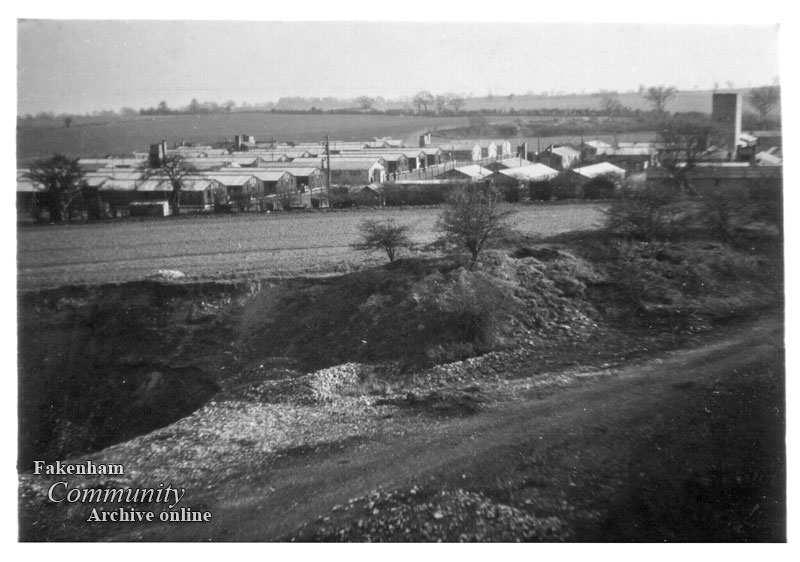
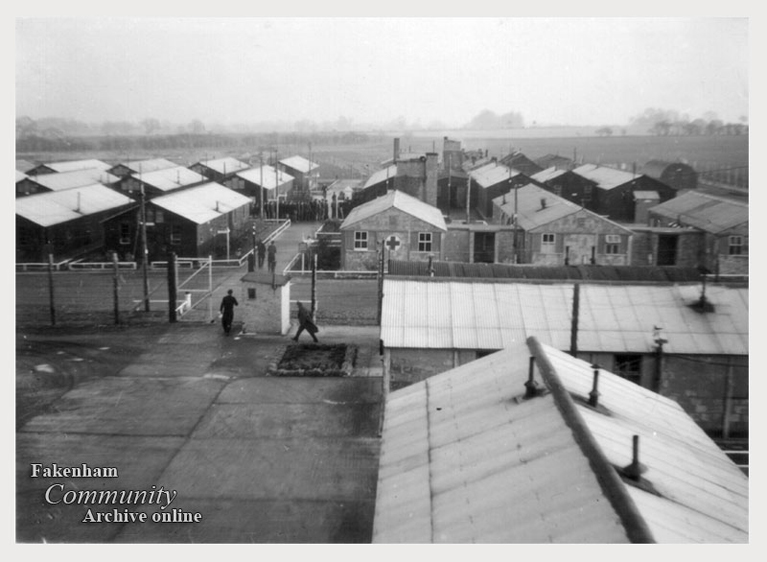
Hempton Green Camp was Camp 82, beside the Tittleshall road in Pudding Norton parish, near Fakenham. Its several names describe one site: a prisoner-of-war camp that later became Green Lane Estate. A compiled list of British prisoner-of-war camps dates the camp from 1942 or 1943 to 1947, gives Pudding Norton as an alternative name and records that it had hostels. Aerial photographs of 1946 show its layout, a central enclosure of prisoners’ huts with an exercise ground and sports pitches to the east and the guards’ huts to the west. The National Archives holds the camp’s own file as 82 Working Camp, Hempton Green Camp, Fakenham, Norfolk, covering 1945 to 1947.
Ukrainians arrived after the 1947 transfer of former Galicia Division soldiers from Rimini, Italy. This was a transfer into British custody and agricultural employment, distinct from the recruitment of civilian displaced people directly from camps in Germany and Austria.
A history in dates
- Early 1940sCamp 82 built to the standard type of German working camp, with prisoners’ huts, an exercise ground and sports pitches, and separate guards’ accommodation.
- 31 January 1946RAF vertical photography records the full extent of the camp.
- 1947Ukrainians transferred from Rimini arrive; 1,001 are housed here, the largest number at any one camp.
- July 1948A survey records 1,682 Ukrainians in camps at or near Hempton.
- 1948A man at the camp advertises in the Paris paper Hromada for news of a relative.
- September 1948The Ministry of Works acquires the camp for its postwar housing use.
- September 1949Local testimony places the Ukrainians’ departure from the camp in this month.
- 1954Holy Trinity Church is extended; its interior retains a Ukrainian former prisoner’s carving.
- 1964Plans provide for demolition of huts and an expanded caravan site; clearance and redevelopment follow later in the decade.
From Rimini to Norfolk
The community archive records a peak of 1,001 Ukrainians at Hempton Green, the largest number sent to any single camp, later falling to about 875. A separate July 1948 survey gives 1,682 men for camps at or near Hempton. The figures describe different geographical groupings; the larger total is not the occupancy of this single compound.
The men were not cut off from the wider Ukrainian world. In 1948 one of them advertised in the Paris Ukrainian paper Hromada, giving his address as No 82 P.O.W. Camp, Hempton Green Camp, Fakenham, Norfolk, and asking for news of a relative. His notice sits in a column of others written from displaced persons camps in Germany and from hostels elsewhere in England, a reminder that the camp was one address in a scattered search for missing families.
Sources for this section
Working on local farms
Agricultural work shaped the camp’s daily routine. Men travelled to farms under Ministry of Agriculture contracts, taken out in lorries by drivers known as gangers who also supervised them at work, under a supervisor from Norwich. Local recollections describe potato harvesting, a large workshop where prisoners made tools, toys and small wooden objects, and the round or diamond patches, bright yellow or orange, that the men had to wear on the backs of their jackets. One son of a Ukrainian at the camp recalled his father describing harsh early conditions and hunger strikes, then an easing, with a weekly visit into town, and work that ranged from farms to mine clearance.
The working-camp system also extended beyond the main enclosure. A local history account identifies a POW hostel at Holkham as an outpost of Camp 82. That relationship helps explain why a locality could account for substantially more men than the main camp alone.
Sources for this section
From custody to civilian life
Former Galicia Division personnel nationally lost POW status during August–October 1948 and entered the European Voluntary Workers scheme. Remaining in communal accommodation could therefore continue after release from military custody.
At Hempton, the archive dates acquisition by the Ministry of Works to September 1948. Families awaiting council housing moved into the huts, and the site became Green Lane Estate. A contributor dates the Ukrainians’ departure from the camp to September 1949, and a few men stayed on living at the site while others settled in Norwich and elsewhere in Norfolk. These are local residential facts rather than the national change of legal status.
Sources for this section
The place that remained
The camp’s Ukrainian connection survives nearby in Holy Trinity Church, Hempton. Historic England records a painted hanging crucifix carved by a Ukrainian former prisoner of war. The object is part of the church interior, not evidence that the church itself stood inside the camp.
The Grade II listing describes the church’s 1954 enlargement using stone and flint salvaged from a bombed Norwich church. Its postwar fabric and the Ukrainian carving place the history of resettlement within a building still standing in the village.
The former camp continued as housing into the 1960s. Plans agreed in 1964 provided for hut demolition and space for up to forty caravans; redevelopment followed later in the decade.
The estate had its own small institutions in the years that followed. A Methodist minister served as warden and lived there with his family, a bungalow rented at ten shillings a week in 1952, and a grocery and provisions store traded beneath the brick tower that held the camp’s water tank. Caravans began to arrive during the 1950s.
Nothing of the camp survives above ground. The Norfolk record notes that the western part of the site is under the Green Lane housing estate, that mobile homes now stand on the sites of the former huts, and that the exercise ground to the east has returned to arable cultivation.
Names attached to the site
| Name | Meaning |
|---|---|
| Camp 82 | POW working-camp number |
| Hempton Green Camp | Official camp name |
| Pudding Norton Camp | Parish location used by the local archive |
| Green Lane Estate | Postwar housing use |
Sources
- Pudding Norton P.O.W. Camp
Fakenham and District Community Archive · Living community collection, accessed 2026
Camp identity, photographs and contributed recollections; conflicting dates distinguished by event.
- Post-war camps and hostels
Roman Krawec, Ukrainians in the United Kingdom · 2013
Locality totals July 1948 and national POW-to-EVW transition.
- Church of the Holy Trinity, list entry 1391769
Historic England · Listed 2006; amended 2022
Official description of suspended rood and 1954 extension.
- Remembering WW2: Alec Peck
Kettlestone History · Accessed 2026
Local account identifies Holkham hostel as an outpost of Camp 82.
- Hempton Green Prisoner of War Camp, NHER 55867
Norfolk Historic Environment Record, Norfolk County Council · Record of 26 July 2011, last edited 26 May 2023
Full record read. Camp layout from 1946 aerial photography (RAF 3G/TUD/UK/50 6138, 31 January 1946): central enclosure of prisoners’ huts, eastern enclosure with exercise ground and sports pitches, western guards’ huts. Listed as Camp Number 82 and described as a standard type German working camp in R. J. C. Thomas, Prisoner of War Camps (1939-1948). No original structures survive; Green Lane estate to the west, caravan park on the hut sites, arable to the east.
- FO 939/162, 82 Working Camp, Hempton Green Camp, Fakenham, Norfolk
The National Archives, Kew · 1945 to 1947
Catalogue entry located through the Discovery API and read; the file itself has not been consulted, so nothing from inside it is cited.
- Розшуки (Searches) column, Hromada, Paris
Hromada, Paris; digitised by diasporiana.org.ua · 1948, second issue
Full extracted text read. One entry gives the searcher’s address as No 82 P.O.W. Camp, Hempton Green Camp, Fakenham, Norfolk, England. The name is not published here, because the Ukrainians at Camp 82 had been transferred from the Rimini camp. The masthead OCR gives the year and issue number; the exact issue date was not legible.
- Camps listed under lowest number allocated
Prisoner-of-War Camps in the United Kingdom (compiled camp list) · Entry revised 20 October 2024
Compiled list of Second World War prisoner-of-war camps in the United Kingdom, read in full. The row for camp 82 gives Hempton Green Camp, Norfolk, dated 1942/3 to 1947, also known as Pudding Norton, with hostels.
Last researched 13 September 2026