Pier 21
Arrival and settlement
Halifax, Nova Scotia · Canada · 1928–1971
Halifax’s ocean terminal linked Ukrainian refugees’ transatlantic voyages with trains, sponsors and new homes across Canada, and for a few it became a place of weeks or months of waiting.
Introduction
Pier 21 was Halifax’s ocean immigration terminal from 1928 to 1971. Nearly a million immigrants passed through it, including Ukrainians rebuilding their lives after the Second World War. It was principally a place of entry, examination and onward travel, with accommodation for people whose admission or departure was delayed.
For many newcomers the waterfront building was the connection between a European voyage and a Canadian train journey. A short stay at the pier could be followed by days of travel to a sponsor, a farm or a city far inland.
A history in dates
- 1928Pier 21 begins operating as an immigration terminal.
- September 1939The Ocean Terminals, including Pier 21, pass under military oversight.
- March 1942The immigration quarters hold more than 170 merchant seamen.
- 1944A fire destroys the immigration quarters, which are subsequently rebuilt.
- 1947Canada begins admitting displaced persons and political refugees.
- 23 June 1948A family from Camp Lexenfeld arrives aboard Marine Falcon and continues to Alberta.
- 27 March 1949A Ukrainian family arrives aboard Samaria before travelling to Regina.
- 10 June 1949A Ukrainian family arrives aboard Nea Hellas and travels on to Montreal.
- 1952The Displaced Persons Movement closes, having admitted almost 200,000 people to Canada.
- 1971Immigration operations at Pier 21 end.
- 1999The preserved site opens as a museum.
Sources for this section
- Uncovering secrets of the popular miniature Pier 21 model
- The Pier Goes To War: Halifax’s Pier 21 and the Second World War
- Exploring Pier 21’s Immigration Quarters
- Postwar Immigration through Pier 21
- Ivan and Anna Zadan
- Irena and Maria Malinowska Wacyk
- Brodowycz Natalia Wasyl
- New perspectives: 25 years after our grand opening
The pier at war
Halifax harbour was large, deep, free of ice and close to the shipping routes from Europe, and the city was joined to the transcontinental railway. Pier 21 had been designed for the passengers and cargo of large ocean liners, so from September 1939 it could take the same vessels as troopships, and the Ocean Terminals complex was placed under military oversight for the duration.
About 368,000 service personnel passed through the Ocean Terminals during and immediately after the war; in one three-month period in 1942 almost 60,000 soldiers embarked there. Civilian traffic continued alongside: evacuated British children from 1940, and from 1942 to 1948 the largest single movement through the pier, 64,446 women who had married Canadian servicemen abroad and their children.
Halifax’s immigration staff also spent much of the war resolving the cases of foreign merchant seamen, who might land legally, desert or be brought ashore after a sinking. The accommodation and detention area stayed busy with them throughout; in March 1942 it held more than 170 at once.
Sources for this section
The displaced persons movement
In 1947 Canada began admitting displaced persons and political refugees from Europe, and by 1952 almost 200,000 had been accepted under the Displaced Persons Movement. The postwar economic boom had created a shortage of labour, so many were admitted as workers; others came on sponsorship, and some were admitted without secured sponsorship, travel documents or personal identification at all.
Most of the displaced persons who came through Pier 21 embarked from France, Belgium, the Netherlands, Italy, Austria and Germany, while most of those admitted as political refugees had fled Czechoslovakia, the Soviet Union and Yugoslavia, as well as Poland and Hungary. Between 1945 and 1971 nearly a million postwar immigrants passed through the building, more than a fifth of them displaced persons and refugees. They arrived with little money, clothing or documentation, and frequently needed help from voluntary agencies before they could reach their new homes.
Movements through the pier
| Movement | Period | Recorded number |
|---|---|---|
| Service personnel through the Ocean Terminals | Second World War and just after | About 368,000 |
| Soldiers’ wives and children | 1942–1948 | 64,446 |
| Displaced persons admitted to Canada | 1947–1952 | Almost 200,000 |
| Postwar immigrants through Pier 21 | 1945–1971 | Nearly a million, over a fifth of them displaced persons and refugees |
Sources for this section
From the ship to the train
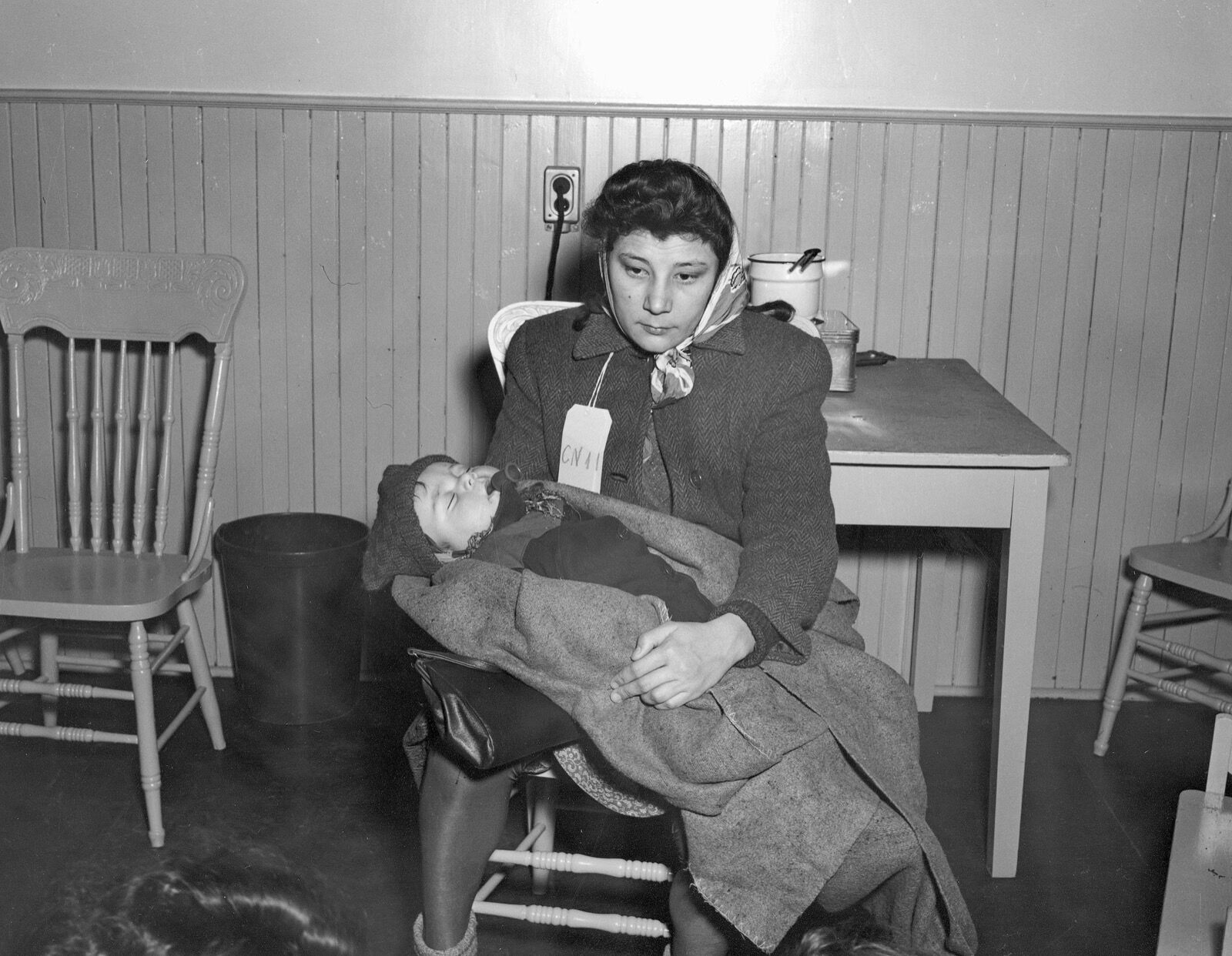
Arrival brought a sequence of practical tasks: medical screening, immigration examination, customs inspection, luggage collection and arrangements for rail travel. The immigration annex and railway facilities were part of the same busy environment. Officers, railway workers and voluntary organisations helped move people through a system that combined border control with the logistics of settlement.
Medical clearance often began overseas. Approved examinations reduced the need for a full repeat examination at Halifax, although checking papers did not remove the possibility of further assessment. Pier 21 contained both clinical and hospital facilities, bringing medical treatment and immigration accommodation together on the waterfront. The medical areas changed repeatedly as requirements and available treatments developed.
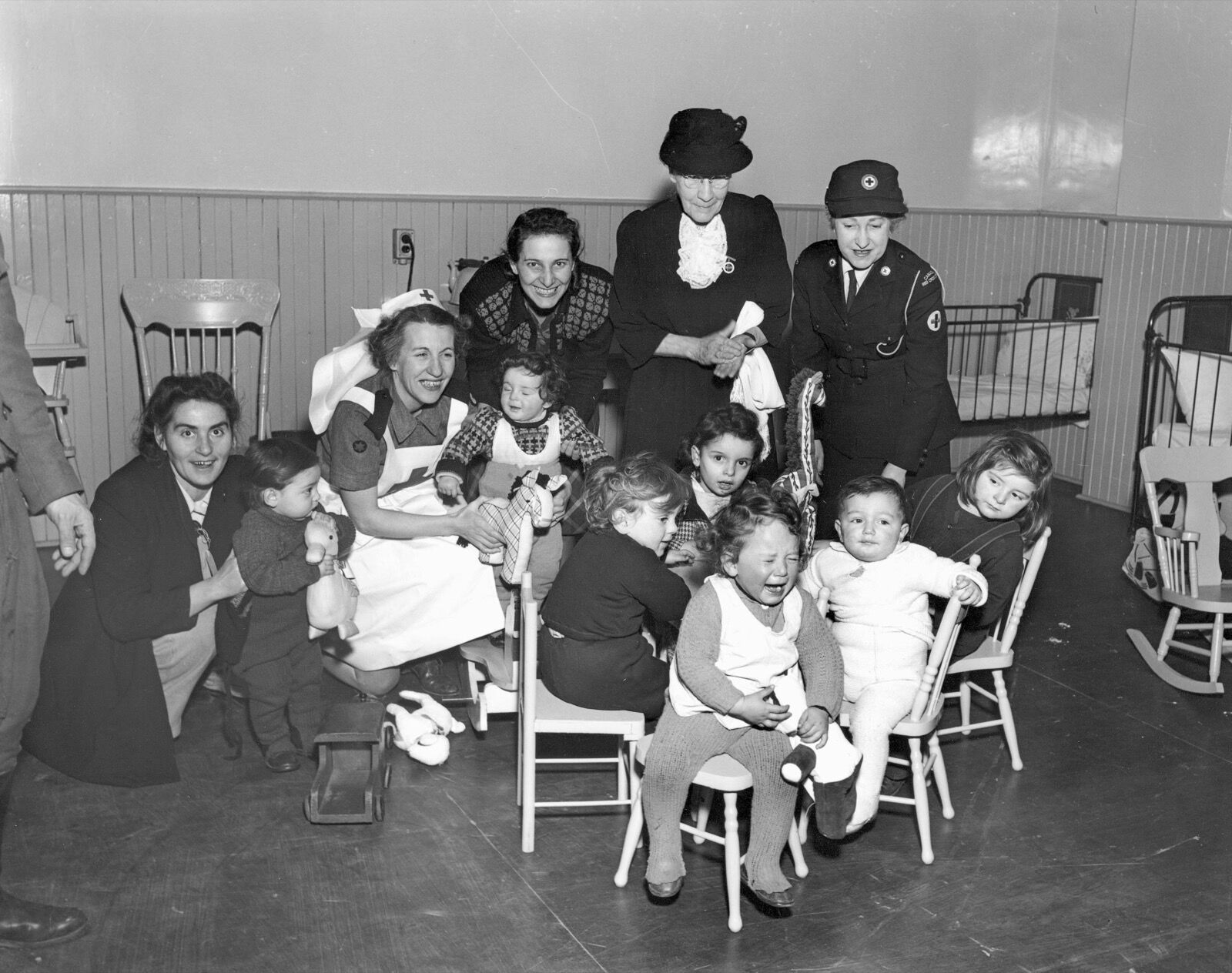
Voluntary service agencies worked in the hall while families waited. The Red Cross ran a nursery that looked after young children while their parents rested, washed, found food or bought tickets for the train.
When the journey paused
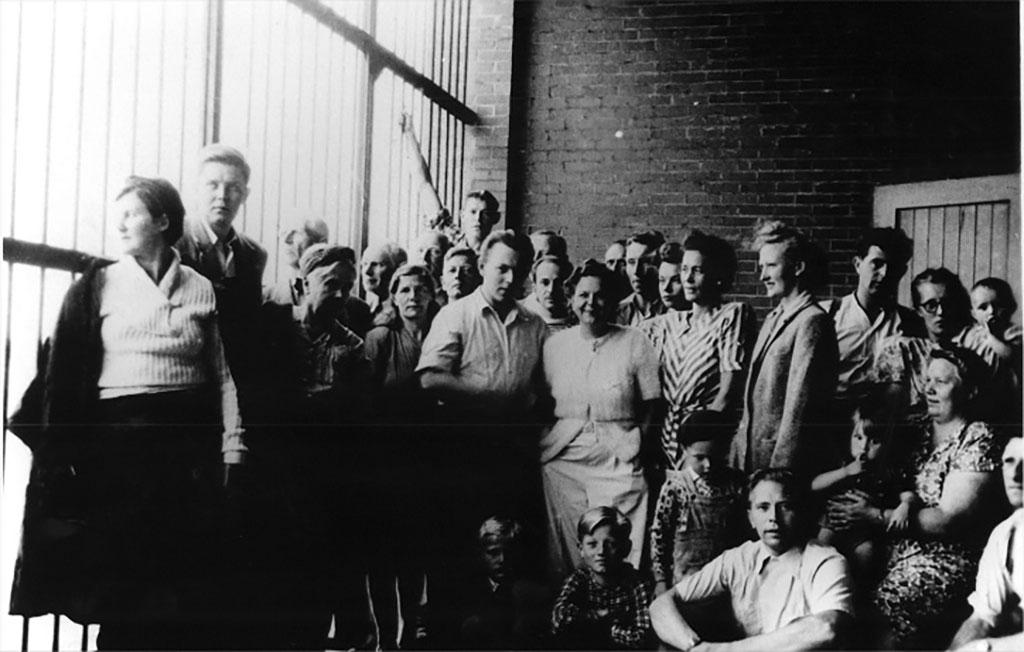
Some people had to wait because documents required checking or an employment arrangement had failed. Large dormitories provided simple beds and bathrooms; more secure rooms served a different detention function. The arrangements could feel restrictive even when residents were permitted to leave during the day. After a 1944 fire, the accommodation was rebuilt with separate dormitories and smaller rooms for families and other groups.
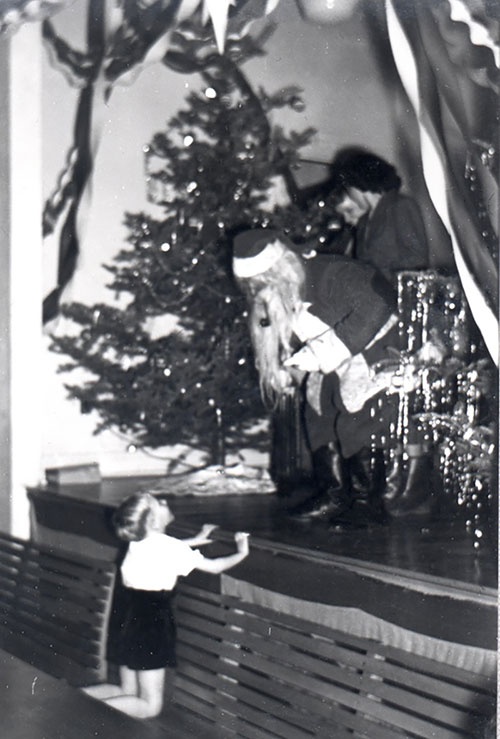
Dining and recreation spaces, airing galleries and the work of matrons formed part of daily life for those waiting. A photograph of Christmas celebrations in 1948 records Baltic refugees making use of the recreation area. The image documents that particular group, rather than a specifically Ukrainian celebration.
A wait could be long. A Jewish refugee family from Poland who landed in March 1950 were held in the detention quarters for three months after a child developed a fever, watching from a window that faced the railway tracks as other passengers boarded their trains. The stated medical grounds turned out to conceal a political suspicion about a relative in Canada, and the family reached Toronto only after a prominent lawyer intervened on their behalf.
Ukrainian journeys through Halifax
One family, deported from Ukraine to forced labour at Linz in 1942 and separated between three camps there, walked south through the Alps in the spring of 1945 and eventually reached an American camp near Salzburg, Camp Lexenfeld, where they spent three years while the IRO planned their resettlement. Before leaving Austria the father signed an agreement to work two years for a sponsoring sugar-beet farmer. Sailing from Bremerhaven aboard Marine Falcon, they reached Pier 21 on 23 June 1948, cleared customs quickly and took a Canadian Pacific train across seven provinces to Taber, Alberta. The farmer met them at the station and loaded them into the box of his grain truck; their first home was an old wooden grain bin converted into two rooms. The eldest daughter, who had married in the camp, followed under a separate sponsorship in 1949, and the family built their own house at Taber between 1951 and 1953.
Another Ukrainian family reached Halifax aboard Samaria on 27 March 1949 from a displaced-persons camp at Heidenau in the British zone, where the mother had worked as the commandant’s secretary and where her daughter had been born in 1945. Having no address for a distant relative in Canada, she wrote to the Ukrainian-American film actor John Hodiak, addressing the letter simply to Hollywood; he placed advertisements in the Ukrainian newspapers in Canada, the uncle saw one and made contact through the Red Cross, and he sponsored the family’s passage.
At Pier 21 that family was not allowed to leave the arrivals area and was put straight on to a train for Regina, sitting and sleeping on wooden benches ranged along the walls of the carriages. A prolonged nosebleed forced a stop in northern Ontario for treatment. In Regina they lived in the cousin’s home for about three years while the mother worked first washing dishes in a restaurant, then as a hospital cleaner and then as a nursing aide, teaching herself enough English to get by, partly from the newspaper comic strips, and repaying the money her uncle had borrowed for their fares.
A third couple landed at Pier 21 on 10 June 1949 from Nea Hellas with their two daughters and travelled on to Montreal, where they settled and where a third daughter was born the following year. They became Canadian citizens in 1959, worked until retirement and were active in the Ukrainian Canadian community.
Documented Ukrainian arrival routes
| Halifax arrival | Ship | Onward destination | Initial arrangement |
|---|---|---|---|
| 23 June 1948 | Marine Falcon | Taber, Alberta | Two-year sugar-beet contract signed before leaving Austria |
| 27 March 1949 | Samaria | Regina, Saskatchewan | Sponsorship by a relative traced through newspaper advertisements |
| 10 June 1949 | Nea Hellas | Montreal, Quebec | Family settled in the city |
Sources for this section
From immigration terminal to museum
Air travel increasingly displaced ocean travel during the 1960s, and immigration operations at Pier 21 ended in 1971. Its place in family memory survived the closure. Preservation campaigns later brought the building a new role: a museum opened in 1999, and subsequent interpretation expanded the story beyond the moment of arrival to the varied experiences of migration and settlement.
Sources
- Uncovering secrets of the popular miniature Pier 21 model
Canadian Museum of Immigration at Pier 21 · 2024
Museum curatorial account explains the building, arrival process, railway connections and 1928–1971 operating period.
- Exploring Pier 21’s Immigration Quarters
Steve Schwinghamer, Canadian Museum of Immigration at Pier 21 · Updated 20 July 2021
Original museum research on dormitories, detention, facilities and the 1944 reconstruction, with archival photographs.
- Medical Facilities at Pier 21
Steve Schwinghamer, Canadian Museum of Immigration at Pier 21 · Updated 20 July 2021
Research distinguishes overseas medical clearance from examination, clinic services and hospital accommodation at Halifax.
- Ivan and Anna Zadan
Family testimony preserved by the Canadian Museum of Immigration at Pier 21 · Written from oral history by Lloyd and Valentina Robinson
Full testimony read: deportation from Ukraine to Linz in 1942, the walk south in 1945, three years at Camp Lexenfeld near Salzburg, the two-year sugar-beet contract signed before departure, arrival aboard Marine Falcon on 23 June 1948, the Canadian Pacific train to Taber, the converted grain bin, and the house the family built in 1951–1953.
- Irena and Maria Malinowska Wacyk
Family testimony preserved by the Canadian Museum of Immigration at Pier 21 · Undated
Full testimony read: the flight from Kalusz, the camp at Heidenau, the letter to John Hodiak and the newspaper advertisements, Red Cross contact and sponsorship, arrival aboard Samaria on 27 March 1949, the train to Regina, and the family’s first three years there.
- New perspectives: 25 years after our grand opening
Canadian Museum of Immigration at Pier 21 · 2024
Museum history records preservation efforts, the 1999 opening and the development of interpretation at the historic facility.
- Postwar Immigration through Pier 21
Jan Raska, Canadian Museum of Immigration at Pier 21 · Updated 26 October 2020
Full article read: the Displaced Persons Movement of 1947–1952 and its scale, the countries of embarkation and of flight, war-bride numbers, and the proportion of postwar arrivals who were displaced persons and refugees.
- The Pier Goes To War: Halifax’s Pier 21 and the Second World War
Steve Schwinghamer, Canadian Museum of Immigration at Pier 21 · Updated 28 January 2022
Full article read: the harbour’s advantages, military use of the Ocean Terminals from 1939, 368,000 service personnel, the 1942 embarkations, 64,446 soldier dependants from 1942 to 1948, and the wartime use of the immigration quarters by merchant seamen.
- Children of the Pier: Adolescent Experiences of Arrival and Process
Jan Raska, Canadian Museum of Immigration at Pier 21 · Updated 28 September 2020
Full article read: the Red Cross nursery, and the three-month detention in 1950 of a Jewish refugee family from Poland who arrived aboard USS General W. C. Langfitt.
- Brodowycz Natalia Wasyl
Family inscription preserved by the Canadian Museum of Immigration at Pier 21 · Undated
Records arrival at Pier 21 on 10 June 1949 aboard Nea Hellas with two daughters, settlement in Montreal, naturalisation in 1959, and later activity in the Ukrainian Canadian community.
Last researched 14 September 2026