Camp Grohn and the Bremerhaven Columbuskaje
Bremen and Bremerhaven, Germany·Emigrant staging and embarkation: 1946 to 1952
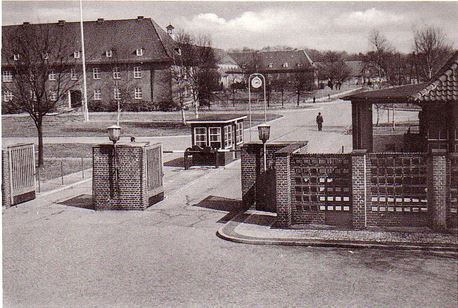
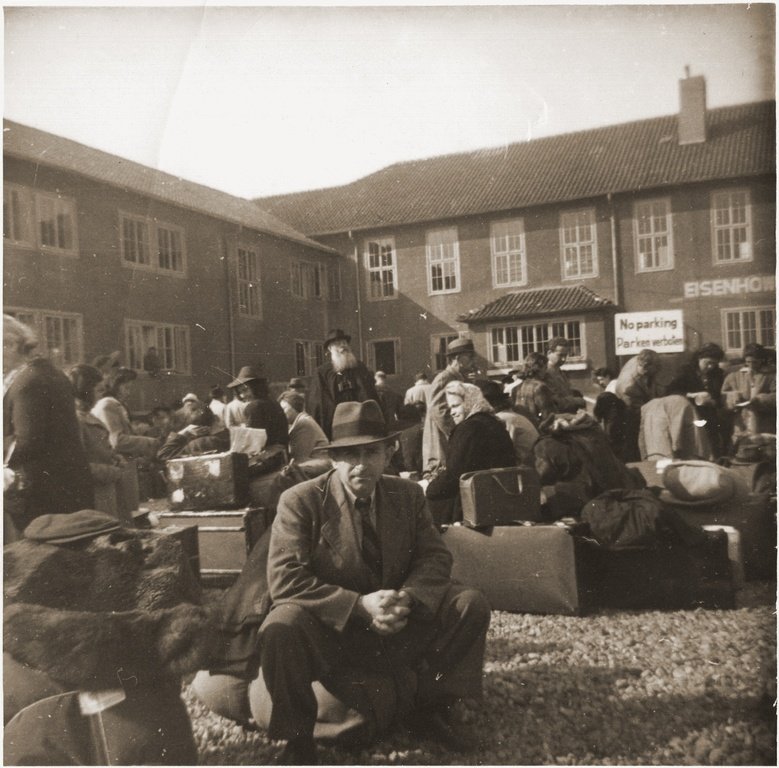
Camp Grohn in Bremen was the largest camp of the Bremen Emigrant Staging Area, the last stop on German soil for displaced persons whose resettlement had already been approved elsewhere, and it held up to 5,000 people at a time. From Grohn they travelled the short distance to the Columbuskaje at Bremerhaven, the only overseas passenger quay in the American zone, and boarded the troopships and IRO vessels that carried them to the Americas and Australia.
Introduction
Resettlement out of occupied Germany ended at a quayside, and for most people leaving the American zone that quayside was the Columbuskaje at Bremerhaven. The staging camps at Bremen existed to make the sailings work. Their job was not to decide who could emigrate but to hold approved emigrants close to the port, finish the last formalities and fill each ship on the day it sailed. Camp Grohn, a requisitioned barracks at Bremen-Vegesack, was the largest of them.125
A history in dates
- 1936A Flak-Kaserne is built at Bremen-Grohn.16
- May 1945
- Spring 1946Camp Tirpitz in Groepelingen begins housing up to 1,800 emigrants.1
- 1946
- 1948President Truman signs the United States Displaced Persons Act, opening admission to hundreds of thousands of displaced persons.2
- 30 September 1948The Interzonal Embarkation Center opens at Camp Grohn with 3,500 places.3
- 21 to 30 October 1948
- 14 February 1949More than 380 displaced persons leave the Resettlement Center Amberg for Bremen-Grohn to emigrate to the United States.12
- 5 August 1949Larissa Prychodko writes to John Panchuk from Camp Grohn before the family sails on the General Muir.8
- End of October 1949The hundred thousandth stateless refugee emigrates to the United States, as reported on 3 November 1949.5
- 30 September 1950The IRO takes over Camp Grohn.3
- Winter 1950 to 1951
- Mid-1951Camp Grohn's use as an emigrant camp ends.3
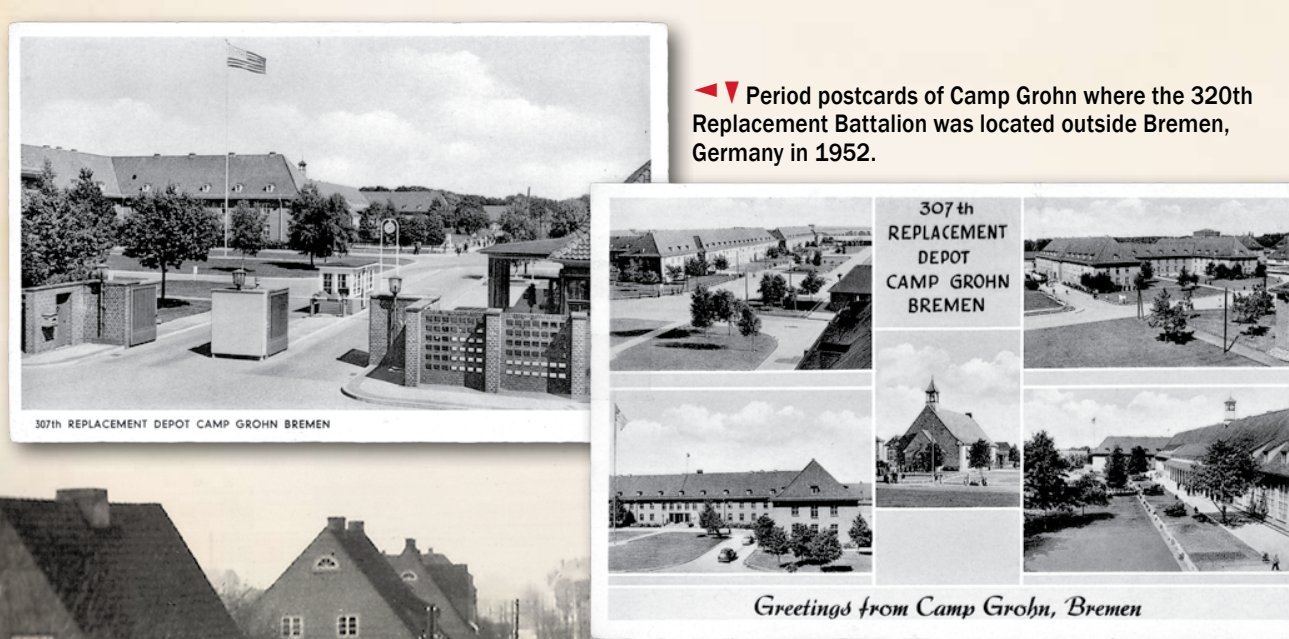
- December 1951 to January 1955Parts of the 307th Replacement Depot Group are stationed at Camp Grohn.3
- 31 January 1952
- 1952The southern passenger building and station at the Columbuskaje are completed, replacing the wooden hall in use from 1950.17
- 1955
Origins and purpose
The site began as a Flak-Kaserne built in 1936. American forces took it over in May 1945 and renamed it Camp Grohn after the district. Because the United States forces in southern Germany had to be supplied by sea, Bremen and Bremerhaven were administered as an American enclave inside the British zone, and the port therefore became the American zone's emigration outlet.316
A staging area grew up around that port. Camp Tirpitz, a former barracks in Groepelingen, housed up to 1,800 emigrants from the spring of 1946. On 30 September 1948 the Americans opened the Interzonal Embarkation Center at Camp Grohn with a capacity of 3,500 places, and the camp is generally recorded as accommodating up to 5,000 people. Camp Lesum, built on another former Wehrmacht barracks site in the winter of 1950 to 1951 for about 5,000 people, completed the group. Together the three were the Bremen Emigrant Staging Area, run by UNRRA and then by the International Refugee Organisation.1341114
The staging camps sat at the end of a chain. Selection happened earlier, at resettlement centres such as Wentorf Resettlement Centre in the British zone and Funk-Kaserne Transit Centre in Munich, where national selection missions interviewed applicants, tested their trades and examined them medically. Only people already assigned to a scheme were sent on to Bremen.112
Bremen Emigrant Staging Area: camps and capacity
| Camp | District | Opened | Capacity | Source scope |
|---|---|---|---|---|
| Camp Tirpitz | Bremen-Groepelingen | Spring 1946 | Up to 1,800 emigrants | Arolsen Archives e-Guide, all nationalities |
| Camp Grohn (Interzonal Embarkation Center) | Bremen-Grohn, Vegesack | 30 September 1948 | 3,500 places at opening | Roland-Kaserne article, German Wikipedia, all nationalities |
| Camp Grohn | Bremen-Grohn, Vegesack | 1948 | Up to 5,000 people | Arolsen Archives e-Guide, migrations-geschichten.de and Weser-Kurier, all nationalities |
| Camp Lesum | Bremen-Lesum | Winter 1950 to 1951 | About 5,000 people | Arolsen Archives e-Guide and Camp Lesum article, German Wikipedia, all nationalities |
How it worked in practice
A surviving nominal roll shows the pattern. On 14 February 1949 more than 380 displaced persons, mostly Polish citizens, left the Resettlement Center Amberg in the Oberpfalz for Bremen-Grohn on their way to the United States. They had reached Amberg from camps including Regensburg, Landshut and Weiden, had sat occupational tests, had been examined by doctors and checked by the security service there, and a selection commission had assigned them to a scheme. Being on the list did not guarantee departure: people were struck off again, most often on health grounds.12
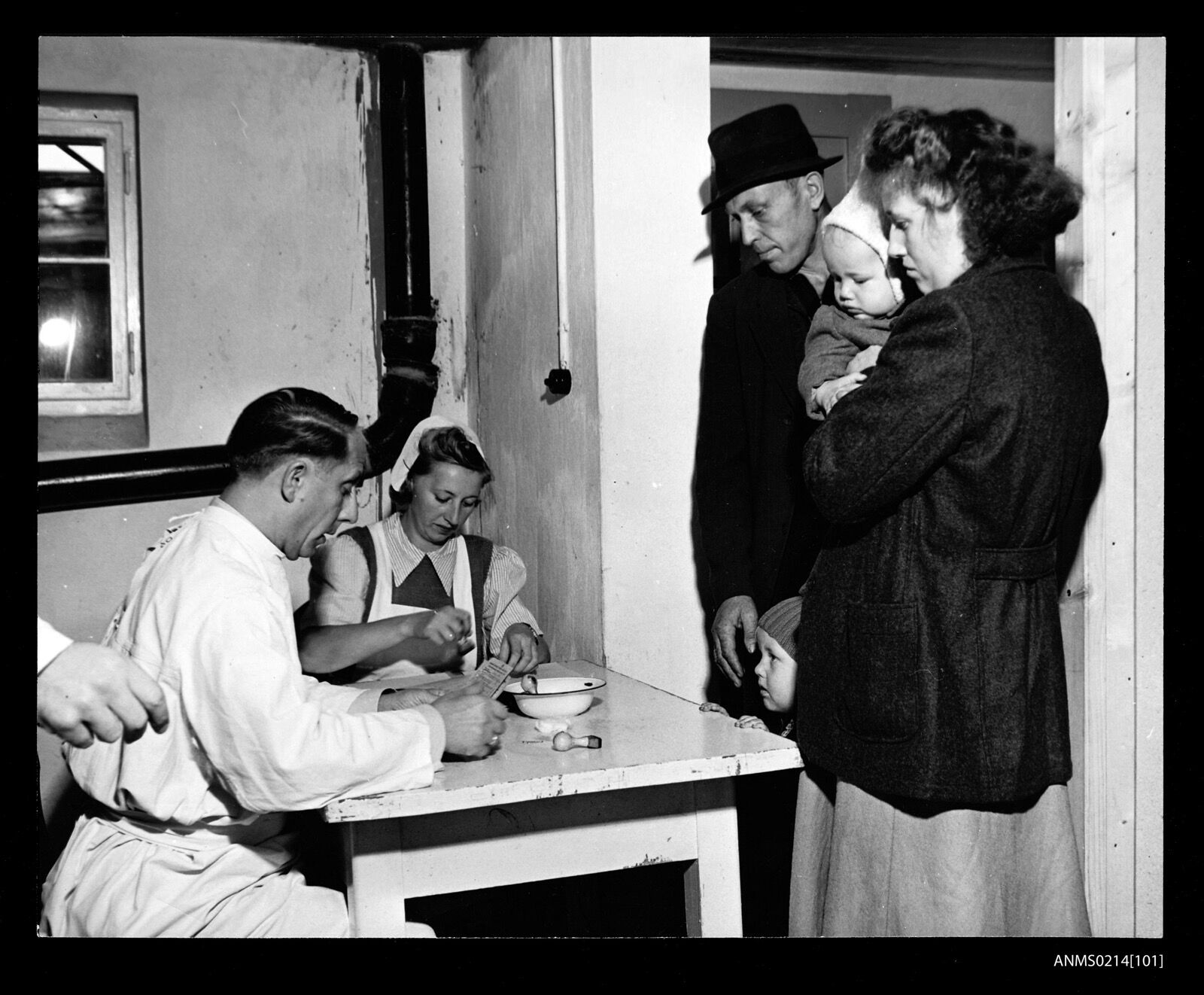
At Bremen the stay was short, usually about two weeks, and about ten days at Camp Lesum. Registrars, doctors and other officials worked through each emigrant using a routing card, recording name, date and place of birth, the camp, and later the departure date, destination and ship. Customs inspection of luggage and security checks had to be finished before embarkation. Doctors examined people again for illnesses that could have stopped them at the last minute. Emigrants under the United States Displaced Persons Act of 1948 arrived with visas already issued and sponsors already found. Meanwhile the camps ran orientation courses on the language, everyday life and culture of the destination country: a 1947 film shot at Grohn shows an English class sponsored by the Church World Service Language Institute.1267
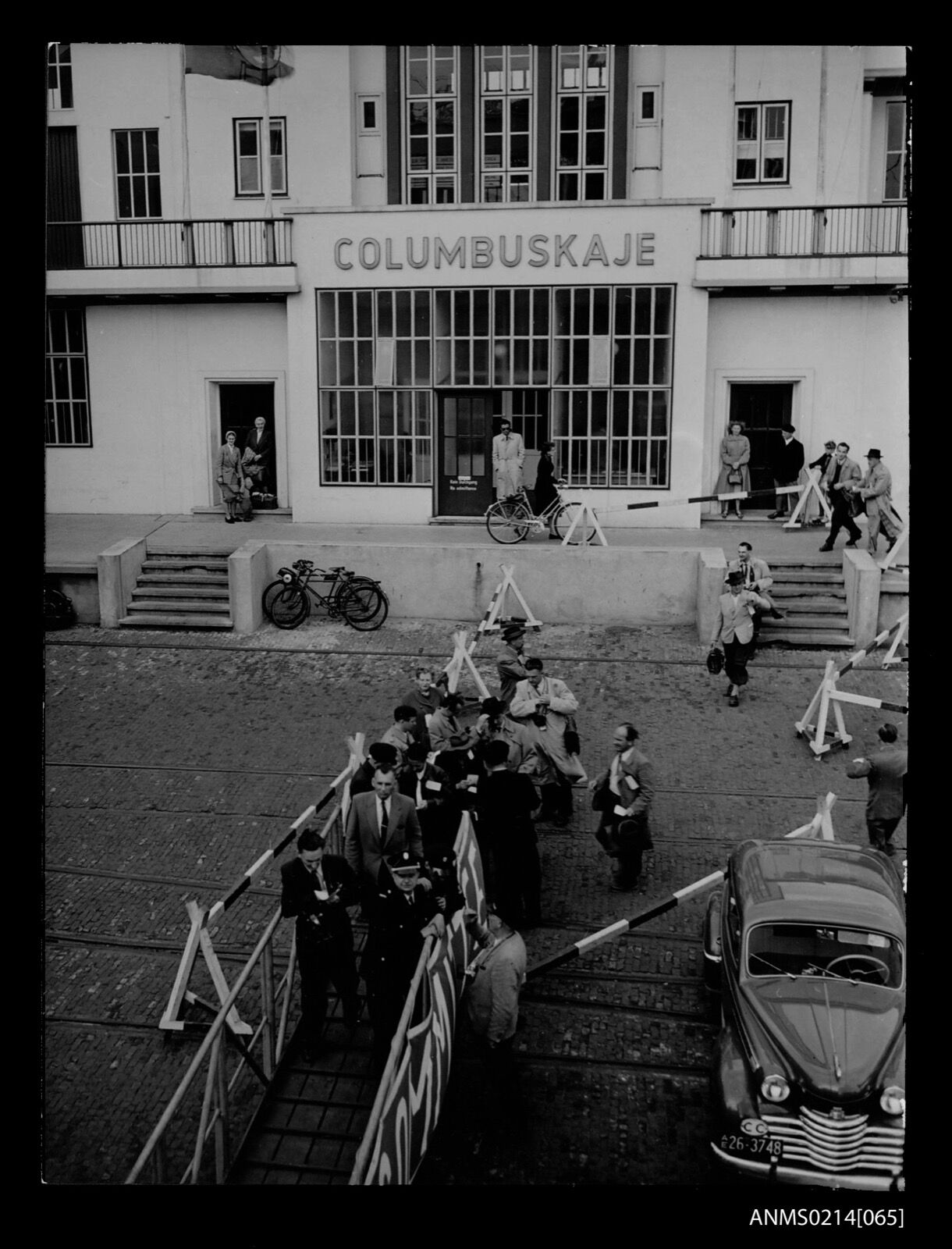
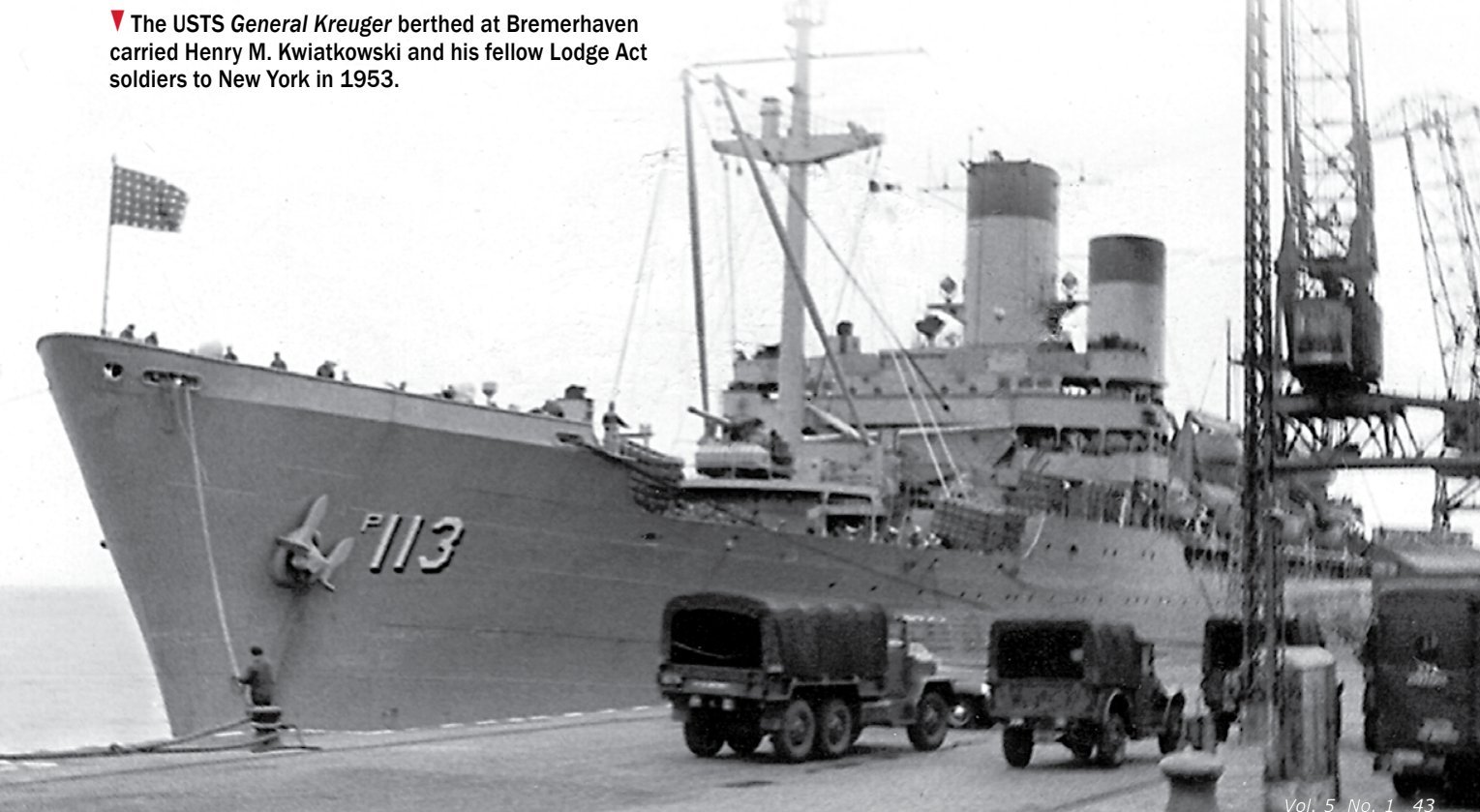
The point of concentrating people at the port was throughput. A ship carrying about 1,200 emigrants sailed on average every two to three days, so turnover was high, and if someone could not travel there was always a replacement in the camp who could take the berth. Emigrants moved from the train directly onto the ship at the Columbuskaje, whose bombed passenger buildings were only gradually replaced: a wooden reception hall served from 1950 and the southern passenger facility and station were finished in 1952. The quay was nicknamed the Kaje der Traenen, the quay of tears. Transport was by United States Army troopships and by IRO vessels. The General W. M. Black left Bremerhaven on 21 October 1948 with 813 displaced persons of eleven nationalities, the first group admitted under the Displaced Persons Act, and reached New York on 30 October. Most emigrants handled by the IRO went to the United States, then Australia, Canada and Israel, and reception was a matter for the receiving country's own arrival centres, among them Pier 21 at Halifax and Bonegilla in Victoria.157915
Throughput and records
| Measure | Figure | Source scope |
|---|---|---|
| Usual length of stay in the staging area | About two weeks (about ten days at Camp Lesum) | Arolsen Archives e-Guide; Camp Lesum article, German Wikipedia |
| Average sailing frequency and ship load | About 1,200 emigrants every two to three days | Arolsen Archives e-Guide, all nationalities, staging-area period |
| Emigrant Staging Area cards created at Bremen | More than 500,000 | Arolsen Archives, all nationalities, 1946 to 1952 |
| Emigrants assisted by the IRO worldwide | More than 700,000, of which 260,000 in 1949 | Jacobmeyer via Arolsen Archives; all ports, not Bremen alone |
| Emigrants through the Bremer Ueberseeheim at Lesum | About 212,000 | Camp Lesum article, German Wikipedia; 1953 to 1962, after the IRO, not DPs specifically |
Sources for this section
- Transfer document 421: nominal roll, Resettlement Center Amberg, 14 February 1949
- Bremen Emigrant Staging Area card
- The emigration of displaced persons
- Film of DPs Studying in Camp Grohn
- Film of Displaced Persons Boarding a Ship in Bremerhaven, Germany
- Bremerhaven, Bremen, Columbuskaje
- Displaced Person Transportation post World War II
- Displaced persons board ship in Bremerhaven, Germany to relocate to the United States (film record)
The Ukrainian experience within it
Ukrainians passed through Bremen in numbers that cannot be stated precisely, because the Allies classified displaced persons by citizenship rather than nationality. Ukrainians were counted as Soviet, Polish, Romanian or Czechoslovak citizens, a decision taken for the American and British zones in November 1945 and followed by UNRRA in December. The best figures Wolfgang Jacobmeyer found, for August 1947, give 118,625 Ukrainian displaced persons across the American, British and French zones, and he estimated the true total at between 110,000 and 140,000. Those figures cover the zones of occupation, not the Bremen camps.10
The same classification shows up in the shipping records. The Mast Magazine reported the national composition of one 1948 arrival in New York from Bremerhaven as 388 Poles, 178 Lithuanians, 59 Czechs, 32 Latvians, 17 Ukrainians, 14 Estonians, 10 Yugoslavs, 10 Romanians, 6 Hungarians, 16 Germans and 83 people without a country. That is a single voyage, and the small Ukrainian figure reflects how passengers were recorded rather than who was aboard: Ukrainians from Galicia and Volhynia appear in such lists as Poles.910
Individual cases are better documented than aggregates. Larissa and Vasyl Prychodko, Ukrainian displaced persons sponsored under the Displaced Persons Act by John Panchuk of the Michigan chapter of the United Ukrainian American Relief Committee, moved from the camp at Butzbach to Camp Grohn and sailed on the General Muir; Larissa wrote to Panchuk from Bremen on 5 August 1949. The committee that sponsored them reckoned that by 1952 it had helped bring roughly 33,000 Ukrainian displaced persons to the United States and another 50,000 to Canada, Australia and several South American countries. That total covers the committee's whole caseload through every port, not departures from Bremerhaven alone.8
Nationalities recorded on one 1948 arrival in New York from Bremerhaven
| Recorded nationality | Passengers |
|---|---|
| Poles | 388 |
| Lithuanians | 178 |
| Czechs | 59 |
| Latvians | 32 |
| Ukrainians | 17 |
| Estonians | 14 |
| Yugoslavs | 10 |
| Romanians | 10 |
| Hungarians | 6 |
| Germans | 16 |
| Without country | 83 |
Ukrainian figures and their scope
| Measure | Figure | Source scope |
|---|---|---|
| Ukrainian DPs in the western zones | 118,625 | August 1947, American, British and French zones; Jacobmeyer, best available statistics |
| Ukrainian DPs, estimated total | 110,000 to 140,000 | Jacobmeyer's estimate, western zones, no year given |
| DPs listed as Ukrainians | 9,190 in December 1945; 106,549 by June 1947 | Wyman; reflects a change in registration practice, not in population |
| Ukrainian DPs helped to the United States by the UUARC | About 33,000 | By 1952; the committee's whole caseload through every port, not Bremerhaven alone |
| Ukrainian DPs helped to Canada, Australia and South American countries by the UUARC | About 50,000 | By 1952; the committee's whole caseload through every port |
What happened afterwards
The peak passed quickly. According to Jacobmeyer more than 700,000 people emigrated with IRO help before the organisation was wound up, 260,000 of them in 1949 alone, and a newspaper report of 3 November 1949 recorded that the hundred thousandth stateless refugee had emigrated to the United States at the end of October that year. The IRO took over Camp Grohn on 30 September 1950, and its use as an emigrant camp ran until the middle of 1951. Camp Lesum had been built to replace it, because the United States Army wanted Grohn back for military purposes from the summer of 1952. Parts of the 307th Replacement Depot Group were stationed at Camp Grohn between December 1951 and January 1955, and in 1955 the barracks passed to German control as the Roland-Kaserne.2345
Emigration itself continued from Bremen without the IRO, which ceased operations on 31 January 1952. Camp Lesum carried on as the Bremer Ueberseeheim, a shipping camp for emigrants paying their own way, and about 212,000 people left Europe through it between 1953 and 1962. What survives of the staging area is largely paper. The Emigrant Staging Area card index holds more than 500,000 cards for emigrants handled at Bremen between 1946 and 1952; it is kept as the Auswandererkartei at the Staatsarchiv Bremen, with part of it accessible through the Arolsen Archives.1413
Sources
- Bremen Emigrant Staging Area card
Arolsen Archives e-Guide · retrieved 12 September 2026
Describes the staging area: Camp Tirpitz up to 1,800 from spring 1946, Camp Grohn probably established 1948 for a maximum of 5,000, Camp Lesum from winter 1950/51; stays of about two weeks; selection at resettlement centres beforehand; customs and security checks; medical examinations; a ship of about 1,200 emigrants sailing every two to three days; the routing-card system and what was recorded on it; Jacobmeyer's figures of more than 700,000 IRO emigrants and 260,000 in 1949.
- The emigration of displaced persons
Arolsen Archives · retrieved 12 September 2026
Truman and the 1948 Displaced Persons Act; Bremerhaven as one of the most important points of departure; final weeks spent in staging centres in Bremen such as Camp Grohn; the Emigrant Staging Area card index of over 500,000 cards from 1946 to 1952; IRO preparatory courses and language lessons.
- Roland-Kaserne
Wikipedia (German) · retrieved 13 September 2026
American administration of Bremen and Bremerhaven as the supply route for United States forces; the barracks renamed Camp Grohn in May 1945; the Interzonal Embarkation Center opened 30 September 1948 with 3,500 places; IRO takeover 30 September 1950; emigrant use to mid-1951; the 307th Replacement Depot Group at Camp Grohn from December 1951 to January 1955.
- Camp Lesum
Wikipedia (German) · retrieved 13 September 2026
Camp Grohn and Camp Tirpitz as the first Bremen camps; Camp Lesum built in winter 1950/51 for about 5,000 people to replace Camp Grohn, which the United States Army wanted for exclusively military use from summer 1952; stays of about ten days; departure via Bremerhaven on Army troop transports and IRO ships; about 212,000 emigrants through the Ueberseeheim between 1953 and 1962.
- Bremerhaven, Bremen, Columbuskaje
Elke Kimmel, Deutschland Archiv, Bundeszentrale fuer politische Bildung · 1 May 2024
The Suedkurier report of 3 November 1949 that the hundred thousandth stateless refugee had emigrated to the United States at the end of October 1949; the Columbuskaje as the only overseas port in the American occupation zone, with emigrants transferring directly from train to ship; the nickname Kaje der Traenen; Jewish survivors among those departing; the 1948 currency-reform shipment landed at the quay.
- Film of DPs Studying in Camp Grohn
United States Holocaust Memorial Museum, Experiencing History · retrieved 13 September 2026
1947 footage by Julien Bryan of an English lesson at the Bremen camp sponsored by the Church World Service Language Institute; the camp near Bremerhaven holding as many as 5,000 people; accession 2003.214, RG-60.4702.
- Film of Displaced Persons Boarding a Ship in Bremerhaven, Germany
United States Holocaust Memorial Museum, Experiencing History · retrieved 13 September 2026
The General W. M. Black leaving Bremerhaven in October 1948 with the first group admitted under the Displaced Persons Act, 813 people from eleven countries; the requirement that they hold United States visas, American sponsors, a clean bill of health and documents proving DP eligibility; accession 2003.213.
- Letter from Larissa Prychodko to John Panchuk
United States Holocaust Memorial Museum, Experiencing History (Bentley Historical Library, University of Michigan, John Panchuk Papers, Box 2) · letter 5 August 1949; retrieved 13 September 2026
Larissa and Vasyl Prychodko, Ukrainian DPs, moving from the camp at Butzbach to Camp Grohn at Bremen and sailing on the General Muir; John Panchuk as president of the Michigan chapter of the United Ukrainian American Relief Committee and sponsor of their application; the committee's estimate that by 1952 it had helped bring about 33,000 Ukrainian DPs to the United States and 50,000 to Canada, Australia and South American countries.
- Displaced Person Transportation post World War II
American Merchant Marine at War (usmm.org), citing The Mast Magazine 1948 · retrieved 13 September 2026
Bremerhaven as the embarkation point for most refugees; C-4 troopships built for 3,485 troops carrying fewer than 700 refugees; a crew account of embarkation and the passage down the Weser; the national composition of one arrival in New York given as 388 Poles, 178 Lithuanians, 59 Czechs, 32 Latvians, 17 Ukrainians, 14 Estonians, 10 Yugoslavs, 10 Romanians, 6 Hungarians, 16 Germans and 83 without country, with 63 orphans.
- Displaced Persons Camps: Ukrainian Statistical Problems
dpcamps.org, summarising Wolfgang Jacobmeyer, Vom Zwangsarbeiter zum heimatlosen Auslaender (1985), and Mark Wyman, DPs (1989) · retrieved 13 September 2026
Classification of DPs by citizenship not nationality, decided for the American and British zones in November 1945 and by UNRRA in December 1945; August 1947 totals of 118,625 Ukrainian DPs across the three western zones with the zone breakdown; Jacobmeyer's estimate of 110,000 to 140,000; Wyman's figures of 9,190 DPs listed as Ukrainians in December 1945 against 106,549 by June 1947.
- Displaced Persons DP Camps in Germany, B to R
dpcamps.org · retrieved 12 September 2026
Camp Tirpitz located in Groepelingen; Camp Grohn described as one of the largest Emigrant Staging Centres with up to 5,000 DPs before emigration and as the farewell stop for all DPs except those going by train; the UNRRA Team 510 Bremen staff list; the Staatsarchiv Bremen and Stadtarchiv Bremerhaven as record repositories.
- Transfer document 421: nominal roll, Resettlement Center Amberg, 14 February 1949
Arolsen Archives e-Guide · retrieved 12 September 2026
More than 380 mainly Polish DPs leaving the Resettlement Center Amberg on 14 February 1949, having come from camps including Regensburg, Landshut and Weiden; occupational tests, medical examinations and security screening at Amberg; assignment to a scheme by a selection commission; transfer to Bremen-Grohn for emigration to the USA; group resettlements as the rule; names struck from lists mainly on health grounds.
- Die Auswandererkartei Bremen
migrations-geschichten.de · 8 March 2024
The IRO card index of more than 500,000 documents covering emigrants handled in the Bremen Emigrant Staging Area from 1946 to 1952; the data recorded on the cards; Lesum and Grohn among the camps; Camp Bremen-Grohn accommodating up to 5,000; the index held today at the Staatsarchiv Bremen.
- Campus in Bremen-Grohn: frueher Flak-Kaserne, heute Constructor Uni
Karolina Benedyk, Weser-Kurier · 8 November 2023
Use of the site as a DP camp between 1948 and 1952 with room for up to 5,000 people; residents described as deported people from eastern Europe, concentration camp survivors and liberated forced labourers awaiting overseas emigration; the link to Bremerhaven as the departure point.
- Displaced persons board ship in Bremerhaven, Germany to relocate to the United States (film record)
United States Holocaust Memorial Museum, gift of the Julien Bryan Archive · retrieved 13 September 2026
Catalogue record for Julien Bryan's Bremerhaven embarkation footage, RG-60.4186, accession 2003.213, event date approximately 1948; the museum places no restrictions on use of the material.
- Camp Grohn
Wikipedia (English) · retrieved 13 September 2026
The site built in 1936 as a Flak-Kaserne; American units stationed there from May 1945 including the 29th Infantry Division and the 311th Infantry Regiment; the camp housing as many as 5,000 people before emigration; transfer to German control in 1955 as the Roland-Kaserne.
- Columbuskaje
Wikipedia (German) · retrieved 13 September 2026
The quay completed in 1927 and about 1,000 metres long; passenger buildings destroyed in air raids; a wooden reception and waiting hall in use in the southern area by 1950 and the southern passenger facility and station finished by 1952; the February to April 1948 landing of currency-reform banknotes.
- Camp Grohn, Germany (photograph)
United States Government, via Wikimedia Commons · Undated; uploaded 2014
Undated photograph of the entrance and guard house of Camp Grohn. The Wikimedia Commons record gives the source and author as the United States Government and the public-domain basis as a work of the United States federal government.
- German migrants embarking on Fairsea, Columbus Quay, Bremerhaven, ANMS0214[065]
Australian National Maritime Museum on The Commons · 6 August 1953
Photograph of emigrants walking up the gangway at the Columbuskaje passenger building at Bremerhaven, published by the Australian National Maritime Museum through Flickr Commons with the rights statement no known copyright restrictions.
- German migrant family undergoing a medical examination before migrating to Australia, Lesum
Australian National Maritime Museum on The Commons; photograph by Davis Pratt for the International Refugee Organization · 1951
International Refugee Organization photograph, stamped on the reverse International Refugee Organization United Nations Specialized Agency HQ US zone Germany, showing a preliminary medical examination at the IRO camp at Lesum. Published by the Australian National Maritime Museum through Flickr Commons with the rights statement no known copyright restrictions.
- America's Foreign Legionnaires: The Lodge Act Soldiers, Part I
Charles H. Briscoe, Veritas: Journal of Army Special Operations History, volume 5, number 1; USASOC History Office · retrieved 14 September 2026
Account of the recruitment and processing of Lodge Act enlistees, including the move of the 320th Replacement Battalion to Camp Grohn near Bremen in July 1952 and the departure of the fifty-man groups by train to Bremerhaven. The article reproduces two period postcards of Camp Grohn on page 42 and photographs of the Bremerhaven quayside and of a troopship berthed there on page 43.
- The everynamecounts challenge: We did it!
Arolsen Archives · 30 January 2024
Report on the indexing of the Bremen emigration card file, which records displaced persons who passed through Bremen on their way out of Germany. The article reproduces a photograph of displaced persons waiting at Camp Grohn in May 1946, credited to the United States Holocaust Memorial Museum with the provenance Selig Goldberg.
Last researched 13 September 2026