Wilton Hostel, Hawick
Arrival and settlement
Howdenbank, Hawick, Scottish Borders, Scotland · Camp from about 1939; postwar DP and EVW accommodation
A Nissen hut camp on the slopes above Wilton Hill held prisoners of war who worked on Borders farms, then displaced people and European Voluntary Workers, Ukrainians among them. It was one of a cluster of hostels around the Borders woollen towns; its fields became allotments and then the Howdenbank housing and public buildings that stand there now.
Introduction
Wilton Hostel, Hawick, appears in Peter Kormylo’s list of Scottish and northern English hostels which held significant numbers of ethnic Ukrainians, compiled from the archives of the Association of Ukrainians in Great Britain and the Ukrainian Catholic Church in Scotland. Douglas Scott’s local reference work connects the Howdenbank camp with postwar displaced people and European Voluntary Workers, establishing the transition from military camp to civilian accommodation.
Sources for this section
A history in dates
- About 1939British military use begins in Scott’s local account.
- About 1940Within a year the camp had been converted to hold prisoners of war, who went out to work on local farms.
- 1934–1954The Reverend Walter Macfarlane Calderwood is minister of St Mary’s Kirk and pastor to the prisoners in Wilton Camp.
- 1946Scott records around 200 German prisoners, with Italians and others present and perhaps 600 occupants at the maximum.
- Spring 1947Recruitment of Ukrainians for the Westward Ho! scheme begins in the camps of Germany and Austria.
- 9 July 1947RAF aerial photographs record at least 44 Nissen huts and two other buildings.
- Autumn 1948Most of the 8,500 former Galicia Division soldiers in Britain are released from prisoner-of-war status into the European Voluntary Workers scheme.
- 1948 and afterMost prisoners leave; the camp accommodates displaced people and European Voluntary Workers, Ukrainians among them.
- 1 January 1951European Voluntary Workers of three years’ standing may apply to be released from the restriction on choosing an employer.
- Early 1950sThe Scottish camps and hostels close and their Ukrainian residents disperse.
- 14 August 1960The vellum presented to Archbishop Gray records the Ukrainian township communities of Scotland; in the Borders only Galashiels appears.
- After the hostelThe land was used for allotments.
- 1964 to 1967The police station was built, followed by Howdenbank in 1965 and Harden Place in 1967.
- 1973The Katharine Elliot Centre was built on ground that had been allotments and, in wartime, Nissen huts for prisoners.
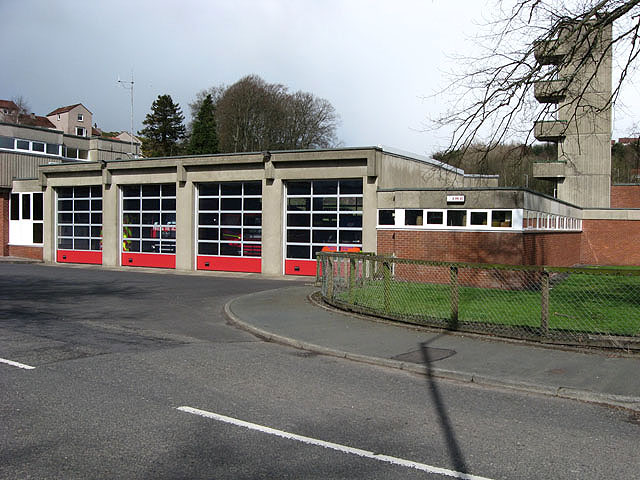
- 5 April 2008Walter Baxter photographs the fire station in the redeveloped former camp area.
The camp above Wilton Hill
Aerial photographs taken by the RAF on 9 July 1947 show at least 44 Nissen huts and two other buildings on the slopes above Wilton Hill road. Historic Environment Scotland classifies the site as a twentieth-century military camp, records it as NT51NW 102 centred NT 5055 1560, also known as Silverbuthall, notes that the purpose of the camp was not known to its compiler, and identifies its later setting as the Police Station, Howdenbank and Harden Place.
Scott places the camp in a couple of fields between Wilton Manse and the main A7, and says it may also have been referred to as Wilton Hill Camp. His account dates British military occupation to about 1939, with conversion to prisoner accommodation within a year. The archaeological record documents the buildings but does not itself identify their occupants.
The archaeological record
| Field | Recorded detail |
|---|---|
| Site name | Hawick, Wilton Hill Camp |
| Alternative locality | Silverbuthall |
| Classification | Military Camp (20th Century) |
| Site and record numbers | NT51NW 102; NRHE 225901 |
| Grid reference | Centred NT 5055 1560 |
| Aerial survey | RAF CPE/Scot/UK/236 [FFO], frames 26–27, 9 July 1947 |
| Visible structures | At least 44 Nissen huts, plus two buildings |
Sources for this section
Prisoners and local connections
Scott describes an open camp, with most of the prisoners leaving during the day to work on local farms and Captain Sewell originally placed in charge. He records around 200 German prisoners in 1946, alongside Italians and others, and perhaps as many as 600 occupants at the maximum. These are prisoner-phase approximations, not a Ukrainian hostel census.
The Reverend Walter Macfarlane Calderwood, born in Edinburgh in 1908, ordained minister of St Mary’s Kirk in Hawick from 1934 to 1954 and later minister at the Foreman Church in Leven, served as pastor to the prisoners of war in Wilton Camp. That pastoral connection belongs to the prisoner phase; it does not establish the form of worship in the later Ukrainian hostel.
Sources for this section
From prisoners to displaced workers
According to Scott, most prisoners departed in 1948, while some remained locally and a few stayed to help build the town’s prefabricated houses. The camp was then used to house people displaced by the war and European Voluntary Workers. Kormylo’s directory supplies the specifically Ukrainian connection within that postwar accommodation history.
Recorded occupancy by phase
| Phase | What the sources record |
|---|---|
| British troops, from about 1939 | Military occupation of the new camp |
| Prisoners of war, from about 1940 | Open camp; men out by day on local farms; Captain Sewell in charge |
| 1946 | Around 200 German prisoners, with Italians and others; perhaps 600 occupants at the maximum |
| 9 July 1947 | At least 44 Nissen huts and two other buildings visible from the air |
| From 1948 | Displaced people and European Voluntary Workers, Ukrainians among them |
Sources for this section
What being a European Voluntary Worker meant
The scheme that brought Ukrainians to hostels like Wilton was Westward Ho!, launched by the British government in 1946 and the largest of its recruitment programmes. Recruitment in the camps of Germany and Austria began in the spring of 1947, and Ukrainians were among the first nationalities sought. In all 20,912 Ukrainians came to the United Kingdom as European Voluntary Workers — 16,194 men and 4,718 women — together with 411 adult dependants and 451 children, most of them arriving between the middle of 1947 and the middle of 1948, with the last in 1949.
Recruits were interviewed and medically inspected, and signed an undertaking to work only as the Ministry of Labour directed and not to change employer without permission. They were paid the same wages as British workers and employed on the same terms, but the direction of labour was real: the men went principally into agriculture, which took 52 per cent of them, coal mining, which took 19 per cent, and domestic service, while the women went into cotton mills, domestic service and woollen mills. Only from 1 January 1951 could an EVW who had been in the country three years apply to be released from the restriction on choosing an employer.
Hostels were sited near the work, and Hawick is a woollen and knitwear town. In the autumn of 1948 the number of Ukrainian EVWs grew again when most of the 8,500 former soldiers of the Galicia Division brought to Britain in 1947 were released from prisoner-of-war status and taken into the scheme, so that a hostel might hold both civilian recruits and former prisoners. Camps and hostels passed from the War Office to civilian bodies — the National Assistance Board, the National Service Hostels Corporation, the Ministry of Agriculture and local authorities — and most had closed by the middle of the 1950s.
Where Ukrainian European Voluntary Workers were directed
| Group | Occupation | Share |
|---|---|---|
| Men | Agriculture | 52 per cent |
| Men | Coal mining | 19 per cent |
| Men | Domestic service | not stated |
| Women | Cotton mills | 38 per cent |
| Women | Domestic service | 34 per cent |
| Women | Woollen mills | not stated |
Sources for this section
The Borders cluster
Wilton was not isolated. Kormylo’s directory places seven hostels in the Borders and just over the line: Victoria Park at Peebles, Thorneycroft at Selkirk, Burnbrae at Galashiels, the ICI hostel at St Boswells, Springwood at Kelso, Winfield Camp at Berwick-upon-Tweed and Wilton at Hawick. They stood in and around the towns of the woollen trade.
What that meant for the people in them can be heard in one of Kormylo’s interviews, describing the family’s arrival at Galashiels: it was to do with the textile industry, it was all woollen mills, the mother was a weaver, Selkirk and Galashiels were all tweed and cloth weaving, and most of the Ukrainians in Galashiels also worked in those mills — some of them known to the father from the camp in Germany.
Hostels of the Borders and the Tweed
| Hostel | Place |
|---|---|
| Victoria Park | Peebles |
| Thorneycroft | Selkirk |
| Burnbrae | Galashiels |
| ICI hostel | St Boswells |
| Springwood | Kelso |
| Winfield Camp | Berwick-upon-Tweed |
| Wilton | Hawick |
Sources for this section
Dispersal, and Howdenbank after the camp
When the labour contracts had run their course the Ukrainians moved on. Kormylo describes the closure of the Scottish camps and hostels in the early 1950s, with chain migration to the textile towns of England, further contracts elsewhere in Scotland, and onward emigration to North America. The vellum presented to Archbishop Gordon Gray on 14 August 1960, which records the formal Ukrainian township communities then existing in Scotland, names Grangemouth, Galashiels, Annan, Dumfries, Haddington, Perth, Easthouses, Edinburgh, Dundee, Dalkeith, Glasgow, Lockerbie, Carlisle, Tranent and Dunbar. In the Borders the community that lasted was at Galashiels.
The land at Howdenbank was afterwards used for allotments before the police station was built in 1964. Scott also locates the later fire station within the former camp setting, and records that the site of the Katharine Elliot Centre, built by Borders Regional Council in 1973 and named after Dame Katharine Elliot of Harwood, had been allotments and before that the site of Nissen huts housing prisoners of war. The street named Howdenbank was built in 1965 as the eastern addition to the Silverbuthall housing scheme, and Harden Place followed in 1967.
Walter Baxter’s photograph of 5 April 2008 shows the fire station opposite the police headquarters. It illustrates redevelopment of the area, rather than a surviving camp hut. The original aerial photographs remain the more direct record of the vanished accommodation.
Sources
- In which ways is the Ukrainian community in Scotland a diaspora?
Peter David Kormylo, University of Glasgow · 2021
Original PDF read. Printed 323 (PDF 339), appendix xii, entry 27: Wilton Hostel, Hawick, under the heading Scottish & Northern English Hostels which held significant numbers of ethnic Ukrainians, with the author’s caveat that the list may not be complete; the Borders entries 7, 8, 10, 11, 12 and 13 read from printed 322 (PDF 338). Printed 100 (PDF 116), figure 4-2, gives the data sources as the archives of the Association of Ukrainians in Great Britain and the Ukrainian Catholic Church in Scotland. Printed 204 (PDF 220): interview N15 on the woollen mills of Galashiels and Selkirk. Printed 207 (PDF 223): the early 1950s closure of the Scottish camps and hostels and the dispersal. Printed 208 (PDF 224): the fifteen township communities named on the 1960 vellum presented to Archbishop Gray.
- A Hawick Word Book
Douglas Scott · Draft 23 August 2026
Original 4456-page PDF re-acquired and searched. Printed 4353 (PDF 4373) Wulton Camp entry read in full: open camp, Captain Sewell in charge, around 200 German prisoners in 1946, perhaps 600 occupants at maximum, at least 44 Nissen huts, most prisoners left in 1948 with a few staying to help build the prefabs, then displaced people and European voluntary workers, then allotments and the 1964 police station. Also read: Katharine Elliot Centre, Howdenbank and Harden Place entries, and printed 512 (PDF 532) Calderwood, verbatim: ordained as minister at St. Mary’s Kirk in 1934–54, and he served as pastor for the prisoners of war in Wilton Camp. Approximate population statements are not administrative census totals.
- Hawick, Wilton Hill Camp
Historic Environment Scotland / RCAHMS · November 2002 description
NT 51 NW 102, NRHE 225901, classified Military Camp (20th Century), also known as Silverbuthall. Verbatim: centred NT 5055 1560; at least 44 Nissen huts with two additional buildings on RAF CPE/Scot/UK/236 [FFO], frames 26-27, flown 9 July 1947; the purpose of the camp is not known; the site is now occupied by the Police Station, Howdenbank and Harden Place. Information from RCAHMS (DE), November 2002. Original aerial frames not acquired.
- Hawick Fire Station
Walter Baxter / Geograph / Wikimedia Commons · 2008-04-05
Original image, 640 × 480, visually inspected; Geograph 754835; CC BY-SA 2.0 https://creativecommons.org/licenses/by-sa/2.0/ . Unaltered photograph of later site use.
- European Voluntary Workers
Ukrainians in the United Kingdom Online Encyclopaedia · Accessed September 2026
Full article read: the Westward Ho! scheme of 1946, recruitment from spring 1947, 20,912 Ukrainian EVWs (16,194 men and 4,718 women) with 411 adult dependants and 451 children, arrivals mid-1947 to mid-1948 and the last in 1949, the undertaking to work as directed, equal wages, the occupational split (agriculture 52 per cent, coal mining 19 per cent, domestic service for men; cotton mills 38 per cent, domestic service 34 per cent and woollen mills for women), hostels near the work, and release from direction of labour from 1 January 1951.
- Post-war camps and hostels
Ukrainians in the United Kingdom Online Encyclopaedia · Accessed September 2026
Full article read: former military and prisoner-of-war camps and wartime industrial and agricultural hostels reused as accommodation; some 8,500 former Galicia Division soldiers transferred in 1947 and released into the EVW scheme; 21,000 Ukrainian EVWs and 860 dependants between 1947 and 1950; administration passing from the War Office to the National Assistance Board, the National Service Hostels Corporation, the Ministry of Agriculture and local authorities; most hostels closed by the mid-1950s.
Last researched 13 September 2026