Resettlement to Argentina
Germany, Austria and Italy to Argentina·Postwar intake: 1947 to 1949, with later adjustments to 1953
Between 1947 and 1949 Argentina admitted more displaced persons from the camps of Germany, Austria and Italy than any other Latin American country, through institutions that Juan Peron had built for a planned labour migration rather than for refugee relief. Ukrainians reached Argentina inside that intake, mostly through International Refugee Organisation channels rather than through the Argentine selection offices, which worked only in Italy and Spain.
Introduction
Argentina reopened to European immigration in 1946 after fifteen years of near closure. The reopening was planned, selective and directed from the presidency, and it coincided with the years in which the International Refugee Organisation was seeking countries willing to take displaced persons out of the camps in Germany, Austria and Italy. Leonardo Senkman records 32,172 refugees resettled in Argentina through the IRO to the end of 1949, the highest figure in Latin America.1
Inside Argentina the machinery that selected Italian and Spanish workers was not the machinery that admitted displaced Ukrainians, Poles, Yugoslavs and Balts. Claudia Stefanetti Kojrowicz notes that Argentina did not screen applicants with the rigour of the United States, Canada or Australia, so that older relatives could travel with their children.123
A history in dates
- November 1945 to June 1947Santiago Peralta heads the Direccion Nacional de Migraciones, promoting ethnic and cultural selection criteria that restrict the admission of Jewish Holocaust survivors.17
- Late 1946
- 1947 to 1951The First Five Year Plan sets the target of incorporating four million foreigners in five years.2
- March 1947Deputies question the powers of selection conferred on the DAIE and the inclusion of a priest in its first mission to Rome and Madrid.1
- 4 June 1947The first embarkation recruited by the DAIE sails from Genoa.1
- October 1947The Commercial and Financial Agreement with Italy includes a migration chapter under which the Italian government will facilitate the emigration of workers to Argentina.19
- November 1947The Direccion de Inmigracion becomes the Direccion General de Migraciones under the Secretaria de Trabajo y Prevision.2
- 29 April and 28 May 1948The IRO office for the French zone of Austria at Innsbruck sends two lists of displaced persons holding Argentine free landing permits to the Argentine consulate general at Genoa; the second is dominated by 162 Ukrainians.1
- 30 June 1948IRO figures record 26,968 displaced persons admitted by Argentina, ahead of Brazil with 19,865 and Venezuela with 12,101.1
- End of 1948A Commercial Agreement with Spain promotes, in its articles 30 and 31, the emigration of skilled workers to Argentina.19
- February 1949The immigration directorate passes to the Secretaria Tecnica and takes the name Direccion Nacional de Migraciones.1
- 1949
- End of 194932,172 refugees have entered Argentina through the IRO, the largest number in Latin America.1
- 1950Net migration to Argentina peaks at 160,000, within a total of more than half a million immigrants arriving between 1946 and 1951.19
- 1951The CIME is created at Brussels; Argentina had opposed its establishment.7
- 1953
Origins and purpose
The First Five Year Plan of 1947 to 1951 put a figure on the government's population aims, the incorporation of four million foreigners in five years. A draft Ley de Bases attached to the plan built immigration policy around three principles, spontaneity, selection and channelling, preferring those held to be closest to Argentine characteristics in origin, customs and language, and those who would work in agriculture, crafts and skilled industrial trades.2
Two new bodies were created at the end of 1946 and reported directly to the presidency. The Delegacion Argentina de Inmigracion en Europa, the DAIE, selected candidates and obtained entry permits in Europe; the Comision de Recepcion y Encauzamiento de Inmigrantes, the CREI, placed them in the Argentine labour market. In 1946 the DAIE's only two seats were established in Italy and Spain, the countries whose emigrants best matched the official ethnic preference, and bilateral agreements with those states followed in 1947 and 1948.12
The older Direccion de Inmigracion became the Direccion General de Migraciones in November 1947, and from February 1949 it passed to the Secretaria Tecnica as the Direccion Nacional de Migraciones, alongside the CREI and the DAIE.12
Volodymyr Yushkevych places the Argentine intake among the targeted migration schemes that several Latin American states ran in the late 1940s, and states that the Peron government used refugee admissions both to boost industrial capacity and to signal an anti-communist stance. The plan's own wording, as quoted by Maria Damilakou, required immigrants to be selected, assimilable, morally and physically sane, rationally distributed and economically useful.1619
Sources for this section
- Los inmigrantes en el primer peronismo: los problemas del ingreso y la integracion en el seno de la nacion
- Etnicidad e inmigracion durante el primer peronismo
- Refugees from Communism: US Policy toward Central and Eastern European Political Emigration amid Sovietization (1944-1952)
- Migration and Development in Southern Europe and South America
How it worked in practice
A confidential report on the DAIE's work at Genoa in 1947 describes a triple selection, ideological, professional and physical. The Rome office screened candidates ideologically from lists supplied by Italian provincial and regional labour offices, then notified the Italian labour ministry so that the chosen were gathered at the ports four days before sailing. Professional and physical selection took place at the ports, where the lists were checked against the register of people considered undesirable and against those rejected at an earlier embarkation. The first embarkation recruited by the DAIE left Genoa on 4 June 1947.1
Three categories of passenger appear in the report: beneficiaries of the immigration agreement and their first degree relatives; Dodero call passengers, who obtained a free landing permit from the CREI against a guarantee from the shipping company that had sold them a call ticket; and those travelling at their own expense. Special Programmes recruited technicians for the naval, war, military manufacturing and aeronautical missions.1
Displaced persons in Germany and Austria fell outside this apparatus, since no DAIE office worked there. Their names travelled on IRO nominal lists, and several thousand received collective free landing permits requested by the national committees representing their communities in Argentina. Two surviving lists were sent by the IRO office for the French zone of Austria at Innsbruck to the Argentine consulate general at Genoa in 1948, asking that the holders be visaed there on the eve of departure rather than crossing the Soviet zone to reach Vienna. Marina Moseykina records that Peron sent a commission to select migrants in the IRO camps, preferring healthy men up to forty five and women up to thirty five.14
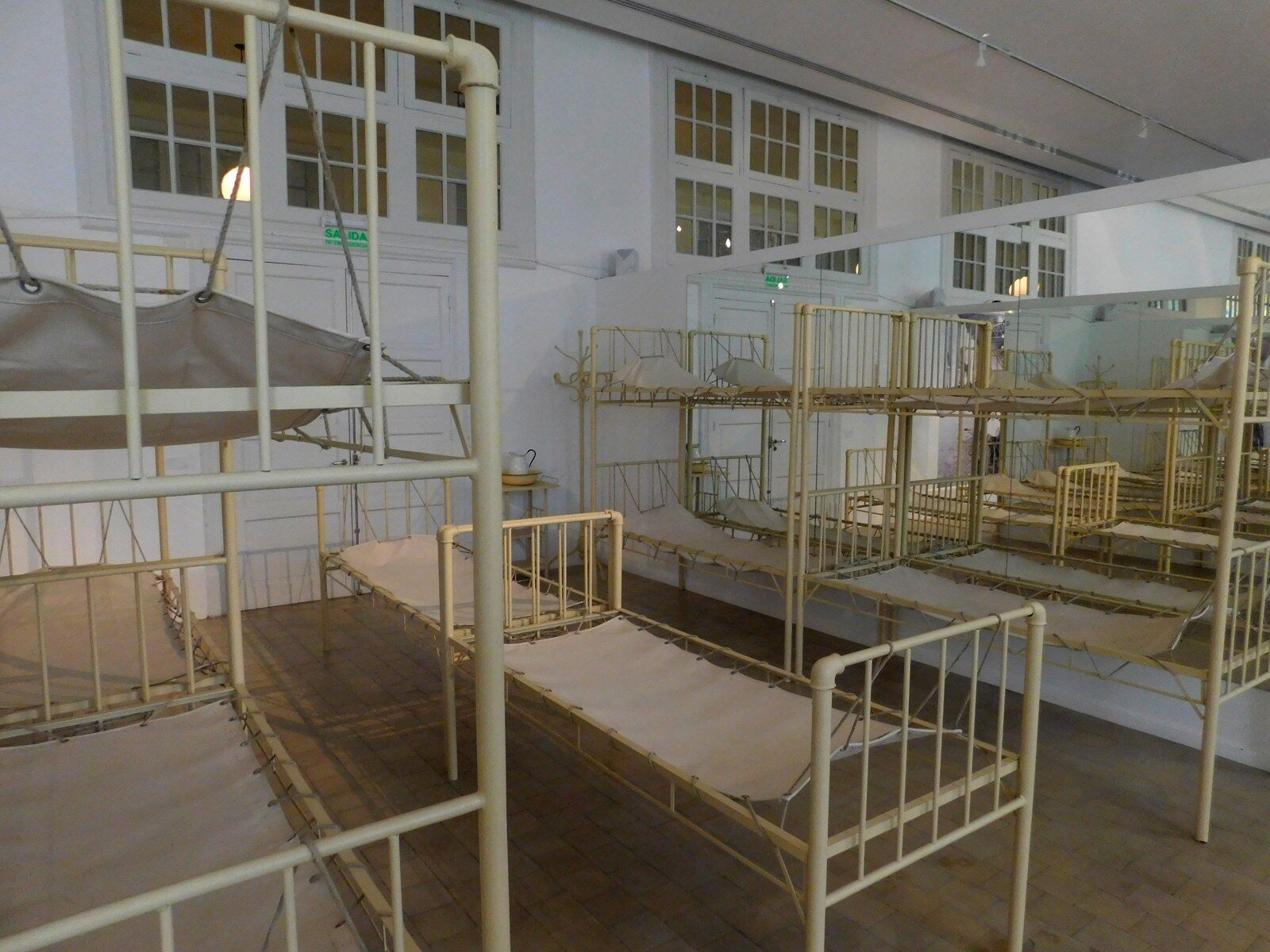
Most people left by ship, with the IRO handling the emigration formalities. Among the transit places already described on this site, the Funk-Kaserne Transit Centre at Munich and Bagnoli near Naples are where medical and consular formalities were completed before embarkation. Arrivals came ashore at the port of Buenos Aires and were received at the Hotel de Inmigrantes, the state reception complex opened in 1911, which could sleep three thousand people. Lodging was free for five days by regulation, extended in cases of illness or where work had not been found; Hungarian arrivals recalled food and lodging there for between one and three weeks after a three-week sea voyage. The complex had a landing stage, a hospital and a labour office, and medical inspection began on board.561318
The same channels admitted people with a collaborationist past. Senkman states that from 1947 to 1949 the DAIE disregarded the non Latin origin of several thousand Croatian, Ukrainian, Polish, Hungarian and Baltic collaborationist refugees as well as Nazi Germans and Austrians, while Jewish displaced persons faced the heaviest exclusion and communists were barred on ideological grounds.1
The bilateral agreements with Italy and Spain had a migration content of their own. The Commercial and Financial Agreement signed with Italy in October 1947 included a chapter establishing that the Italian government would facilitate the emigration of workers to Argentina, and articles 30 and 31 of the Commercial Agreement signed with Spain at the end of 1948 promoted the emigration of skilled workers.19
Argentine diplomacy also reached displaced people outside the IRO camps. In Turkey, where escapees from eastern Europe did not enter the American or Australian resettlement programmes, Latin American embassies increased their involvement: Argentina issued visas to Romanians and Hungarians, while Brazil assisted Bulgarians, Albanians, Greeks and Iranians.16
A study of the Hungarian exiles gives a measure of the comparative pull. Hungarian exiles began arriving in Argentina towards the end of 1947, most of them after years in Austrian and Bavarian refugee camps, and the countries of South America, with Argentina, Brazil and Venezuela at the forefront, accepted displaced persons with almost no preconditions. Official IRO data cited in that study record 4,800 Hungarians reaching Argentina in 1948 from the German and Austrian sectors under North American control, against 2,100 to Brazil, 1,700 to Australia, 380 to Canada, 210 to South Africa and 130 to the United States.18
The exclusion of Jewish displaced persons is documented from the Argentine side by the Museo del Holocausto de Buenos Aires. Between November 1945 and June 1947 the Direccion Nacional de Migraciones was headed by Santiago Peralta, a nationalist anthropologist whom the museum describes as an outspoken antisemite, who promoted selection criteria based on ethnicity and culture and argued that Jews lacked social affinities with the Argentine nation. The museum estimates that between 1945 and 1949 around 4,800 Jews entered Argentina, of whom approximately 3,300 did so illegally.17
Sources for this section
- Etnicidad e inmigracion durante el primer peronismo
- Obustroistvo russkikh bezhentsev i peremeshchennykh lits v Argentine, The Settlement of Russian Refugees and Displaced Persons in Postwar Argentina
- Un afan organizador de las mayorias: el Hotel de Inmigrantes porteno y la inspeccion medica en Argentina
- El Hotel, Museo Nacional de la Inmigracion
- The emigration of displaced persons
- Exiled Hungarians in Argentina 1948-1968: The Formation of a Community
- Migration and Development in Southern Europe and South America
- Refugees from Communism: US Policy toward Central and Eastern European Political Emigration amid Sovietization (1944-1952)
- The Arrival of Holocaust Survivors in Argentina
The Ukrainian experience within it
The Encyclopedia of Ukraine puts the third period of Ukrainian immigration to Argentina at about 6,000 people between 1946 and 1950, displaced persons from the camps in Germany and Austria, a large proportion of them educated and professional. That figure covers Ukrainians over those five years and is separate from the all nationality totals above. Senkman's breakdown of the 32,172 IRO assisted arrivals to the end of 1949 gives about 10,000 from Yugoslavia, 6,000 from Poland, 5,500 from Russia and Ukraine counted together, and 3,000 from Hungary.18
The two Innsbruck lists show the composition of individual consignments rather than any total. The list of 29 April 1948 recorded 57 displaced persons holding free landing permits, of whom 6 were Ukrainians. The list of 28 May 1948 recorded 186, of whom 162 were Ukrainians. These are samples from one occupation zone.1
The new arrivals joined established Ukrainian settlements in Buenos Aires, in Berisso in Buenos Aires province, and in Misiones and Chaco. Prosvita had been founded at Berisso in February 1924 and obtained legal personality in 1932, and the Vidrodzhennia society at Buenos Aires in 1939. After the war the two societies set up a relief committee to help displaced persons resettle in Argentina, and in 1947 the Ukrainian Central Representation in Argentina was established as an umbrella body. Serge Cipko describes the third wave as small in number but the most politicised of the three; the Encyclopedia of Ukraine records that it gave the two societies differing orientations, Prosvita towards the Bandera faction of the OUN and Vidrodzhennia towards the Melnyk faction.89101112
Origins of the IRO assisted refugees who entered Argentina to the end of 1949
| Country of origin as given | Approximate number |
|---|---|
| Yugoslavia | about 10,000 |
| Poland | about 6,000 |
| Russia and Ukraine, counted together | about 5,500 |
| Hungary | about 3,000 |
| Total recorded | 32,172 |
Two IRO lists from the French zone of Austria sent to the Argentine consulate general at Genoa, 1948
| List date | Total holders of free landing permits | Ukrainians | Other nationalities recorded |
|---|---|---|---|
| 29 April 1948 | 57 | 6, all Catholic | 18 Yugoslavs, 6 Russians, 21 Romanians, 3 Slovaks, 3 Hungarians |
| 28 May 1948 | 186 | 162, all but 7 Catholic | 14 Hungarians, 10 Slovaks |
Published figures for the Ukrainian third wave to Argentina
| Measure | Figure | Scope and source |
|---|---|---|
| Ukrainians arriving | about 6,000 | 1946 to 1950, Ukrainians only, displaced persons from camps in Germany and Austria; Encyclopedia of Ukraine |
| Character of the wave | smallest of the three waves, most politicised | 1946 into the 1950s; Cipko, as summarised in the East/West review |
| Prosvita, Berisso | founded 10 February 1924, legal personality 1932 | predates the third wave; Albornoz and others, 2005 |
| Ukrainian Central Representation in Argentina | established 1947, Buenos Aires | umbrella body; Encyclopedia of Ukraine |
Sources for this section
- Etnicidad e inmigracion durante el primer peronismo
- Argentina
- Vidrodzhennia society
- Ukrainian Central Representation in Argentina
- Bibliotecas de colectividades e identidad etnica: las asociaciones Prosvita y Nemunas de Berisso
- Review of Serge Cipko, Ukrainians in Argentina, 1897-1950: The Making of a Community
What happened afterwards
The terms tightened from 1949. Collective landing permit requests gave way to individual applications, in which the petitioner had to guarantee the refugee's housing, employment and maintenance. Moseykina records that in the same year the authorities barred the issue of visas in Europe to applicants of Slavic origin. The amnesties of 1948 and 1949 then regularised a large undocumented population already in the country, victims and perpetrators of the war among them.14
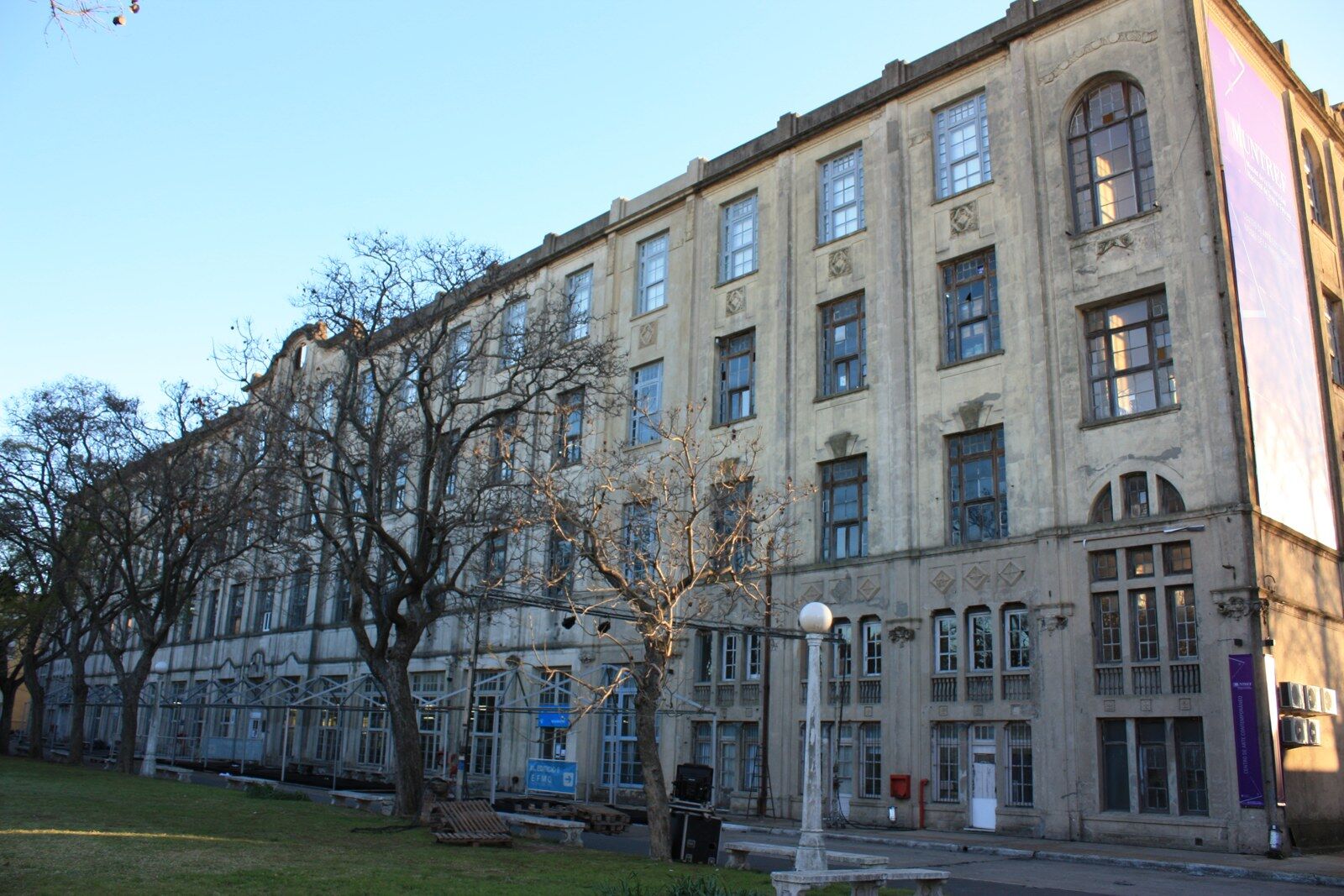
Maria Silvia Di Liscia describes the Hotel de Inmigrantes being gradually abandoned as mass overseas immigration declined, under economic and administrative pressure. It ceased to receive arrivals in 1953, the closing year of the arrival records that begin in 1882, and later became the Museo Nacional de la Inmigracion under the Direccion Nacional de Migraciones.56
Organised European migration passed to a new body. The Intergovernmental Committee for European Migration, the CIME or ICEM, was set up at Brussels in 1951; Peronist Argentina had opposed its creation and did not join until 1953. The displaced persons route out of the German, Austrian and Italian camps had by then closed.17
The displaced persons intake sat inside a much larger migration. Maria Damilakou records that more than half a million immigrants arrived in Argentina between 1946 and 1951, with net migration rising from fewer than 4,000 in 1946 to 46,000 in 1947, 138,000 in 1948 and 157,000 in 1949, and peaking at 160,000 in 1950. These totals cover all immigration and are separate from the IRO figures for displaced persons.19
Argentina became a member of the ICEM in February 1953, and between 1952 and 1961 the organisation transferred some 110,000 immigrants to the country, of whom 92,655 were Italians, alongside about 14,000 Spaniards who arrived between 1957 and 1961 after Spain joined in 1956. That flow continued the Italian and Spanish labour migration of the 1940s rather than the resettlement of displaced persons.19
Sources for this section
- Etnicidad e inmigracion durante el primer peronismo
- Obustroistvo russkikh bezhentsev i peremeshchennykh lits v Argentine, The Settlement of Russian Refugees and Displaced Persons in Postwar Argentina
- Un afan organizador de las mayorias: el Hotel de Inmigrantes porteno y la inspeccion medica en Argentina
- El Hotel, Museo Nacional de la Inmigracion
- Italia y la emigracion a America Latina: acuerdos bilaterales y participacion en el CIME (1946-1957)
- Migration and Development in Southern Europe and South America
Sources
- Etnicidad e inmigracion durante el primer peronismo
Leonardo Senkman, EIAL, Estudios Interdisciplinarios de America Latina y el Caribe, 3 (2), pp. 5 to 38 · 1992
Full article PDF read. Used for the creation and remit of the DAIE and CREI, the transfer of the immigration directorate and its renaming as Direccion Nacional de Migraciones in February 1949, the triple ideological, professional and physical selection at Rome and the Italian ports, the categories of passenger and the Dodero call permits, the Special Programmes for military and aeronautical technicians, the two Innsbruck lists of April and May 1948 with their nationality and religion breakdown, the figure of 32,172 IRO refugees to the end of 1949 with the country of origin breakdown, footnote 38 with the IRO figures for Latin America at 30 June 1948, the exclusions applied to Jewish and communist applicants, the change to individual landing permit requests from 1949, the 1948 and 1949 amnesties, and the passages on collaborators and the clandestine escape route.
- Los inmigrantes en el primer peronismo: los problemas del ingreso y la integracion en el seno de la nacion
Nadia Andrea De Cristoforis, Universidad de Buenos Aires and CONICET, conference paper hosted by Memoria Academica, FaHCE, Universidad Nacional de La Plata · 2011
PDF read. Used for the First Five Year Plan and its target of four million immigrants in five years, the draft Ley de Bases and its principles of spontaneity, selection and channelling, the statement that in 1946 the DAIE's only two seats were installed in Italy and Spain with bilateral agreements following in 1947 and 1948, and the renaming of the immigration directorate in November 1947.
- DPs polacos en la Argentina
Claudia Stefanetti Kojrowicz, XIV Jornadas Interescuelas, Departamentos de Historia, Universidad Nacional de Cuyo · 2013
PDF read. Background on the displaced person category, the IRO's individual eligibility screening and statistical practice, the statement that some one hundred thousand displaced persons went to Latin America, and the observation that Argentina did not apply preliminary selection as rigorously as the United States, Canada or Australia. Used as context; no figure in this article rests on it alone.
- Obustroistvo russkikh bezhentsev i peremeshchennykh lits v Argentine, The Settlement of Russian Refugees and Displaced Persons in Postwar Argentina
Marina Moseykina, Quaestio Rossica, 10 (2) · 2022
Russian language PDF read. Used for Peron's special commission sent to select migrants in the IRO camps and its age preferences, the observation that the IRO did not treat Argentina as a priority and did not fund enough passages, and the 1949 prohibition on issuing visas in Europe to applicants of Slavic origin. The article also states that Argentina ratified the IRO constitution, which conflicts with Senkman; the article text follows Senkman and flags the conflict in the review.
- Un afan organizador de las mayorias: el Hotel de Inmigrantes porteno y la inspeccion medica en Argentina
Maria Silvia Di Liscia, Investigaciones y Ensayos, Academia Nacional de la Historia · 2018
Article read online. Used for the inspection of immigrant ships before disembarkation, the five day stay at the hotel, the labour office inside the complex, and the gradual abandonment of the building as mass overseas immigration declined under economic and administrative pressure.
- El Hotel, Museo Nacional de la Inmigracion
Direccion Nacional de Migraciones, Republica Argentina · consulted 13 September 2026
Official page read. Used for the start of construction in 1906, the purpose of receiving, serving, lodging and distributing immigrants, the four dormitories to a floor of two hundred and fifty people each giving a capacity of three thousand sleepers, and the five day free lodging rule. The companion museum page states that arrival records cover ships reaching the port of Buenos Aires between 1882 and 1953.
- Italia y la emigracion a America Latina: acuerdos bilaterales y participacion en el CIME (1946-1957)
Eugenia Scarzanella, Historia Unisinos, 22 (2), pp. 195 to 208 · 2018
Article read online. Used for the creation of the CIME at Brussels in 1951, Peronist Argentina's initial opposition to it and its entry in 1953.
- Argentina
Internet Encyclopedia of Ukraine, Canadian Institute of Ukrainian Studies · consulted 13 September 2026
Entry read. Used for the third period of Ukrainian immigration totalling about 6,000 between 1946 and 1950 from displaced persons camps in Germany and Austria, the professional profile of the arrivals, settlement in Buenos Aires, Berisso, Misiones and Chaco, the later departure of part of the group to North America, and the effect of the third immigration on Prosvita and Vidrodzhennia and their differing OUN orientations.
- Vidrodzhennia society
Internet Encyclopedia of Ukraine, Canadian Institute of Ukrainian Studies · consulted 13 September 2026
Entry read. Used for the society's foundation at Buenos Aires in 1939 and for the relief committee it established with Prosvita after the Second World War to help displaced persons resettle in Argentina.
- Ukrainian Central Representation in Argentina
Internet Encyclopedia of Ukraine, Canadian Institute of Ukrainian Studies · consulted 13 September 2026
Entry read. Used for the establishment of the umbrella body at Buenos Aires in 1947, modelled on the Ukrainian representative councils in Canada and the United States, and for its member societies including Prosvita and Vidrodzhennia.
- Bibliotecas de colectividades e identidad etnica: las asociaciones Prosvita y Nemunas de Berisso
Silvia Beatriz Albornoz, Marina Borrell, Maria Cecilia Corda, Rosa Zulema Pisarello and Cristina Alicia Ristuccia, IV Jornadas de Sociologia, Universidad Nacional de La Plata · 2005
PDF read. Used for the foundation of the Prosvita association at Berisso on 10 February 1924 out of the Hromada youth centre, its legal personality in 1932, and its reading rooms and library work.
- Review of Serge Cipko, Ukrainians in Argentina, 1897-1950: The Making of a Community
East/West: Journal of Ukrainian Studies, IV (1), pp. 193 to 194 · 2017
Review PDF read. Used for the characterisation of the third wave from 1946 into the 1950s as small in total number but the most politicised of the three, with a significant effect on the organisational structure of the community. The Cipko monograph itself was not read.
- The emigration of displaced persons
Arolsen Archives · consulted 13 September 2026
Page read. Used for the IRO's liaison with receiving countries, its handling of emigration formalities and preparatory courses, and the statement that most displaced persons left by ship. It names South America among the destinations but gives no Argentine figures.
- Antiguas literas — Ex Hotel de Inmigrantes, Buenos Aires
Wikimedia Commons; photograph by the contributor Banfield · 16 July 2016
Photograph of the original iron bunks re-installed in a dormitory of the former Hotel de Inmigrantes, now the Museo Nacional de la Inmigracion. Licensed Creative Commons Attribution-ShareAlike 2.5 Argentina.
- Ex Hotel de Inmigrantes — Puerto de Buenos Aires
Wikimedia Commons; photograph by the contributor Jrivell · 26 September 2013
Modern photograph of the surviving four-storey accommodation block of the Hotel de Inmigrantes at the port of Buenos Aires. Licensed Creative Commons Attribution-ShareAlike 3.0.
- Refugees from Communism: US Policy toward Central and Eastern European Political Emigration amid Sovietization (1944-1952)
Volodymyr Yushkevych, Ukrainskyi istorychnyi zhurnal 2025, No. 5 (584), pp. 78–97 · 2025
Pages 86 and 89 read: the characterisation of the Peron government's refugee admissions as serving industrial capacity and an anti-communist stance within the targeted Latin American migration schemes of the late 1940s, and the role of Latin American embassies in Turkey, where Argentina issued visas to Romanians and Hungarians.
- The Arrival of Holocaust Survivors in Argentina
Museo del Holocausto de Buenos Aires · 2024
Exhibition section 'After the Shoah' read: the directorship of Santiago Peralta at the Direccion Nacional de Migraciones between November 1945 and June 1947 and his ethnic and cultural selection criteria, and the estimate that around 4,800 Jews entered Argentina between 1945 and 1949, approximately 3,300 of them illegally. A museum exhibition text without named authorship; its figures are given as the museum's estimates.
- Exiled Hungarians in Argentina 1948-1968: The Formation of a Community
Judith Kesseru Nemethy, AHEA: E-journal of the American Hungarian Educators Association, volume 5 · 2012
Pages 2 to 4 read: the arrival of Hungarian exiles from the Austrian and Bavarian camps from the end of 1947, the statement that the South American countries accepted displaced persons with almost no preconditions, the IRO figures at footnote 2 for Hungarian arrivals in 1948 by destination, and the one to three weeks of food and lodging at the Immigrant Hotel after a three-week voyage.
- Migration and Development in Southern Europe and South America
Maria Damilakou and Yannis G. S. Papadopoulos (eds.), Routledge; open access copy via EconStor · 2022
Chapter 3 read at pages 42 to 48: more than half a million immigrants arriving between 1946 and 1951, the net migration series from 1946 to its 1950 peak of 160,000, the First Five Year Plan's wording on selected and assimilable immigrants, the migration chapters of the commercial agreements with Italy of October 1947 and Spain of late 1948, and Argentina's ICEM membership from February 1953 with the transfers of 1952 to 1961.
Last researched 13 September 2026