Resettlement to Brazil
Germany and Austria to Brazil·1947–1952
Between 1947 and the closure of the International Refugee Organisation office in Rio de Janeiro in January 1952, Brazil took about 29,000 refugees and displaced persons whom the IRO could not repatriate, selected by Brazilian commissions in the camps of Germany and Austria and carried across the Atlantic in IRO shipping. Ukrainians were among the nationalities the Brazilian selectors ranked highest, and about 7,000 of them are estimated to have come to Brazil in this third wave.
Introduction
The scheme that carried displaced people from the camps of Germany and Austria to Brazil was not one agreement but a sequence of them, negotiated between 1946 and 1948 and worked through Brazilian selection commissions in Europe, IRO shipping, and a chain of hostels running from the quay at Rio de Janeiro into the interior of São Paulo state. Brazil never ratified the IRO constitution, yet when the organisation closed its Rio office on 31 January 1952 its chief of mission reported 29,000 refugees and displaced persons directed to the country. A later study of Brazilian selection policy states that these displaced persons were resettled mainly in the states of São Paulo, Paraná and Rio Grande do Sul.111
The reception side in São Paulo is described separately on this site under Campo Limpo, the provisional hostel in the coffee warehouses at Campo Limpo Paulista. This page is the national scheme around it.4
A history in dates
- 18 September 1945Decree-law 7.967 reopens Brazilian immigration, keeps quotas and sets out directed immigration with a preference for large working families.2
- 31 July 1946Decree-law 9.534 approves the agreement between the federal union and São Paulo for European immigrants for agricultural and industrial work.2
- 1946 to 1951Under President Dutra, Brazil signs an agreement with UNRRA pledging to receive 5,000 families of displaced persons.11
- Late October 1946Three Brazilian selection commissions leave for Europe without written selection criteria or a register of labour needs.1
- 6 February 1947Artur Hehl Neiva reports from Europe and recommends taking Balts, Ukrainians, Poles, non-communist White Russians and Yugoslavs, in that order.1
- 1 April 1947The Brazil–Intergovernmental Committee agreement is concluded in London for a trial group of 1,000 families, not more than 5,000 people.1
- 16 May 1947
- 30 April 1948The Brazil–Preparatory Commission agreement replaces the earlier one, adds 1,000 families and provides for a joint Brazil–IRO commission.1
- 15 December 1948The joint Brazil–IRO commission is installed, with sub-delegations in seven states.1
- 15 December 1949The joint Brazil–IRO commission closes for financial reasons.1
- 31 December 1949IRO resettlement since 1 July 1947 totals 688,284 people, of whom 23,305 went to Brazil.3
- 1951The Brás hostel returns to the São Paulo agriculture secretariat and the provisional hostel at Campo Limpo ends its role.4
- 31 January 1952The IRO closes its Rio de Janeiro office, reporting 29,000 refugees and displaced persons directed to Brazil.1
Origins and purpose
Brazil reopened immigration with decree-law 7.967 of 18 September 1945, which kept a quota system and preferred, for directed immigration, families with at least eight members fit for work between 15 and 50. An agreement between the federal union and the state of São Paulo, approved by decree-law 9.534 of 31 July 1946, provided for European immigrants for agricultural and industrial work and let the state set conditions of occupation, family composition, nationality and port of departure. At the United Nations the Brazilian delegate had said that only farmers, technicians and skilled workers should come.12
The first bilateral instrument was the agreement of 1 April 1947 between Brazil and the Intergovernmental Committee on Refugees: an experimental group of a thousand families, not exceeding five thousand people, with single persons limited to 40 per cent of each group. Brazil kept the right of selection and the duty of reception, forwarding and placement, while the committee met the cost of transport. The quota was unfilled when the Preparatory Commission for the IRO took over on 1 July 1947, and an agreement of 30 April 1948 replaced it and created a joint Brazil-IRO commission.1
A later study of Brazilian selection policy records a further instrument earlier in the sequence: under President Dutra, whose term ran from 1946 to 1951, Brazil signed an agreement with the United Nations Relief and Rehabilitation Administration pledging to receive 5,000 families of displaced persons. The same study dates the replacement of UNRRA by the IRO to 1946, when the new organisation introduced what it calls a global system of humanitarian-based population transfer.11
Sources for this section
How it worked in practice
President Dutra sent three selection commissions to Europe, each of a chief, a labour ministry official, a consul, a doctor, a secretary and an interpreter. They left in late October 1946 without written criteria and without the register of labour shortages that the 1945 decree-law had required the Conselho de Imigração e Colonização to compile; that register was never made. The criteria were drawn up in the field by the head of the commissions, Artur Hehl Neiva of the CIC, who reported on 6 February 1947 and recommended taking, in this order, Balts, Ukrainians, Poles, non-communist White Russians and Yugoslavs.1
Demand at home shaped what the selectors looked for: mechanics of every grade, spinning and weaving workers, chemical and metallurgical specialists and coal miners, with family groups encouraged and the farmer of the older rhetoric still wanted. The Brazilian delegate in Geneva, Helio Lobo, toured camps at Frankfurt, Munich, Heidelberg, Salzburg, Vienna, Graz and Innsbruck over the winter of 1947 to 1948 and afterwards praised the qualities of those he had seen, among them that they were not communists.12
The head of the selection commissions was dismissed on 1 August 1947 after allegations, which the surviving record treats as unfounded, of poor selection on health and occupational grounds. The occupational cards used in the camps carried many errors, the commonest being to class people as farmers, so a fuller inquiry began at the Campo Limpo hostel itself.12
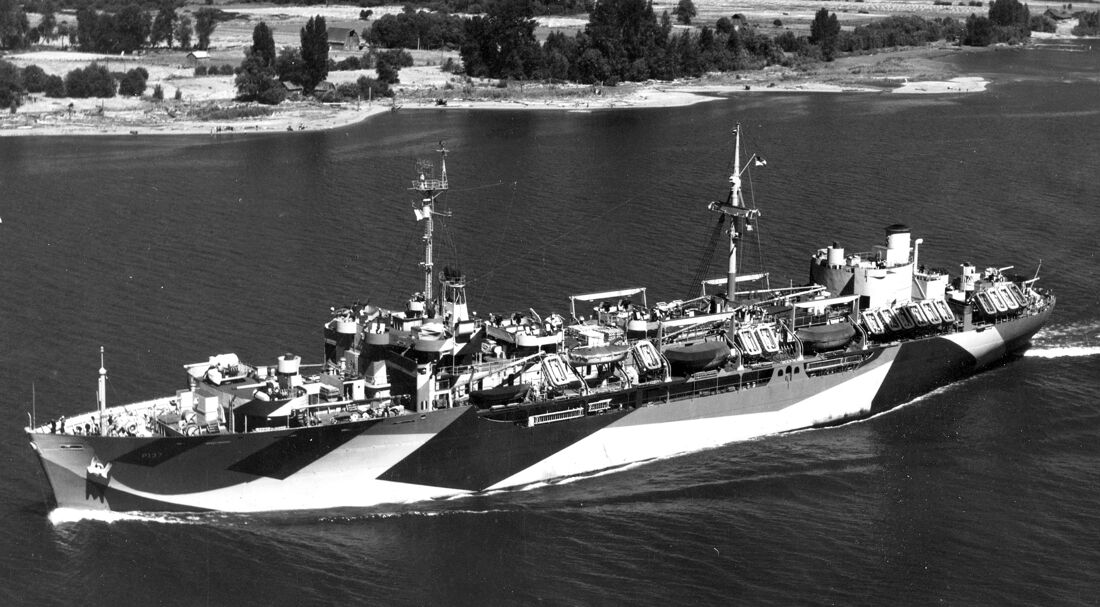
Transport was the organisation's own. For overseas resettlement the IRO kept a chartered fleet of about 36 vessels, booked space on commercial ships and aircraft and ran an average of 35 trains a month. The first group under the scheme reached Rio de Janeiro on 16 May 1947 aboard the United States Army transport General S. D. Sturgis, one of three transports operated by the Preparatory Commission, with 861 people aboard.1358
Arrivals entered through the port of Rio de Janeiro and were received at the Hospedaria de Imigrantes da Ilha das Flores in Guanabara bay, the last great intake in that hostel's history. Those bound for São Paulo went on to the provisional hostel at Campo Limpo, the Brás hostel in the city being occupied by the Escola Técnica de Aviação. The joint Brazil-IRO commission, installed on 15 December 1948, helped the national immigration department with reception, reclassification of occupations, registration, forwarding and welfare, and set up sub-delegations in seven states. Between December 1948 and August 1949 it forwarded 14,016 people of 28 nationalities.1245
Placement went into industry and agriculture, and the agricultural side went badly. Complaints turned on people classed as agricultural workers who were nothing of the kind, on wages that would not support a pre-war standard of living, and on the wish to become smallholders rather than employees. Industrial placement concentrated in metropolitan São Paulo.2
The same study sets out the order of preference in the same terms, with candidates from the Baltic countries the most highly desirable, followed by Ukrainians, Poles, Russians and Yugoslavs, and records that, as in the interwar period, Brazil remained unwilling to accept Jews.11
IRO resettlement by country of destination, 1 July 1947 to 31 December 1949
| Country | People resettled |
|---|---|
| United States | 149,971 |
| Israel | 116,580 |
| Australia | 105,352 |
| United Kingdom | 82,474 |
| Canada | 77,500 |
| France | 36,871 |
| Argentina | 28,045 |
| Brazil | 23,305 |
| Belgium | 22,183 |
| Venezuela | 13,276 |
| Other countries | 32,727 |
| Total resettled | 688,284 |
Sources for this section
- O Brasil e a organização internacional para os refugiados (1946-1952)
- A imigração polonesa para São Paulo no pós-Segunda Guerra Mundial no quadro das entradas dos "deslocados de guerra": 1947 a 1951
- Yearbook of the United Nations 1950, chapter X: The International Refugee Organization (IRO)
- Patrimônio da Imigração: o Museu da Imigração da Ilha das Flores
- PCIRO Transports Displaced Persons to Brazil
- A Hospedaria de Imigrantes de Campo Limpo
- Skills, genes and politics: creating a profile for desirable immigrants in Brazil
The Ukrainian experience within the scheme
Ukrainians stood second on Neiva's order of priority, and the Brazilian commission recorded excellent references for them. In the database of 18,369 entries for 1947 to 1951 drawn from the Memorial do Imigrante records, Ukrainians are 9 per cent, behind Poles at 26 per cent, records without a nationality at 19 per cent and stateless people at 11 per cent. That counts registered entries in the São Paulo documentation, not all Ukrainian arrivals in Brazil.12
For the country as a whole the Encyclopedia of Ukraine puts the third wave at about 7,000 Ukrainians arriving in 1947 to 1951 from the camps of Germany and Austria, socially more varied than the earlier waves, settling almost exclusively in the cities, and including many intellectuals who later moved on to Canada or the United States.46
The Ukrainian community settled in Paraná since the 1870s worked on the scheme from the receiving end. The Ukrainian Committee of Aid to the War Victims, founded at Curitiba on 9 October 1945, sent relief to the camps, kept contact with camp authorities, put immigration requests to the Brazilian government and, when one was accepted, undertook to find the newcomer a job and somewhere to live. Its archive holds more than three hundred letters written from the camps, almost all in Ukrainian.67
Nationality of 18,369 registered entries through the São Paulo records, 1947 to 1951
| Nationality as recorded | Share of entries |
|---|---|
| Poles | 26% |
| No nationality recorded | 19% |
| Stateless | 11% |
| Ukrainians | 9% |
| Hungarians | 6% |
| Yugoslavs | 6% |
| Russians | 6% |
| Latvians | 3% |
| Italians | 3% |
| Lithuanians | 3% |
| Czechoslovaks | 2% |
| Romanians | 2% |
Sources for this section
- O Brasil e a organização internacional para os refugiados (1946-1952)
- A imigração polonesa para São Paulo no pós-Segunda Guerra Mundial no quadro das entradas dos "deslocados de guerra": 1947 a 1951
- A Hospedaria de Imigrantes de Campo Limpo
- Brazil
- Ukrainian Displaced Persons and the Brazilian Aid Committee after the Second World War
What happened afterwards
The joint Brazil-IRO commission was wound up on 15 December 1949 for financial reasons, and a last plan for a direct agreement between the IRO and the state of São Paulo, approved by the CIC in July 1950, was never carried through. Congress had approved the IRO constitution in December 1948, but the executive withheld ratification while it sought a foreign loan to cover an execution quota of 2.3 million US dollars a year. The loan never came.1
In 1951 the Brás hostel was returned to the São Paulo agriculture secretariat and resumed receiving migrants, and the provisional arrangement at Campo Limpo ended; a later museum account dates the reopening to 1952. The IRO was succeeded by the Comitê Intergovernamental para as Migrações Europeias, known as CIME, which agreed with Brazil that the European flow would continue and organised entries alongside bilateral agreements into the 1970s.249
The Ukrainian community the scheme fed into remained overwhelmingly a Paraná one. The Encyclopedia of Ukraine reports 78 per cent of Ukrainians in Brazil living in Paraná, concentrated in the county of Prudentópolis and around Curitiba, and 5 per cent in São Paulo state, most at São Caetano do Sul, where the Sociedade Ucraniana Unificação was founded in 1949.56
Selection from the German camps was still being proposed after the scheme had ended. With the German government unwilling to encourage the emigration of skilled workers, the Brazilian embassy in Bonn repeatedly suggested selecting technicians from among the East European refugees stranded in camps across Germany, with the help of the United Nations High Commissioner for Refugees.11
Sources for this section
- O Brasil e a organização internacional para os refugiados (1946-1952)
- A imigração polonesa para São Paulo no pós-Segunda Guerra Mundial no quadro das entradas dos "deslocados de guerra": 1947 a 1951
- A Hospedaria de Imigrantes de Campo Limpo
- Refúgio e migração no pós-Segunda Guerra Mundial
- Patrimônio da Imigração: o Museu da Imigração da Ilha das Flores
- Brazil
- Skills, genes and politics: creating a profile for desirable immigrants in Brazil
Sources
- O Brasil e a organização internacional para os refugiados (1946-1952)
José H. Fischel de Andrade, Revista Brasileira de Política Internacional 48(1) · June 2005
Full Portuguese text read. Study based on primary sources in the Itamaraty historical archive. Used for the selection commissions and their composition, the absence of criteria and of the labour register, Neiva's priority order of national groups, the 1947 and 1948 agreements and their terms, the joint Brazil–IRO commission and its sub-delegations, the 14,016 people received between December 1948 and August 1949, the failed São Paulo–IRO agreement, the non-ratification of the IRO constitution, and the 29,000 figure reported at the closure of the Rio office.
- A imigração polonesa para São Paulo no pós-Segunda Guerra Mundial no quadro das entradas dos "deslocados de guerra": 1947 a 1951
Sênia Bastos and Maria do Rosário Rolfsen Salles, Revista Brasileira de Estudos de População 31(1) · June 2014
Full Portuguese text read. Used for decree-law 7.967 of 1945 and its article 38, decree-law 9.534 of 1946, the professions the Brazilian authorities asked for, the nationality breakdown of the 18,369 registered entries for 1947 to 1951 including 9 per cent Ukrainians, the route from Rio de Janeiro through Ilha das Flores to Campo Limpo, the complaints about agricultural placement and the reclassification of occupations, and the succession of the OIR by CIME from 1952.
- Yearbook of the United Nations 1950, chapter X: The International Refugee Organization (IRO)
United Nations · 1950
Official chapter read. Gives repatriation of 68,778 and resettlement of 688,284 people between 1 July 1947 and 31 December 1949, with the destination table in which Brazil appears at 23,305, and states that the IRO maintained a chartered fleet of about 36 vessels plus commercial bookings and an average of 35 trains a month.
- A Hospedaria de Imigrantes de Campo Limpo
Museu da Imigração do Estado de São Paulo · 6 May 2019
Museum article read for the Brás hostel serving as the aviation technical school until 1951, the operating dates of the provisional Campo Limpo hostel, the nationality shares in which Ukrainians are 12 per cent, the skilled occupations declared, the return of the Brás building to the agriculture secretariat in 1951, and the succession of the OIR by CIME.
- Patrimônio da Imigração: o Museu da Imigração da Ilha das Flores
Julianna Carolina Oliveira Costa and Vanessa Mendonça Leite, Projeto História vol. 81, pp. 60-86 · September to December 2024
Article read. Used for the arrival at Rio de Janeiro on 16 May 1947 of the General Sturgis with an inaugural group of 861 refugees and displaced persons for the Ilha das Flores hostel, the statement that Brazil received 29,000 refugees between 1947 and 1952 all entering through the port of Rio and that hostel, and the deactivation of the hostel in 1966 and its transfer to the navy.
- Brazil
Oksana Borushenko, Internet Encyclopedia of Ukraine (from Encyclopedia of Ukraine vol. 1, 1984) · Accessed 13 September 2026
Entry read for the third wave of about 7,000 Ukrainians arriving in 1947 to 1951 from displaced persons camps in Germany and Austria, their urban settlement and later onward emigration to Canada and the United States, the distribution of Ukrainians between Paraná, São Paulo and other states, and the founding of the Sociedade Ucraniana Unificação at São Caetano do Sul in 1949.
- Ukrainian Displaced Persons and the Brazilian Aid Committee after the Second World War
Henrique Schlumberger Vitchmichen, Refugee History · 11 March 2026
Research post read. Used for the Ukrainian Committee of Aid to the War Victims founded at Curitiba on 9 October 1945, its relief work and contact with camp authorities, its responsibility for finding accepted immigrants a job and accommodation, the more than three hundred letters from the camps held in the Ukrainian Society of Brazil archive, and the partnership with the Brazilian Red Cross.
- PCIRO Transports Displaced Persons to Brazil
UN Photo, unique identifier UN7519522 · 16 May 1947
Photo record read for its caption, which describes the first group of displaced persons transported by the Preparatory Commission from Germany to Brazil awaiting disembarkation at Rio de Janeiro aboard the General Sturgis, one of three United States Army transports then operated by the Preparatory Commission. The image itself is not reproduced here because UN Photo permits use for news purposes only and forbids redistribution without written consent.
- Refúgio e migração no pós-Segunda Guerra Mundial
Thiago Haruo, Museu da Imigração do Estado de São Paulo · 18 October 2023
Museum blog post read for the 1948 joint commission with the OIR, the framing of the postwar refugee as qualified labour for an industrialising economy, the role of CIME, and its dating of the reopening of the Brás hostel to 1952, against 1951 in the museum's own 2019 article.
- File:USS General S. D. Sturgis (AP-137) underway on 16 July 1944 (80-G-241338).jpg
United States Navy, via Wikimedia Commons · Photographed 16 July 1944
File page read for the description and licence. Official US Navy photograph 80-G-241338 of the transport USS General S. D. Sturgis under way, in the public domain. Reproduced here as a photograph of the vessel, not of any particular voyage.
- Skills, genes and politics: creating a profile for desirable immigrants in Brazil
Yannis G. S. Papadopoulos, in Maria Damilakou and Yannis G. S. Papadopoulos (eds.), Migration and Development in Southern Europe and South America, Routledge; open access copy via the Vlaams Instituut voor de Zee under CC BY-NC-ND 4.0 · 2022
Chapter 5 read at pages 74, 75 and 79: the UNRRA agreement under President Dutra pledging 5,000 families, the dating of UNRRA's replacement by the IRO to 1946, the resettlement of the 29,000 displaced persons mainly in São Paulo, Paraná and Rio Grande do Sul, the ranking of desirable nationalities with Jews still unwanted, and the Bonn embassy's repeated proposals to select technicians from the camps in Germany with UNHCR help.
Last researched 13 September 2026