Jewish Survivors to Israel
Ukrainian territory to Israel·1945–1951
Between 1945 and about 1951 Jewish survivors whose birthplaces lie in present-day Ukraine left Europe along a route that ran from their home towns through the Brichah escape network, the displaced persons camps of the American zone and Italy, clandestine sailings to Palestine, interception at sea and detention on Cyprus, and after May 1948 into Israel. The route is well documented in aggregate, but every published figure counts people by ship, by camp or by state as it then was, so the number born in territory now Ukrainian cannot be read off any of them.
Introduction
This page follows a route rather than a place. Jewish survivors born in Volhynia, eastern Galicia, northern Bukovina, Transcarpathia, Odesa and the eastern regions, all territory now in Ukraine, left Europe in stages: flight westward from the home town, the displaced persons camps of the American zone and of Italy, clandestine sailings to Palestine, interception by the Royal Navy, detention on Cyprus, and after May 1948 legal entry to the new state. Two stages already have pages on this site: Atlit Detention Camp and Sha'ar HaAliyah.1234
This is the Jewish displacement story. It crossed some of the same ground as the displacement of ethnic Ukrainians, but its causes, its scale and its destination were different, and nothing here should be read as an equivalence.46
A history in dates
- Late 1944Young Zionists meeting in Lublin begin the clandestine movement of Jews westward that becomes the Brichah.1
- Mid-1945The Polish-Soviet repatriation agreement takes effect; between 120,000 and 150,000 Jews return from the Soviet Union to Poland.6
- 1945 to 1946Most surviving Jews of Chernivtsi cross into Romania and travel on towards Palestine.8
- Beginning of 1946A survey of the displaced persons camps finds more than 95 per cent of those asked wishing to go to Eretz Israel.6
- August 1945 to June 1946Over 48,000 Jews leave Poland through the Brichah.1
- 4 July 1946
- 13 August 1946The Yagour and the Henrietta Szold are held off Haifa with 1,350 passengers; Famagusta is alerted for arrivals and a troopship lies at Haifa loaded with barbed wire.10
- August 1946
- November 1946
- 22 February 1947Poland closes the border; between 75,000 and 100,000 Jews had left since the Kielce pogrom.6
- July 1947
- 14 May 1948Israel is proclaimed and all limits on Jewish immigration are lifted.3
- August 1948About 11,000 internees, mainly men of military age, remain on Cyprus; the British move them at 1,500 a month.13
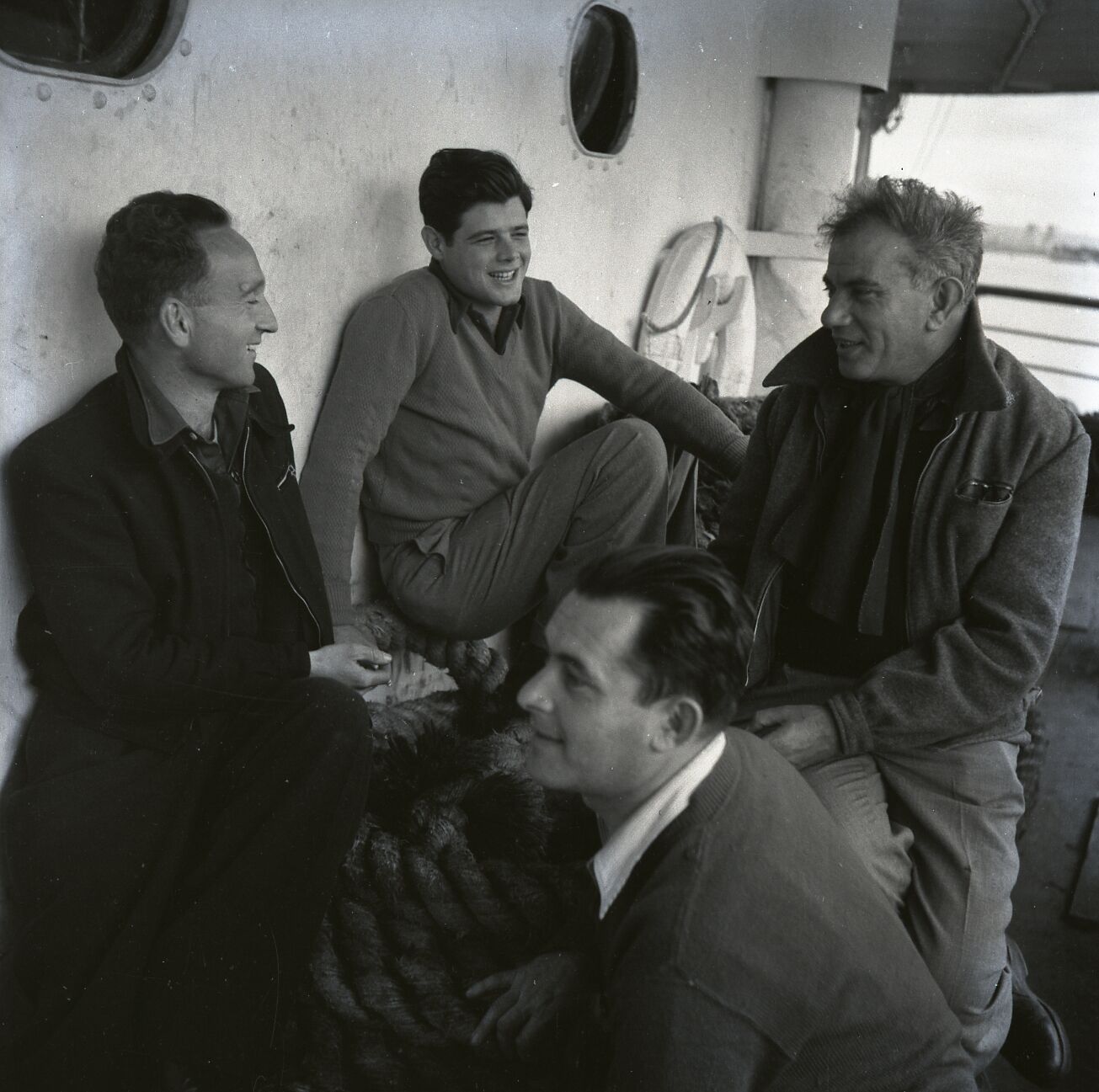
- 24 January to 10 February 1949Operation Pdut evacuates the remaining detainees aboard the Galila and the Atzma'ut; the last leaves Cyprus on 10 February.9
- 14 March 1949
- 1951There are 127 ma'abarot in Israel housing 250,000 people.14
Origins and purpose
At the end of the war there were about 1,500,000 Jews in Europe outside the Soviet Union, roughly 70,000 of them in Poland. Survivors who returned to their home towns generally found the Jewish population gone and their return unwelcome. A Polish report of January 1945 recorded that not a week passed without a Jewish murder victim being found, and more than 500 Jews were killed in Poland in the first year after liberation. The murder of 42 Jews at Kielce on 4 July 1946 was the point at which most gave up on rebuilding Jewish life in eastern Europe.67
For people born in what is now Ukraine the first stage was often lawful. Under the Polish-Soviet repatriation agreement of mid-1945, former Polish citizens who had spent the war in the Soviet Union could return to Poland, and Yad Vashem puts the Jews who did so at between 120,000 and 150,000. About 30 per cent of the Jews of Chernivtsi had survived, and in 1945 and 1946 most of them crossed into Romania and went on towards Palestine. Of the Jews of Transcarpathia and southern Slovakia, deported to Auschwitz in May 1944, perhaps 25,000 survived at all.568
The organised escape westward was the Brichah, which grew from a meeting of young Zionists in Lublin in late 1944 around Abba Kovner and was later run by officers of the Jewish Brigade and operatives of the Hagana, funded by the American Jewish Joint Distribution Committee. Over 48,000 Jews left Poland through it between August 1945 and June 1946, at least 90,000 more after July 1946, and at least 150,000 in total reached displaced persons camps with its help.16
How it worked in practice
Registration and selection took place in the camps. More than 250,000 Jewish displaced persons lived in Germany, Austria and Italy between 1945 and 1952, about 210,000 of them counted at the beginning of 1947 with some 175,000 in the American zone. When the Anglo-American Committee of Inquiry and UNRRA surveyed the camps early in 1946, more than 95 per cent of those asked said they wished to go to Eretz Israel. The mossad l'aliyah bet recruited through the Zionist youth movements and preferred the young and fit, which determined who sailed.246
Transport ran overland through Czechoslovakia and Austria to Italy and southern France, and the ships left from ports in France, Italy and the Balkans. Conditions on board were poor: bunks half a metre wide stacked one above another, bad sanitation and limited water. Between 1945 and 1948, 66 clandestine vessels carrying 70,000 immigrants sailed for Palestine.236
Over 90 per cent of the ships were caught by the Royal Navy. On 13 August 1946 the Jewish Telegraphic Agency reported the Yagour with 700 passengers and the Henrietta Szold with 650 held under destroyer escort off Haifa, and a former British troopship lying there with its decks covered in barbed wire. Those two ships supplied the first 1,300 deportees to Cyprus.910
Twelve camps operated on Cyprus from August 1946 until early 1949 and held about 52,000 ma'apilim taken from 39 ships. Five summer camps at Caraolos near Famagusta housed people in tents; seven winter camps at Dekelia, on the Xylotymbou side of the island, used tin Nissen huts. About 80 per cent of the detainees were aged between 12 and 35, around 2,000 babies were born and 400 people died. From November 1946 the British released 750 a month against certificates, half the monthly quota, and those released completed their detention at Atlit Detention Camp.2913
All limits on Jewish immigration were lifted when Israel was proclaimed on 14 May 1948, but release from Cyprus was slow: about 11,000 internees, mainly men of military age, were still held in August 1948, and the British moved them at 1,500 a month. The final evacuation, Operation Pdut, ran from 24 January to 10 February 1949. Arrivals were processed on the Haifa quayside until March 1949, when Sha'ar HaAliyah opened as the central reception and screening camp, and from 1950 most were passed on to the ma'abarot, of which there were 127 housing 250,000 people in 1951.391314
Published figures for the route and what each one counts
| Stage | Figure | Scope of the figure |
|---|---|---|
| Brichah departures from Poland, August 1945 to June 1946 | over 48,000 | Departures from Poland reported by the Brichah organisation, not individuals traced to a destination |
| Brichah departures from Poland after July 1946 | at least 90,000 | Departures from Poland; USHMM states the total is not known with certainty |
| Reached DP camps with Brichah help, 1945 to 1948 | at least 150,000 | Cumulative arrivals in displaced persons camps, a lower bound |
| Jewish displaced persons in Germany, Austria and Italy, 1945 to 1952 | more than 250,000 | Cumulative population of the camps and urban centres over seven years |
| Jewish DPs at the beginning of 1947 | about 210,000, of whom about 175,000 in the American zone | Population on a date, not cumulative |
| Clandestine vessels and passengers, 1945 to 1948 | 66 vessels, 70,000 immigrants | Sailings for Palestine; 64 from Europe and two from North Africa |
| Ships intercepted by the Royal Navy | over 90 per cent | Proportion of Aliyah Bet ships, not of passengers |
| Deported to Cyprus, August 1946 to early 1949 | about 52,000 from 39 ships | Cumulative deportations over 30 months, not simultaneous occupancy |
| Released from Cyprus, November 1946 to May 1948 | 750 a month | Half the monthly British certificate quota |
| Still interned on Cyprus, August 1948 | about 11,000 | Population on a date, mainly men of military age |
| Ma'abarot in Israel, 1951 | 127 camps, 250,000 residents | Population on a date, all origins |
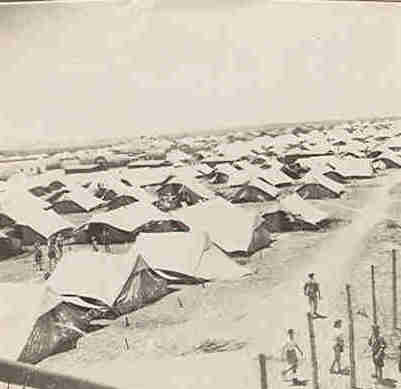
Survivors from Ukrainian territory within the route
Survivors born in territory now Ukrainian were present at every stage. The USHMM states that nearly all the Cyprus detainees were Holocaust survivors and that many had fled eastern Europe or the Soviet Union with the help of the Brichah. On this site the direct evidence is individual: a survivor born in then-Polish territory now in Ukraine who was held at Atlit Detention Camp, and a family from Radyvyliv who reached Sha'ar HaAliyah.12
The number cannot be recovered from the immigration statistics, because those statistics classify people by state. Israel's Central Bureau of Statistics tabulates Holocaust survivors by country of birth under the headings USSR (former), Romania, Poland, Bulgaria, Germany and Austria, and Hungary. On that scheme a person born in Volhynia in the 1920s counts as Poland, one born in Chernivtsi as Romania, one born in Odesa as the USSR and one born in Uzhhorod under other European countries, and all four birthplaces are in Ukraine today. The early returns work the same way: of 738,891 immigrants to the end of 1952, Poland is listed at 106,751 and Romania at 121,537, and the USSR is not listed at all.1112
Nor can it be reconstructed from the intermediate totals, because none records birthplace below the level of the state. The Brichah series counts departures from Poland. The 120,000 to 150,000 Jews repatriated from the Soviet Union included both people born in what is now Ukraine and people from central and western Poland who had fled eastwards in 1939, and no breakdown has been published. The Cyprus totals count ships and heads. People born in present-day Ukrainian territory formed a substantial but unquantified part of the movement, and any specific figure offered for them would be an invention.12611
Holocaust survivors living in Israel by country of birth, 2025
| Country of birth as classified | Percentage of all survivors | Present-day Ukrainian territory falling under this heading |
|---|---|---|
| USSR (former) | 35.9 | Odesa, the eastern regions, and Volhynia, eastern Galicia, northern Bukovina and Transcarpathia for anyone recorded as born after their annexation |
| Romania | 10.6 | Northern Bukovina and northern Bessarabia for births before 1940 |
| Poland | 4.7 | Volhynia and eastern Galicia for births before 1939 |
| Bulgaria | 2.6 | None |
| Germany and Austria | 1.4 | None |
| Hungary | 1.3 | Transcarpathia for births recorded under the 1939 to 1944 annexation |
| Other European countries | 4.2 | Transcarpathia for births under interwar Czechoslovakia |
| European countries, total | 60.7 |
Immigrants to Israel to the end of 1952, communist states heading
| Country as listed | Immigrants |
|---|---|
| Poland | 106,751 |
| Romania | 121,537 |
| Bulgaria | 37,703 |
| Czechoslovakia | 18,815 |
| Hungary | 14,519 |
| Yugoslavia | 7,757 |
| Total, communist states | 307,082 |
| Grand total, all origins | 738,891 |
What happened afterwards
The Cyprus camps closed in February 1949. Atlit became a second screening camp known as Sha'ar Aliyah Bet, and the ma'abarot ran until the last was dismantled in 1963.913
For survivors who remained inside the Soviet Union the route effectively closed. Of Holocaust survivors living in Israel and born in the former USSR, 1.9 per cent immigrated in the great wave of 1948 to 1951 and 84.3 per cent came after 1990, against 62.0 per cent of those born in Poland and 47.2 per cent of those born in Romania. That contrast describes the state whose citizenship a person held when they left, not the place where they were born.11
Sources
- Brihah
United States Holocaust Memorial Museum, Holocaust Encyclopedia · Accessed 13 September 2026
Full article text read and saved. Source of the Lublin origin in late 1944, Abba Kovner, the Jewish Brigade and Hagana control, JDC funding, the routes across the Polish borders with Czechoslovakia and Hungary, and the figures of over 48,000 (August 1945 to June 1946), at least 90,000 after July 1946 and at least 150,000 in total. Also the statement that the total is not known with certainty.
- Cyprus Detention Camps
United States Holocaust Memorial Museum, Holocaust Encyclopedia · Accessed 13 September 2026
Full article text read and saved. Source of the August 1946 to May 1948 deportation period, about 52,000 detainees from 39 ships sailing from France, Italy and the Balkans, the five summer camps at Caraolos and seven winter camps at Dekelia, the age profile (80 per cent aged 12 to 35, 8,000 aged 12 to 18), approximately 2,000 births at the Nicosia military hospital, 400 deaths at Margoa, JDC welfare provision, the recruitment through Zionist youth movements in the DP camps, and the Exodus 1947 decision.
- Aliyah Bet
United States Holocaust Memorial Museum, Holocaust Encyclopedia · Accessed 13 September 2026
Full article text read and saved. Used for the interception rate of over 90 per cent of ships, the Cyprus internment of over 50,000 by 1948, the Exodus 1947 episode, and the lifting of all immigration limits in May 1948.
- Displaced Persons
United States Holocaust Memorial Museum, Holocaust Encyclopedia · Accessed 13 September 2026
Full article text read and saved. Source of the figure of more than 250,000 Jewish displaced persons in Germany, Austria and Italy between 1945 and 1952, the Zionist orientation of the camps, the Harrison report and the Anglo-American Committee, and the eventual distribution of Jewish DPs including about 136,000 to Israel.
- The Holocaust in Subcarpathian Rus and Southern Slovakia
United States Holocaust Memorial Museum, Holocaust Encyclopedia · Accessed 13 September 2026
Full article text read and saved. Used for the deportation of around 140,000 Jews from southern Slovakia and Subcarpathian Rus in May 1944 and the statement that possibly as many as 25,000 Jews from the two regions survived the war. The survival figure covers both regions together and is explicitly an upper estimate.
- The Survivors of the Holocaust
Yad Vashem · Accessed 13 September 2026
Full article text read and saved. Source of about 1,500,000 Jews in Europe outside the USSR at the end of the war and about 70,000 in Poland, more than 500 Jews killed in Poland in the first year after liberation, the 120,000 to 150,000 repatriated from the Soviet Union, the 75,000 to 100,000 who fled Poland before the border closed on 22 February 1947, the DP population of 210,000 at the start of 1947 with about 175,000 in the American zone, the survey at the beginning of 1946 in which more than 95 per cent named Eretz Israel, the shipboard conditions, and the figure of 66 vessels carrying 70,000 immigrants between 1945 and 1948, 64 from Europe and two from North Africa.
- Anti-Jewish Violence in Poland After Liberation
Yad Vashem · Accessed 13 September 2026
Full article text read and saved. Source of the September 1944 official note on recurring killings, the January 1945 report that not a week passed without a Jewish murder victim being found, the 1945 blood-libel riots at Chelm, Rzeszow and elsewhere, the 42 murdered at Kielce on 4 July 1946, and the monthly departure figures cited there for July, August and September 1946. The article also sets out the disagreement among historians over the total number of Jews murdered in postwar Poland, which is why no total is quoted here.
- Chernivtsi
Andrei Corbea-Hoisie, YIVO Encyclopedia of Jews in Eastern Europe (Yale University Press, 2008), reproduced by the Leo Baeck Institute Archives of Jewish Bukovina and Transylvania · Accessed 13 September 2026
Entry text read and saved. Source of the deportation of more than 32,000 people from Cernauti to Transnistria between October 1941 and mid-1942, the estimate that about 30 per cent of the Jewish population had survived by the Soviet reoccupation in 1944, and the statement that between 1945 and 1946 most of the surviving Jews crossed into Romania and then emigrated to Palestine.
- The Cyprus Camps
Palyam and Aliya Bet historical website · Accessed 13 September 2026
Full page text read and saved. Source of Operation Igloo and the first 1,300 deportees from the Henrietta Szold and Yagur in August 1946, some 15,000 detained by mid-1947, the monthly release of about 750 people as half the British quota, the summer and winter camp distinction, close to 2,200 births, the total of about 52,000 deported by the end of the Mandate including the 15,000 who arrived directly on the two Pans, the retention of detainees of draft age, Operation Pdut from 24 January 1949 with the Galila and Atzma'ut, and the departure of the last detainee on 10 February 1949. Its birth figure of about 2,200 differs from the USHMM figure of about 2,000; both are given as approximations and neither is treated as exact.
- British Destroyers Detain Two Ships with 1,300 Jewish Immigrants off Haifa Harbor
Jewish Telegraphic Agency, 13 August 1946 · Accessed 13 September 2026
Contemporary report read in full. Names the Yagour (700 passengers) and the Henrietta Szold (650, including children under 16), the refusal to let Jewish Agency officials board, the fear of diversion to Cyprus, the alerting of Famagusta for six ships, and the arrival at Haifa of a former troopship with its decks covered in rolls of barbed wire.
- On the Occasion of Holocaust Day, 2025: Jews in Israel and Throughout the World (media release 124/2025)
Central Bureau of Statistics, State of Israel · 22 April 2025; retrieved 13 September 2026
PDF downloaded and text extracted. Table A classifies Holocaust survivors in Israel by country of birth using the categories USSR (former) 35.9 per cent, Romania 10.6, Poland 4.7, Bulgaria 2.6, Germany and Austria 1.4, Hungary 1.3 and other European countries 4.2. Table B gives immigration period by the same country-of-birth categories, including USSR (former) 1.9 per cent in 1948 to 1951 and 84.3 per cent from 1990, Poland 62.0 per cent in 1948 to 1951 and Romania 47.2 per cent. This is the direct evidence that the official classification is by state and not by present-day territory.
- Immigrants to Israel: 1948-1952
Jewish Virtual Library, reproducing a July 1953 tabulation credited to the Israel State Archives · Accessed 13 September 2026
Table read in full and used only as a pointer to the shape of the early official returns: a grand total of 738,891 immigrants to the end of 1952, with Poland 106,751, Romania 121,537, Czechoslovakia 18,815, Hungary 14,519 and Bulgaria 37,703 under a heading of communist states, and the explicit note that the USSR is not on the list. The underlying archival tabulation has not been consulted at the Israel State Archives.
- Cyprus internment camps
English Wikipedia, citing among others Nachum Bogner and contemporary press reporting · Accessed 13 September 2026
Read as a framework article and used only where it agrees with sources 2, 3 and 9: twelve camps operating from August 1946 to early 1949, the 750 per month release rate from November 1946, about 28,000 still interned in May 1948, about 11,000 mainly men of military age remaining in August 1948 with movement at 1,500 a month, the final evacuation in January and February 1949, and the small number who stayed on the island until November 1949. The article carries maintenance templates and is not relied on for any figure that appears here alone.
- Ma'abarot
English Wikipedia · Accessed 13 September 2026
Read as a framework article for the transit camps that replaced the earlier immigrant camps from 1950, the figure of 127 ma'abarot housing 250,000 people in 1951, and the dismantling of the last camp in 1963. Not used for anything concerning Ukrainian territory.
- Cyprus: the Atzma'ut, the last ship of Cyprus detainees, sets out for Israel, February 1949
Boris Carmi; National Library of Israel, digital ID NNL_ARCHIVE_AL997009322905305171, via Wikimedia Commons · Photograph February 1949; file metadata checked 13 September 2026
Commons file metadata read through the MediaWiki API: licence Creative Commons Attribution 4.0, photographer Boris Carmi, credited to the National Library of Israel, dated February 1949, Hebrew caption identifying the Atzma'ut as the last ship carrying Cyprus detainees to Israel, 1,305 by 1,297 pixels. File downloaded unaltered.
- The tents in the deportation summer camps at Cyprus
The Atlit Illegal Immigration Detention Camp site, via the PikiWiki Israel free image collection and Wikimedia Commons · Photograph between 1946 and 1949; file metadata checked 13 September 2026
Commons file metadata read through the MediaWiki API: public domain in Israel on expiry of the copyright term, photographer not recorded, described as the tents in the deportation summer camps at Cyprus and dated between 1946 and 1949, 401 by 389 pixels. File downloaded unaltered. The photograph is not dated to a particular camp or month.
Last researched 13 September 2026