The Australian Displaced Persons Scheme
Germany, Austria and Italy to Australia·1947–1952
Under a 1947 agreement with the International Refugee Organisation, Australia brought in more than 170,000 displaced persons who accepted two years of directed labour in return for a passage. Ukrainians made up 8.5 per cent of that intake, and passed through the reception and training centres at Bonegilla, Bathurst and Greta before employment officers dispersed them across the country.
Introduction
The Australian displaced persons scheme was a labour migration programme carried out through a refugee organisation. Australia wanted workers and population; the International Refugee Organisation wanted the camps of Germany, Austria and Italy emptied. The agreement the two reached in 1947 moved people from those camps to Australian reception centres, and from the reception centres to jobs chosen by officials. By 1951 Australia had taken in more than 170,000 of Europe's displaced persons with the help of the IRO.1
Ukrainians were not among the first groups selected, and they were never the largest. They formed 8.5 per cent of the displaced persons Australia received, ranking behind Poles, Yugoslavs and Latvians. The scheme nonetheless created the Ukrainian communities of postwar Australia, because it delivered families to particular camps and then scattered their working members across the continent.12
A history in dates
- 1947The Australian Government reaches agreement with the International Refugee Organisation to take in displaced persons from the refugee camps, principally in Germany.1
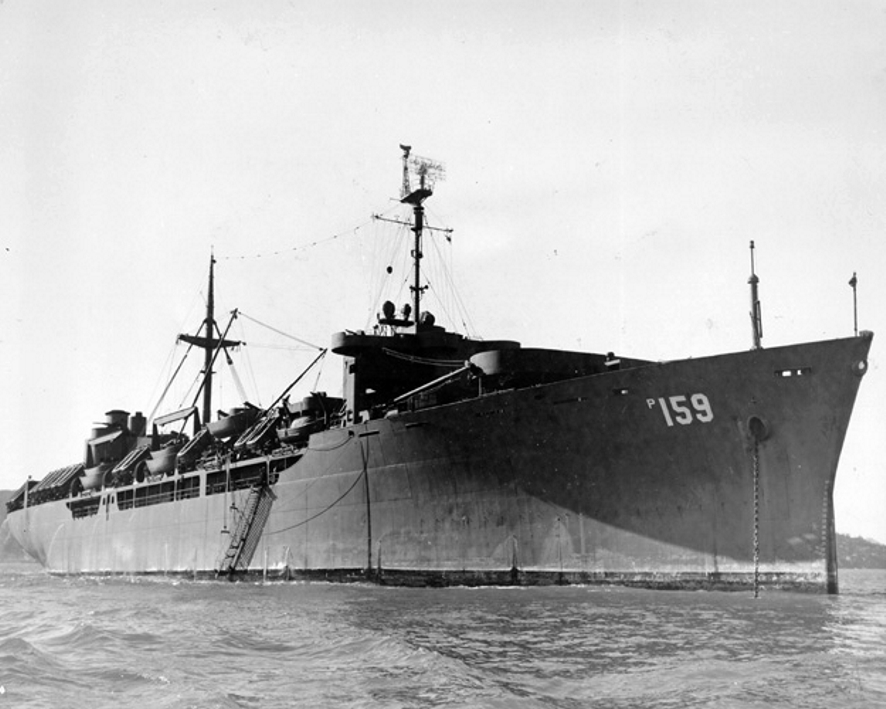
- 30 October 1947USAT General Stuart Heintzelman leaves Bremerhaven with 843 displaced persons from Estonia, Latvia and Lithuania.4
- 28 November 1947
- December 1947The first contingent of 839 Baltic men and women arrives at the newly opened Bonegilla Reception and Training Centre.1
- Early 1948The government drops the term displaced persons in official publicity in favour of Tomorrow's Australians, and from 1949 New Australians.1
- 8 May 1948The Bathurst reception centre opens on the former army camp site at Kelso, New South Wales.3
- Mid-1948Displaced families become acceptable for selection; widows and lone mothers follow in early 1949, and men with young children later that year.1
- 1949Temporary reception centres open at Greta, Northam and Cunderdin as the number of arrivals rises; twenty holding centres take dependants.1
- May 1949
- September 1949Nineteen recently arrived children die, thirteen of them at Bonegilla, and an inquiry criticises the centre hospital as under-staffed and inadequately equipped.1
- 1950Adelaide's Ukrainian Orthodox community, at first worshipping in an Anglican church, erects its own small church of Saint Michael at Thebarton.7
- By 1951Australia has taken in more than 170,000 displaced persons with IRO assistance.1
- April 1952
Origins and purpose
Australia looked first to the United Kingdom for migrants after the war, offering assisted passages to British ex-servicemen and then to the British public. There were not enough people willing to come and not enough ships to carry them. In 1947 the Australian Government reached agreement with the International Refugee Organisation to take in some of the people displaced by the war and living in refugee camps, principally in Germany.1
Arthur Calwell, the first Minister for Immigration, sold the programme at home on grounds of security and labour rather than charity. He argued that without a much larger population Australia could not hold the continent, and he described the displaced he had seen in German refugee camps as an ideal source of migrants who would help meet Australian labour shortages. The condition he attached was explicit: they had to serve what became two-year contracts in industries and occupations vital to the development of Australia, and they could not expect to pick and choose their jobs.1
The agreement with the International Refugee Organisation was signed on 21 July 1947. Under it Australia undertook to settle 12,000 displaced persons each year, with provision to increase the number, from the camps in Germany, Austria and France.58
How it worked in practice
Selection happened in Europe. Australia saw itself as competing for the best of the displaced persons, and recruited first the young and, in official language, easily assimilable people from the Baltic countries. The search for good quality workers widened to include Poles, Ukrainians, Slovenians, Hungarians and White Russians, then Bulgarians, Romanians and Albanians, and by the end of 1949 it embraced all European groups the IRO deemed eligible. The pool of employable young men and women was exhausted quickly: displaced families became acceptable from mid-1948, widows, deserted wives and unmarried mothers with children in early 1949, and men without wives but with young children later that year.1
People in the camps understood that they were being assessed as workers rather than as refugees, and prepared accordingly. Applicants remembered hardening their hands to look fit for labouring and describing themselves as domestics rather than teachers. Selection officers judged whole family units, including whether a grandmother could care for a child while a mother worked.1
The first contingent, 839 young men and women from Estonia, Latvia and Lithuania, reached the newly opened Bonegilla Reception and Training Centre in north-east Victoria in December 1947. The ship that carried them, the United States Army transport General Stuart Heintzelman, had left Bremerhaven on 30 October 1947 with 843 Baltic displaced persons and reached Fremantle on 28 November; it was the first of nearly 150 voyages by some forty ships. The National Heritage List assessment of Bonegilla records that the passengers were accommodated at the Graylands and Swanbourne hostels in Western Australia, then continued on the Kanimbla to Melbourne and by train to Bonegilla, and that Graylands, not Bonegilla, had been the first migrant camp for displaced persons. A Ukrainian scholarly account notes that this first group was presented to the Australian public as the Beautiful Balts, young Lithuanians, Latvians and Estonians described as close to the Scandinavian peoples and carefully selected with a view to a favourable public reception. Passengers were shipped in bulk, often in former troop ships.1458
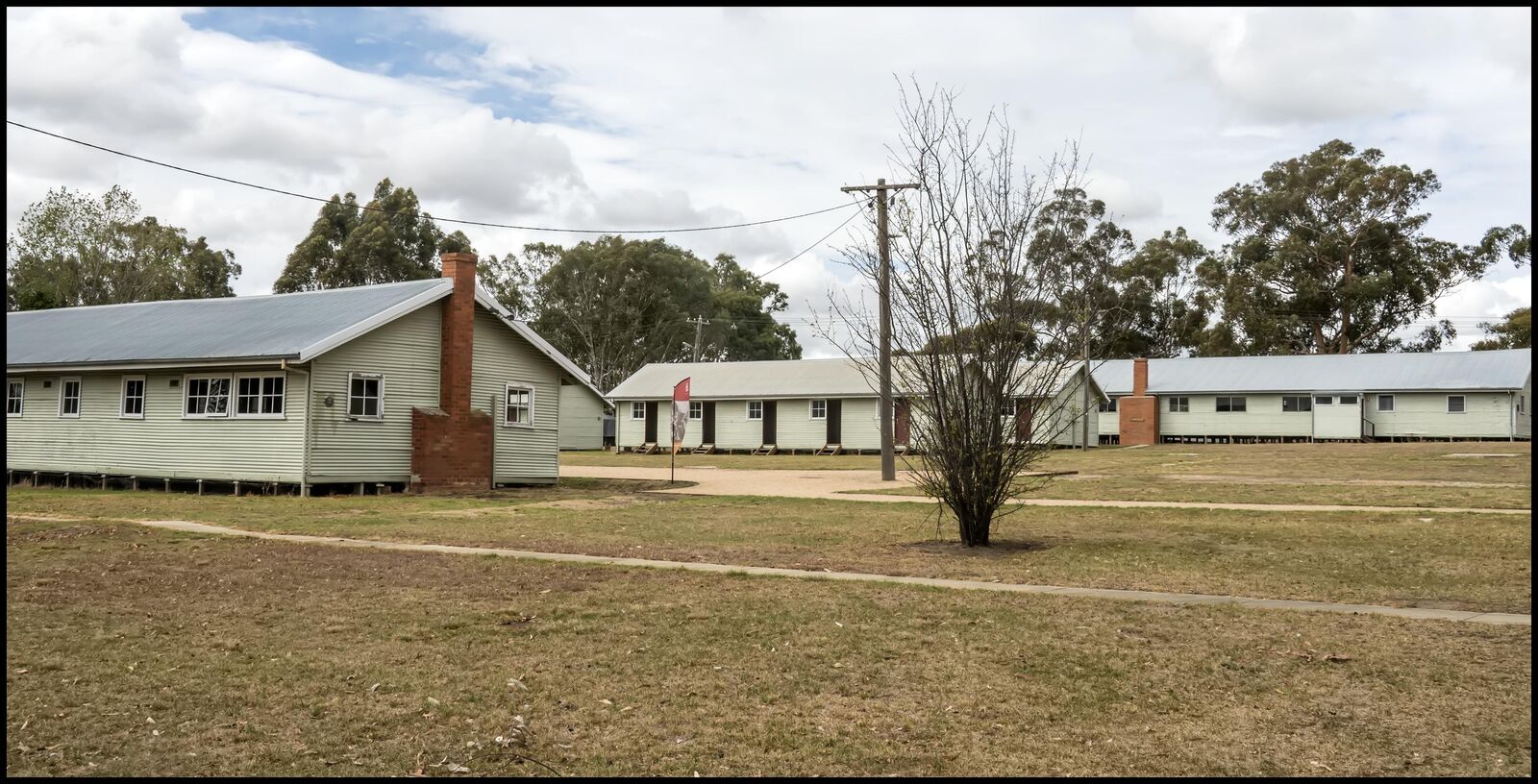
Reception centres provided the general medical examination and X-ray of migrants, the issue of clothing, payment of social service benefits, interviews to determine employment potential, and instruction in English and in Australian life. Bonegilla processed more than half of all the displaced persons who arrived before 1953. As the ships multiplied, an additional reception centre opened at Bathurst in New South Wales, on the former army camp site at Kelso, and temporary reception centres opened at Greta in New South Wales and at Northam and Cunderdin in Western Australia. Bathurst ran from 1948 until April 1952, with eleven residential blocks holding just over 6,000 people in unlined iron sheds, wooden barracks and tents; most residents stayed a few weeks or at most a few months.13
Placement was the point of the whole apparatus. Bonegilla was expanded to hold 7,700 people, with 1,600 more in tents if required, a teleprinter was installed to speed the dispatch of workers, and up to forty employment officers processed as many as 100 people a day during parts of 1950. Because employment and family accommodation rarely lay in the same place, twenty holding centres were opened in other former service establishments in country districts to take dependants. From Bathurst, workers and dependants were directed to northern New South Wales; from Bonegilla to southern New South Wales, the Australian Capital Territory, Queensland and South Australia.1
Measures of the scheme's scale
| Measure | Figure | Source scope |
|---|---|---|
| Displaced persons taken in with IRO help by 1951 | more than 170,000 | All nationalities, whole scheme |
| Ukrainian emigration to Australia, 1948–51 | about 21,500 | Ukrainians only, four years, Internet Encyclopedia of Ukraine |
| Children as a proportion of the displaced persons accepted | 25% | All nationalities, whole scheme |
| Displaced persons processed through Bonegilla before 1953 | more than half of all arrivals | All nationalities |
| Bonegilla capacity after expansion | 7,700, with 1,600 more in tents if required | Capacity, not occupancy |
| Bathurst capacity | just over 6,000 in eleven residential blocks | Capacity at closure in April 1952 |
| Holding centres for dependants | 20 | Former service establishments in country areas |
| Married women housed in holding centres by 1951 | 14,000 | All nationalities; the 70,000 displaced women who came also included single women and aged dependants |
| People remaining in European refugee camps by 1951 | 177,000 | All nationalities, all destinations |
The first displaced-persons voyage
| Stage | Detail | Source scope |
|---|---|---|
| Sailing | USAT General Stuart Heintzelman, Bremerhaven, 30 October 1947, 843 displaced persons from Estonia, Latvia and Lithuania | One voyage |
| Arrival | Fremantle, 28 November 1947 | One voyage |
| Reception | 839 young men and women reach the newly opened Bonegilla Reception and Training Centre in December 1947 | The contingent as recorded on arrival at the centre |
| Sequence | The first of nearly 150 voyages by some forty ships | Whole scheme |
Sources for this section
- Receiving Europe's Displaced: Bonegilla Reception and Training Centre 1947–1953
- USS General Stuart Heintzelman (AP-159)
- The Department of Immigration in Australia: The First Years of Development and Transformation
- Bonegilla Migrant Camp, Block 19: National Heritage List assessment, place ID 105845
- Bathurst Migrant Camp 1948–1952
The Ukrainian experience within the scheme
Ukrainians made up 8.5 per cent of the displaced persons Australia received, on the breakdown published in the Bonegilla history from Egon Kunz's study, behind Poles at 37.1 per cent, Yugoslavs at 13.8 per cent and Latvians at 11.4 per cent. The National Heritage List assessment of Bonegilla likewise names Ukrainians among the main groups of the 170,700 people brought out under the IRO scheme, alongside Poles, Yugoslavs, Latvians, Hungarians, Lithuanians, Czechs and Estonians. The Internet Encyclopedia of Ukraine gives a different measure for a slightly different population: about 21,500 Ukrainians emigrating to Australia in 1948 to 1951. The two figures are not interchangeable, since one is a share of the IRO-assisted intake and the other a count of Ukrainian emigration to Australia over four named years.128
The scheme separated Ukrainian households as a matter of routine. Michal and Vera B, who arrived in 1949, remembered the bus taking the men away to work while the women cried because they did not know where the men were going. Orion Wenhrynowucz, who arrived in 1948, was sent to Ivanhoe while his wife went to the Royal Melbourne Hospital as a domestic. Nikolaus H, 1949, was sent to a glass manufacturer in Melbourne while his wife Maria and their daughter Elisabeth went in the opposite direction to Cowra. Anton Sziller, 1949, went to Adelaide and his wife Lea to Cowra. A separated breadwinner paid for his own accommodation near his work and contributed up to three pounds a week towards his family's keep in a holding centre.1
Where Ukrainians ended up was also patterned. A study of the settlement of former displaced persons found Poles and Ukrainians in country areas, while Czechs, Greeks and Hungarians preferred the cities and Germans and Yugoslavs went to industrial centres. The camps in the meantime became places of Ukrainian institutional life: choirs, schools, worship and exhibitions took shape at Bonegilla, Bathurst and Greta Migrant Camp while the two-year contracts ran.1
Ukrainian institutional life took root beyond the camps as the contracts ran their course. In Adelaide the Ukrainian Orthodox community worshipped in an Anglican church in 1950 and erected its own small church of Saint Michael at Thebarton in the same year.7
Nationality shares of the displaced persons received in Australia
| Nationality | Share of total displaced persons received | Source scope |
|---|---|---|
| Poles | 37.1% | All displaced persons received in Australia |
| Yugoslavs | 13.8% | All displaced persons received in Australia |
| Latvians | 11.4% | All displaced persons received in Australia |
| Ukrainians | 8.5% | All displaced persons received in Australia |
| Hungarians | 7.0% | All displaced persons received in Australia |
| Lithuanians | 5.8% | All displaced persons received in Australia |
| Czechoslovaks | 5.4% | All displaced persons received in Australia |
| Estonians | 3.1% | All displaced persons received in Australia |
| Russians | 3.0% | All displaced persons received in Australia |
| Others | 4.9% | All displaced persons received in Australia |
What happened afterwards
Completing the contract changed a person's position. The Internet Encyclopedia of Ukraine records that immigrants who had served their two years automatically received the right of permanent residency and the right to choose their work, and became eligible for Australian citizenship after five years. Married women were released from their contracts earlier if their husbands could find work and independent accommodation, which was the administration's chief remedy for family separation.12
The scheme wound down as the camps in Europe emptied. By 1951 only 177,000 people remained in European refugee camps, mostly the aged and infirm, and the last refugees officially recognised as displaced persons reached Australia by early 1952. Former enemy nationals had never been within the IRO mandate, and Australia brought them in instead under nation-to-nation agreements from 1951.1
Family reunion continued after the scheme proper closed. In 1955 the Department of Immigration implemented Operation Reunion, intended to assist family members overseas to migrate to Australia to be reunited with family already living there; a Ukrainian scholarly account states that 30,000 people migrated under it from countries including Bulgaria, Czechoslovakia, Hungary, Poland, Romania, the Soviet Union and the former Yugoslavia.5
The selection machinery left a personal dossier for every person it moved. The National Archives of Australia holds 170,700 personal dossiers of displaced persons who emigrated to Australia between 1947 and 1953, inscribed on the Australian Memory of the World Register, whose listing describes the collection as documenting a major shift in Australia's immigration priorities, which before the Second World War had favoured migration from Anglo-Celtic sources.6
Sources
- Receiving Europe's Displaced: Bonegilla Reception and Training Centre 1947–1953
Bruce Pennay, Bonegilla Migrant Experience · Accessed 2026
Read in full. Supplies the 1947 IRO agreement, the 170,000 total, the nationality shares taken from Egon Kunz (Ukrainians 8.5 per cent), Calwell's two-year contract language, the selection sequence, reception centre functions, the surge and the additional centres, holding centres, and the Ukrainian recollections of separation quoted here.
- Australia
Internet Encyclopedia of Ukraine, Canadian Institute of Ukrainian Studies · Accessed 2026
Read for the Ukrainian figures: about 21,500 Ukrainians emigrating in 1948–51, the two-year obligation, dispersal in small groups after a short stay at transfer camps, and the rights acquired after the contract and after five years.
- Bathurst Migrant Camp 1948–1952
Bathurst Family History Group · Accessed 2026
Read for the Limekilns Road site, the May 1948 opening and April 1952 closure, the eleven blocks holding just over 6,000, the building fabric and the typical length of stay.
- USS General Stuart Heintzelman (AP-159)
Wikipedia · Accessed 2026
Encyclopaedic secondary source, used only for the first displaced-persons voyage to Australia: departure from Bremerhaven on 30 October 1947 with 843 Baltic passengers, arrival at Fremantle on 28 November 1947, and the count of nearly 150 voyages by some forty ships. The article cites Ann Tündern-Smith and a 2023 study of Calwell for the passage.
- The Department of Immigration in Australia: The First Years of Development and Transformation
O. V. Romanenko, in Aktualni problemy istorii, filosofii ta prava u doslidzhenniakh molodykh uchenykh, pp. 58–64; Institute of World History, National Academy of Sciences of Ukraine, Kyiv · 2020
Pages 62 and 63 read: the signing of the agreement with the IRO on 21 July 1947, the presentation of the first arrivals of November 1947 as the Beautiful Balts, and Operation Reunion of 1955 with its total of 30,000 migrants and the countries they came from.
- Displaced Persons Migrant Selection Documents, 1947-1953
Australian Memory of the World Register, listing 7 · Inscribed 2004; listing read 13 September 2026
Register listing read in full: the collection of 170,700 personal dossiers of displaced persons who emigrated to Australia between 1947 and 1953, held by the National Archives of Australia, and the listing's statement that it documents a shift away from the pre-war preference for Anglo-Celtic migration.
- Twentieth Century Heritage Survey, Stage 1: Post Second World War (1946-1959), Overview History
Susan Marsden, Marsden Russell Historians, for the Department for Environment and Heritage, Adelaide · 2003 to 2004, revised January 2005
Printed pages 13 and 65 read: the arrival in May 1949 of the first 907 displaced persons in South Australia, 438 of them Poles, and their housing in converted army huts at Woodside; and the Ukrainian Orthodox community in Adelaide worshipping in an Anglican church in 1950 and erecting its own church of Saint Michael at Thebarton that year.
- Bonegilla Migrant Camp, Block 19: National Heritage List assessment, place ID 105845
Australian Heritage Council, Department of the Environment · 2007
History and Analysis sections read: the 1947 undertaking to settle 12,000 displaced persons a year from the camps in Germany, Austria and France with provision to increase the number; Graylands in Western Australia as the first migrant camp, before Bonegilla; the accommodation of the General Stuart Heintzelman's passengers at Graylands and Swanbourne and their onward passage on the Kanimbla to Melbourne and by train to Bonegilla; and the naming of Ukrainians among the main groups of the 170,700 arrivals.
Last researched 13 September 2026